Thank you for visiting SNEWPapers!
Sign up free
Story
February 1, 1951
The Voice
Lincoln, Lancaster County, Nebraska
What is this article about?
Dr. Arnold M. Rose credits four WWII developments and Negro protest movements for visible progress in equality and opportunity for the Negro community in America over the last decade, as detailed in his pamphlet 'The Negro in Postwar America.'
Clipping
OCR Quality
100%
Excellent
Full Text
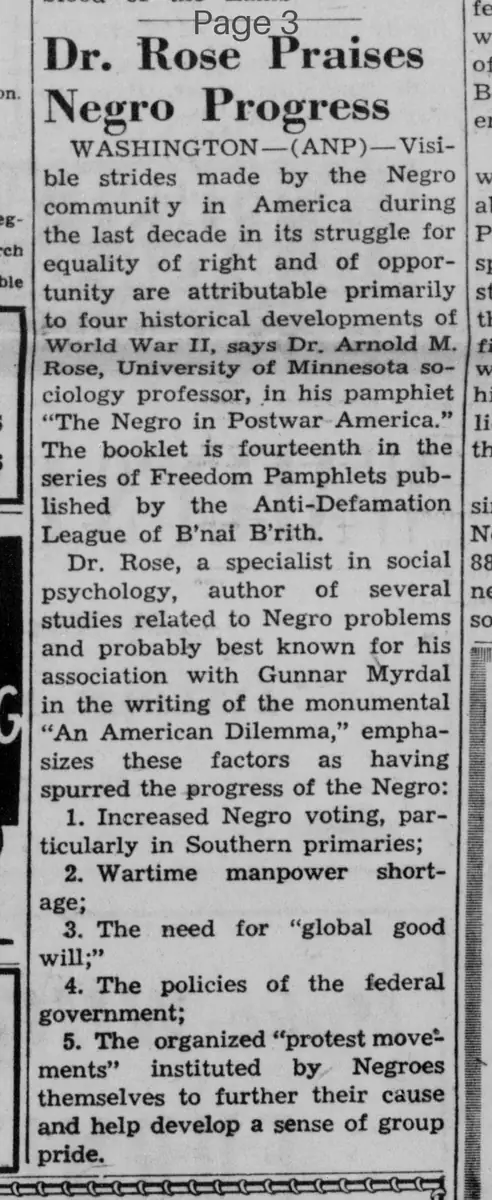
Dr. Rose Praises Negro Progress
WASHINGTON—(ANP)—Visible strides made by the Negro community in America during the last decade in its struggle for equality of right and of opportunity are attributable primarily to four historical developments of World War II, says Dr. Arnold M. Rose, University of Minnesota sociology professor, in his pamphlet "The Negro in Postwar America."
The booklet is fourteenth in the series of Freedom Pamphlets published by the Anti-Defamation League of B'nai B'rith.
Dr. Rose, a specialist in social psychology, author of several studies related to Negro problems and probably best known for his association with Gunnar Myrdal in the writing of the monumental "An American Dilemma," emphasizes these factors as having spurred the progress of the Negro:
1. Increased Negro voting, particularly in Southern primaries;
2. Wartime manpower shortage;
3. The need for "global good will;"
4. The policies of the federal government;
5. The organized "protest movements" instituted by Negroes themselves to further their cause and help develop a sense of group pride.
WASHINGTON—(ANP)—Visible strides made by the Negro community in America during the last decade in its struggle for equality of right and of opportunity are attributable primarily to four historical developments of World War II, says Dr. Arnold M. Rose, University of Minnesota sociology professor, in his pamphlet "The Negro in Postwar America."
The booklet is fourteenth in the series of Freedom Pamphlets published by the Anti-Defamation League of B'nai B'rith.
Dr. Rose, a specialist in social psychology, author of several studies related to Negro problems and probably best known for his association with Gunnar Myrdal in the writing of the monumental "An American Dilemma," emphasizes these factors as having spurred the progress of the Negro:
1. Increased Negro voting, particularly in Southern primaries;
2. Wartime manpower shortage;
3. The need for "global good will;"
4. The policies of the federal government;
5. The organized "protest movements" instituted by Negroes themselves to further their cause and help develop a sense of group pride.
What sub-type of article is it?
Historical Event
What themes does it cover?
Triumph
Justice
What keywords are associated?
Negro Progress
World War Ii
Voting Rights
Manpower Shortage
Federal Policies
Protest Movements
What entities or persons were involved?
Dr. Arnold M. Rose
Gunnar Myrdal
Where did it happen?
America
Story Details
Key Persons
Dr. Arnold M. Rose
Gunnar Myrdal
Location
America
Event Date
Last Decade Post World War Ii
Story Details
Dr. Rose highlights five factors from WWII era spurring Negro progress: increased voting in Southern primaries, wartime manpower shortage, need for global goodwill, federal government policies, and organized Negro protest movements fostering group pride.