Thank you for visiting SNEWPapers!
Sign up free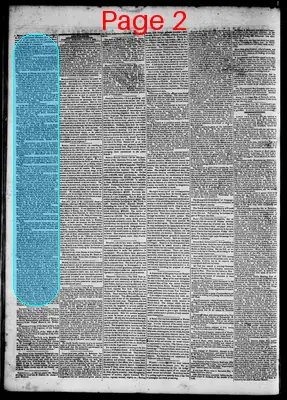
Story
June 9, 1829
Rhode Island American And Providence Gazette
Providence, Providence County, Rhode Island
What is this article about?
A communication from the New York Commercial refutes an Epistle from the Hicksite Yearly Meeting, quoting Elias Hicks and others to support Orthodox Quaker charges of derogating Scriptures and denying Christian doctrines like Christ's divinity and atonement.
Clipping

OCR Quality
96%
Excellent
Full Text
Having published the Epistle from that portion of the Friends denominated Hicksites, as matter of information to our readers, we now give a different view of the subject in the form of a communication taken from the N. Y. Commercial.
A Document purporting to be an Epistle from a "Yearly Meeting"-(but which is well known to have emanated from the body of persons distinguished by the appellation of Hicksites,) held in this city during the past week, has made its appearance in several of the daily papers. Among a number of other declarations equally susceptible of refutation, it is asserted in this Epistle, that the charges heretofore preferred against them by the Society of Friends, whom they style Orthodox, of "derogating from the authenticity of the Holy Scriptures, denying some of the fundamental doctrines of the Christian Religion," and "rejecting the offered means of Salvation by Jesus Christ," are false.
The Society of Friends have ever been averse to bringing their private concerns before the public, through the medium of the daily press, and such a discussion on the present occasion is by no means desired: but it is thought to be due to the public, and to the cause of Truth, to furnish a few of the many evidences on which the above charges are founded.
The following quotations are taken from the printed sermons, and from letters written by some of the distinguished members of this new sect. These authors continue to be acknowledged by them, and to receive their united support and approbation.
It is left to the Christian reader to determine for himself how far these quotations go to justify the charges referred to. It is believed that their correctness will not be denied. Their authenticity, however, can be fully established.
ON THE SCRIPTURES.
"If the Scriptures were absolutely necessary, he had power to communicate them to all the nations of the earth; but they were not necessary, and perhaps not suited to any other people than they to whom they were written!"-Elias Hicks, Philadelphia. Sermons, 1825 page 119.
"One would suppose, that to a rational mind, the hearing and reading of the instructive parables of Jesus, would have a tendency to reform and turn men about to truth, and lead them on in it; but they have no such effect."-Idem. page 129.
"It is in vain that we are referred to the Scriptures as to an acknowledged authority to determine conflicting opinions."-Berean, vol. 2, page 401.
"Let us attend to spiritual reflections, and not be looking to the Scriptures, and to the system of men, and to the words of Preachers; or, all these being of an external character, can only form an ignis fatuus, which leads to bewilder, and dazzles to blind."-Thomas Wetherall's Sermons. Quaker, vol. 2, page 219.
ON THE CHARACTER AND OFFICES OF CHRIST.
"I examined the accounts given on this subject, (the miraculous birth of Christ,) by the four Evangelists, and according to my best judgment on the occasion, I was led to think there was considerable more Scripture evidence of his being the 'son of Joseph than otherwise, &c.'"-Elias Hicks' letter to Thomas William.
"He (Jesus) never directed to himself, but all he wanted was to lead their minds to the Spirit of Truth, to the light within, and when he had done this, he had done his office." Elias Hicks, Quaker, vol. 1, page 47.
The Christ which it concerns us to have an interest in, is not that outward manifestation, which was limited in its operations to a single province, a single nation, and to this day known only by history to a few."-Berean, vol. 2, p. 21.
Can it be supposed, that He of whom it is declared that He was limited in knowledge, power, and action, possessed absolutely the spirit of God, without measure? I believe not."-Berean, vol. 2, p. 259.
"He (Christ) was instructed and led to see himself a poor creature; he had no merit of his own; he was a poor, helpless, male infant, whose life was dependent under God, on the nursing of his mother." Elias Hicks' Sermons, Quaker, vol. 1, p. 237.
"If we believe that God is equal and righteous in all his ways, that He has made of one blood all the families that dwell upon the face of the earth, it is impossible that he should be partial, and therefore has been unwilling to reveal his will to every creature, to Moses and the Prophets, to Jesus Christ and his Apostles. He never can set any of these above us because if He did, He would be partial."-Elias Hicks' Sermon, Philad. edit. 1825, p. 292.
"If as some have said, He had made his Son perfect so that He could not fall, his obedience would have been of no worth to the children of men, and none to himself as a rational creature."-E. Hicks Sermons, Quaker, vol. 3, p. 111.
"It was the soul that wanted salvation, but this no outward Saviour could do, no external Saviour could have any hand in it."-Elias Hicks Phil. Sermons p. 50, 51.
"Oh dearly beloved friends, young and old, may you gather deeper and deeper to that which is within the vail, where we may have access to our God, without any Mediator."-Elias Hicks' Sermons, Quaker, vol. 2, p. 277.
"But I do not consider that the crucifixion of the outward body of flesh and blood of Jesus on the cross, was an atonement for my sins, but the legal sins of the Jews, &c. Surely is it possible that any rational being that has any right sense of justice or mercy, would be willing to accept forgiveness of sins on such terms? Would he not rather go forward and offer himself wholly up to suffer all the penalties due to his crimes, rather than the innocent should suffer? Nay, was he so hardy as to acknowledge a willingness to be saved through such a medium, would it not prove that he stood in direct opposition to every principle of justice and honesty, of mercy and love, and show himself to be a poor selfish creature, and unworthy of notice."--Elias Hicks' letter to N. Shoemaker.
It may, perhaps, be hereafter consistent with the design of infinite Wisdom, for ends which cannot now be conceived by any foresight or sagacity, to prepare another glorious body, and on it to pour out again the Spirit without measure, in order to fulfill some still more magnificent purposes."--Berean, p. 71.
It was from such a ministry, and the open and daily avowal of sentiments such as the above, that Friends felt imperiously called upon to withdraw. And, notwithstanding the alleged invitation to remain, they could not continue to hold religious fellowship with persons professing doctrines so utterly at variance with the solemn and important truths of the Christian religion, as professed by the Society. And here it may be proper to remark, for the information of those who are unacquainted with its organization, that the Society of Friends is composed of Ten Yearly Meetings-five of them, viz: Dublin, London, N. England, Virginia, and North Carolina, remain undivided and attached to the ancient discipline and doctrines of the Society; and the four latter have issued testimonials of their disunity with the principles of Elias Hicks, and those who continue to adhere to him. The remaining five are divided; but the greater portion of the members, it is believed, acknowledge allegiance to the Ancient Yearly Meetings, and to the Christian Doctrines of the Society.
A Document purporting to be an Epistle from a "Yearly Meeting"-(but which is well known to have emanated from the body of persons distinguished by the appellation of Hicksites,) held in this city during the past week, has made its appearance in several of the daily papers. Among a number of other declarations equally susceptible of refutation, it is asserted in this Epistle, that the charges heretofore preferred against them by the Society of Friends, whom they style Orthodox, of "derogating from the authenticity of the Holy Scriptures, denying some of the fundamental doctrines of the Christian Religion," and "rejecting the offered means of Salvation by Jesus Christ," are false.
The Society of Friends have ever been averse to bringing their private concerns before the public, through the medium of the daily press, and such a discussion on the present occasion is by no means desired: but it is thought to be due to the public, and to the cause of Truth, to furnish a few of the many evidences on which the above charges are founded.
The following quotations are taken from the printed sermons, and from letters written by some of the distinguished members of this new sect. These authors continue to be acknowledged by them, and to receive their united support and approbation.
It is left to the Christian reader to determine for himself how far these quotations go to justify the charges referred to. It is believed that their correctness will not be denied. Their authenticity, however, can be fully established.
ON THE SCRIPTURES.
"If the Scriptures were absolutely necessary, he had power to communicate them to all the nations of the earth; but they were not necessary, and perhaps not suited to any other people than they to whom they were written!"-Elias Hicks, Philadelphia. Sermons, 1825 page 119.
"One would suppose, that to a rational mind, the hearing and reading of the instructive parables of Jesus, would have a tendency to reform and turn men about to truth, and lead them on in it; but they have no such effect."-Idem. page 129.
"It is in vain that we are referred to the Scriptures as to an acknowledged authority to determine conflicting opinions."-Berean, vol. 2, page 401.
"Let us attend to spiritual reflections, and not be looking to the Scriptures, and to the system of men, and to the words of Preachers; or, all these being of an external character, can only form an ignis fatuus, which leads to bewilder, and dazzles to blind."-Thomas Wetherall's Sermons. Quaker, vol. 2, page 219.
ON THE CHARACTER AND OFFICES OF CHRIST.
"I examined the accounts given on this subject, (the miraculous birth of Christ,) by the four Evangelists, and according to my best judgment on the occasion, I was led to think there was considerable more Scripture evidence of his being the 'son of Joseph than otherwise, &c.'"-Elias Hicks' letter to Thomas William.
"He (Jesus) never directed to himself, but all he wanted was to lead their minds to the Spirit of Truth, to the light within, and when he had done this, he had done his office." Elias Hicks, Quaker, vol. 1, page 47.
The Christ which it concerns us to have an interest in, is not that outward manifestation, which was limited in its operations to a single province, a single nation, and to this day known only by history to a few."-Berean, vol. 2, p. 21.
Can it be supposed, that He of whom it is declared that He was limited in knowledge, power, and action, possessed absolutely the spirit of God, without measure? I believe not."-Berean, vol. 2, p. 259.
"He (Christ) was instructed and led to see himself a poor creature; he had no merit of his own; he was a poor, helpless, male infant, whose life was dependent under God, on the nursing of his mother." Elias Hicks' Sermons, Quaker, vol. 1, p. 237.
"If we believe that God is equal and righteous in all his ways, that He has made of one blood all the families that dwell upon the face of the earth, it is impossible that he should be partial, and therefore has been unwilling to reveal his will to every creature, to Moses and the Prophets, to Jesus Christ and his Apostles. He never can set any of these above us because if He did, He would be partial."-Elias Hicks' Sermon, Philad. edit. 1825, p. 292.
"If as some have said, He had made his Son perfect so that He could not fall, his obedience would have been of no worth to the children of men, and none to himself as a rational creature."-E. Hicks Sermons, Quaker, vol. 3, p. 111.
"It was the soul that wanted salvation, but this no outward Saviour could do, no external Saviour could have any hand in it."-Elias Hicks Phil. Sermons p. 50, 51.
"Oh dearly beloved friends, young and old, may you gather deeper and deeper to that which is within the vail, where we may have access to our God, without any Mediator."-Elias Hicks' Sermons, Quaker, vol. 2, p. 277.
"But I do not consider that the crucifixion of the outward body of flesh and blood of Jesus on the cross, was an atonement for my sins, but the legal sins of the Jews, &c. Surely is it possible that any rational being that has any right sense of justice or mercy, would be willing to accept forgiveness of sins on such terms? Would he not rather go forward and offer himself wholly up to suffer all the penalties due to his crimes, rather than the innocent should suffer? Nay, was he so hardy as to acknowledge a willingness to be saved through such a medium, would it not prove that he stood in direct opposition to every principle of justice and honesty, of mercy and love, and show himself to be a poor selfish creature, and unworthy of notice."--Elias Hicks' letter to N. Shoemaker.
It may, perhaps, be hereafter consistent with the design of infinite Wisdom, for ends which cannot now be conceived by any foresight or sagacity, to prepare another glorious body, and on it to pour out again the Spirit without measure, in order to fulfill some still more magnificent purposes."--Berean, p. 71.
It was from such a ministry, and the open and daily avowal of sentiments such as the above, that Friends felt imperiously called upon to withdraw. And, notwithstanding the alleged invitation to remain, they could not continue to hold religious fellowship with persons professing doctrines so utterly at variance with the solemn and important truths of the Christian religion, as professed by the Society. And here it may be proper to remark, for the information of those who are unacquainted with its organization, that the Society of Friends is composed of Ten Yearly Meetings-five of them, viz: Dublin, London, N. England, Virginia, and North Carolina, remain undivided and attached to the ancient discipline and doctrines of the Society; and the four latter have issued testimonials of their disunity with the principles of Elias Hicks, and those who continue to adhere to him. The remaining five are divided; but the greater portion of the members, it is believed, acknowledge allegiance to the Ancient Yearly Meetings, and to the Christian Doctrines of the Society.
What sub-type of article is it?
Historical Event
What themes does it cover?
Justice
Moral Virtue
Deception
What keywords are associated?
Quaker Schism
Hicksites
Orthodox Friends
Elias Hicks
Scriptures Authenticity
Christ Doctrines
Yearly Meeting
What entities or persons were involved?
Elias Hicks
Thomas William
N. Shoemaker
Thomas Wetherall
Where did it happen?
New York, Philadelphia
Story Details
Key Persons
Elias Hicks
Thomas William
N. Shoemaker
Thomas Wetherall
Location
New York, Philadelphia
Event Date
1825
Story Details
Orthodox Quakers refute Hicksite Epistle denying charges of derogating Scriptures and Christian doctrines, quoting Hicks' sermons and letters questioning Scripture authority, Christ's divinity, miraculous birth, atonement, and mediation.