Thank you for visiting SNEWPapers!
Sign up free
Trainman News
Indianapolis, Marion County, Indiana
What is this article about?
In Chicago, Secretary of Agriculture Ezra T. Benson's request for a 50% cut in western railroad freight rates on hay and livestock for drought-stricken areas was denied, as railroads cited poor 1954 financial conditions compared to 1953 when they contributed over $20 million in relief.
Clipping
OCR Quality
Full Text
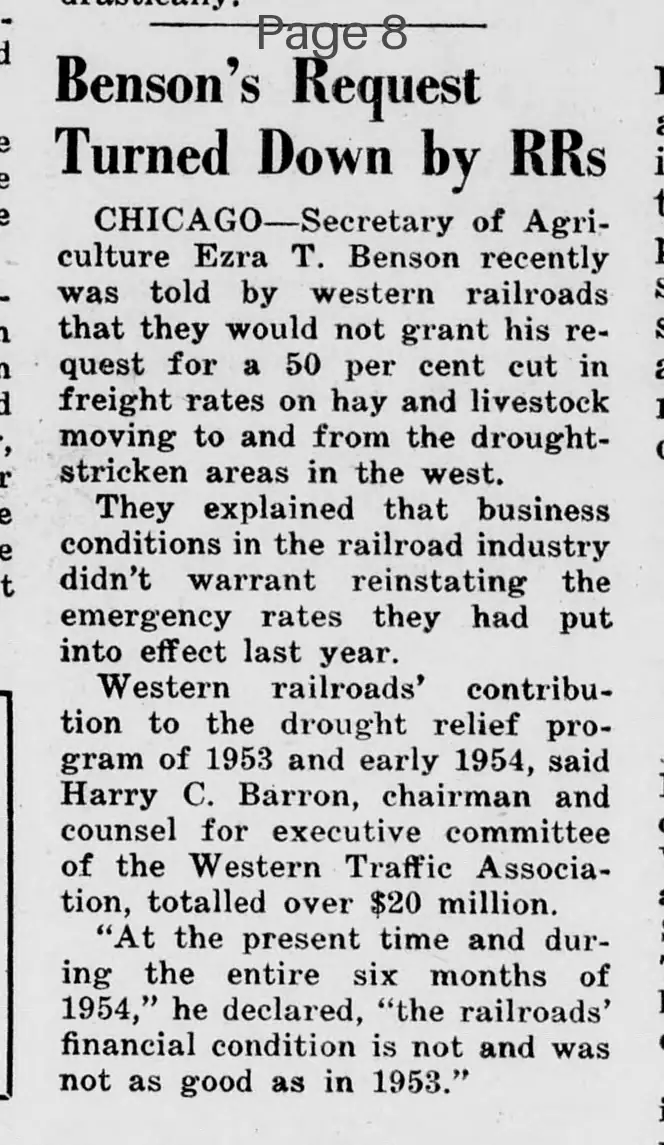
CHICAGO - Secretary of Agriculture Ezra T. Benson recently was told by western railroads that they would not grant his request for a 50 per cent cut in freight rates on hay and livestock moving to and from the drought-stricken areas in the west.
They explained that business conditions in the railroad industry didn't warrant reinstating the emergency rates they had put into effect last year.
Western railroads' contribution to the drought relief program of 1953 and early 1954, said Harry C. Barron, chairman and counsel for executive committee of the Western Traffic Association, totalled over $20 million.
"At the present time and during the entire six months of 1954," he declared, "the railroads' financial condition is not and was not as good as in 1953."
What sub-type of article is it?
What themes does it cover?
What keywords are associated?
What entities or persons were involved?
Where did it happen?
Story Details
Key Persons
Location
Chicago, Western Drought Stricken Areas
Event Date
1954
Story Details
Secretary of Agriculture Ezra T. Benson requested a 50% cut in freight rates from western railroads for hay and livestock to and from drought areas, but the railroads refused, explaining that their 1954 financial conditions were worse than in 1953 when they had provided emergency rates contributing over $20 million to relief efforts.