Thank you for visiting SNEWPapers!
Sign up free
National Gazette
Philadelphia, Philadelphia County, Pennsylvania
What is this article about?
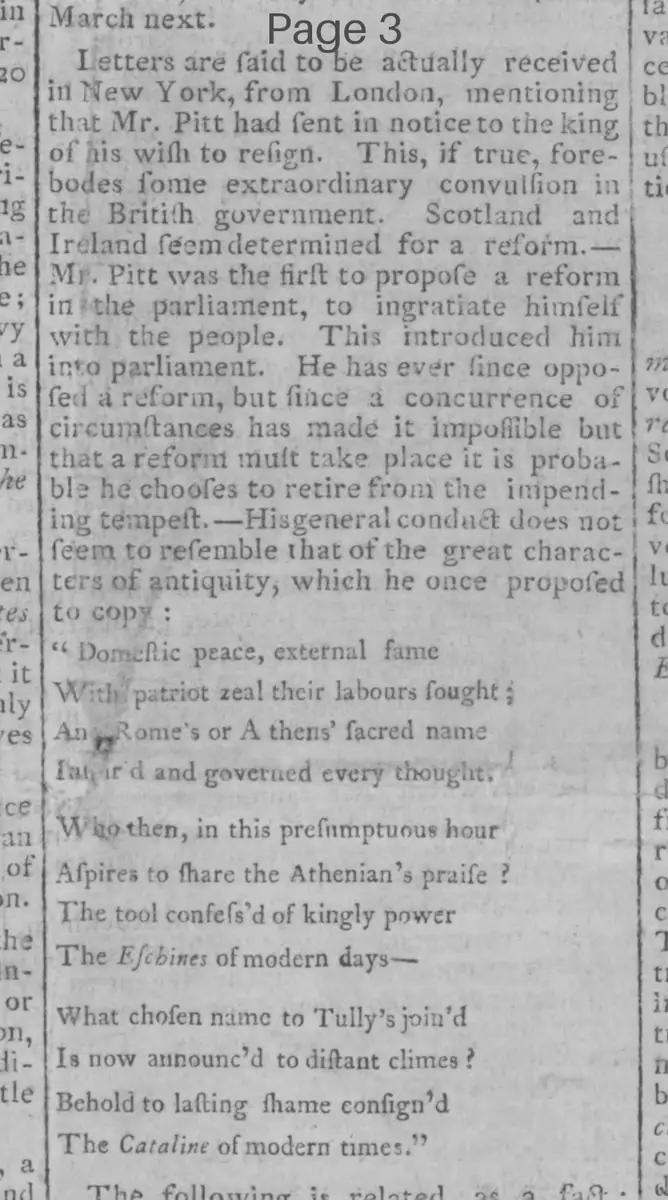
Letters received in New York from London indicate Mr. Pitt has notified the king of his intent to resign, suggesting major upheaval in the British government. Scotland and Ireland push for reform, which Pitt once supported but now opposes amid inevitable changes.
Clipping
OCR Quality
Full Text
Mr. Pitt was the first to propose a reform in the parliament, to ingratiate himself with the people. This introduced him into parliament. He has ever since opposed a reform, but since a concurrence of circumstances has made it impossible but that a reform must take place it is probable he chooses to retire from the impending tempest.—His general conduct does not seem to resemble that of the great characters of antiquity, which he once proposed to copy :
"Domestic peace, external fame
With patriot zeal their labours ought;
An Rome's or Athens' sacred name
Inspired and governed every thought.
Who then, in this presumptuous hour
Aspires to share the Athenian's praise?
The fool confess'd of kingly power
The Eschines of modern days—
What chosen name to Tully's join'd
Is now announced to distant climes?
Behold to lasting shame consigned
The Cataline of modern times."
What sub-type of article is it?
What keywords are associated?
What entities or persons were involved?
Where did it happen?
Foreign News Details
Primary Location
London
Key Persons
Outcome
mr. pitt's notice of resignation; forebodes convulsion in british government; determination for reform in scotland and ireland
Event Details
Letters from London received in New York mention Mr. Pitt's notice to the king of his wish to resign. This suggests extraordinary convulsion in British government. Scotland and Ireland determined for reform. Pitt first proposed parliamentary reform to gain favor, entered parliament, but opposed it since; now retires amid inevitable reform. His conduct criticized in verse comparing to ancient figures unfavorably.