Thank you for visiting SNEWPapers!
Sign up free
Literary
February 9, 1827
The Litchfield County Post
Litchfield, Litchfield County, Connecticut
What is this article about?
Bonnard, a chronic drunkard, is tricked by sober friends into believing he broke his leg while intoxicated in a wine cellar. They fake the injury with splints, confining him for a month. He vows sobriety, reconciles with his fiancée Laura, marries her, and lives temperately. Years later, he discovers the ruse and thanks them.
Clipping
OCR Quality
95%
Excellent
Full Text
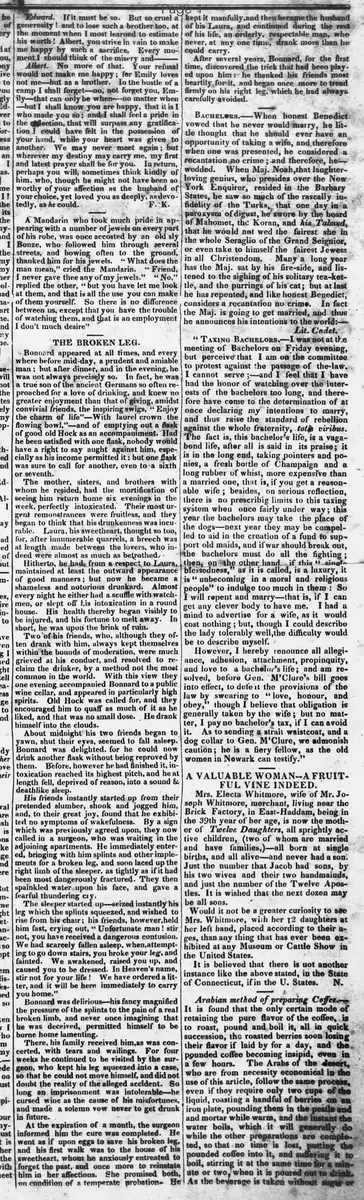
THE BROKEN LEG.
Bonnard appeared at all times, and everywhere before mid-day, a prudent and amiable man; but after dinner, and in the evening, he was not always precisely so. In fact, he was a true son of the ancient Germans so often reproached for a love of drinking, and knew no greater enjoyment than that of giving, amidst convivial friends, the inspiring swigs, "Enjoy the charm of life"—With laurel crown the flowing bowl," and of emptying out a flask of good old Hock as an accompaniment. Had he been satisfied with one flask, nobody would have a right to say aught against him, especially as his income permitted it: but one flask was sure to call for another, even to a sixth or seventh.
The mother, sisters, and brothers with whom he resided, had the mortification of seeing him return home six evenings in the week, perfectly intoxicated. Their most urgent remonstrances were fruitless, and they began to think that his drunkenness was incurable. Laura, his sweetheart, thought so too, for, after innumerable quarrels, a breach was at length made between the lovers, who indeed were almost as much as betrothed—Hitherto, he had, from a respect to Laura, maintained at least the outward appearance of good manners; but now he became a shameless and notorious drunkard. Almost every night he either had a scuffle with watchmen, or slept off his intoxication in a round house. His health thereby began visibly to be injured, and his fortune to melt away. In short, he was upon the brink of ruin.
Two of his friends, who, although they often drank with him, always kept themselves within the bounds of moderation, were much grieved at his conduct, and resolved to reclaim the drinker, by a method not the most common in the world. With this view they one evening accompanied Bonnard to a public wine cellar, and appeared in particularly high spirits. Old Hock was called for, and they encouraged him to quaff as much of it as he liked, and that was no small dose. He drank himself into the clouds.
About midnight his two friends began to yawn, shut their eyes, seemed to fall asleep. Bonnard was delighted, for he could now drink another flask without being reproved by them. Before, however, he had finished it, intoxication reached its highest pitch, and he at length fell, deprived of reason, into a sound and deathlike sleep.
His friends instantly started up from their pretended slumber, shook and jogged him, and, to their great joy, found that he exhibited no symptoms of wakefulness. By a sign which was previously agreed upon, they now called in a surgeon, who was waiting in the adjoining apartments. He immediately entered, bringing with him splints and other implements for a broken leg, and soon laced up the right limb of the sleeper as tightly as if it had been most dangerously fractured. They then sprinkled water upon his face, and gave a fearful thundering cry.
The sleeper started up—seized instantly his leg which the splints squeezed, and wished to rise from his chair: his friends, however, held him fast, crying out, "Unfortunate man! stir not, you have received a dangerous contusion. We had scarcely fallen asleep, when, attempting to go down stairs, you broke your leg, and fainted. We awakened, raised you up, and caused you to be dressed. In Heaven's name, stir not for your life! We have ordered a litter, and it will be here immediately to carry you home."
Bonnard was delirious—his fancy magnified the pressure of the splints to the pain of a real broken limb, and never once imagining that he was deceived, permitted himself to be borne home lamenting.
There, his family received him, as was concerted, with tears and wailings. For four weeks he continued to be visited by the surgeon, who kept his leg squeezed into a case, so that he could not move himself, and did not doubt the reality of the alleged accident. So long an imprisonment was intolerable—he cursed wine as the cause of his misfortunes, and made a solemn vow never to get drunk in future.
At the expiration of a month, the surgeon informed him the cure was completed. He went as if upon eggs to save his broken leg, and his first walk was to the house of his sweetheart, whom he anxiously entreated to forget the past, and once more to reinstate him in her affections. She promised both, on condition of a temperate probation—He kept it manfully, and then became the husband of his Laura, and continued during the rest of his life, an orderly, respectable man, who never, at any one time, drank more than he could carry.
After several years, Bonnard, for the first time, discovered the trick that had been played upon him: he thanked his friends most heartily for it, and began once more to tread firmly on his right leg, which he had always carefully avoided.
Bonnard appeared at all times, and everywhere before mid-day, a prudent and amiable man; but after dinner, and in the evening, he was not always precisely so. In fact, he was a true son of the ancient Germans so often reproached for a love of drinking, and knew no greater enjoyment than that of giving, amidst convivial friends, the inspiring swigs, "Enjoy the charm of life"—With laurel crown the flowing bowl," and of emptying out a flask of good old Hock as an accompaniment. Had he been satisfied with one flask, nobody would have a right to say aught against him, especially as his income permitted it: but one flask was sure to call for another, even to a sixth or seventh.
The mother, sisters, and brothers with whom he resided, had the mortification of seeing him return home six evenings in the week, perfectly intoxicated. Their most urgent remonstrances were fruitless, and they began to think that his drunkenness was incurable. Laura, his sweetheart, thought so too, for, after innumerable quarrels, a breach was at length made between the lovers, who indeed were almost as much as betrothed—Hitherto, he had, from a respect to Laura, maintained at least the outward appearance of good manners; but now he became a shameless and notorious drunkard. Almost every night he either had a scuffle with watchmen, or slept off his intoxication in a round house. His health thereby began visibly to be injured, and his fortune to melt away. In short, he was upon the brink of ruin.
Two of his friends, who, although they often drank with him, always kept themselves within the bounds of moderation, were much grieved at his conduct, and resolved to reclaim the drinker, by a method not the most common in the world. With this view they one evening accompanied Bonnard to a public wine cellar, and appeared in particularly high spirits. Old Hock was called for, and they encouraged him to quaff as much of it as he liked, and that was no small dose. He drank himself into the clouds.
About midnight his two friends began to yawn, shut their eyes, seemed to fall asleep. Bonnard was delighted, for he could now drink another flask without being reproved by them. Before, however, he had finished it, intoxication reached its highest pitch, and he at length fell, deprived of reason, into a sound and deathlike sleep.
His friends instantly started up from their pretended slumber, shook and jogged him, and, to their great joy, found that he exhibited no symptoms of wakefulness. By a sign which was previously agreed upon, they now called in a surgeon, who was waiting in the adjoining apartments. He immediately entered, bringing with him splints and other implements for a broken leg, and soon laced up the right limb of the sleeper as tightly as if it had been most dangerously fractured. They then sprinkled water upon his face, and gave a fearful thundering cry.
The sleeper started up—seized instantly his leg which the splints squeezed, and wished to rise from his chair: his friends, however, held him fast, crying out, "Unfortunate man! stir not, you have received a dangerous contusion. We had scarcely fallen asleep, when, attempting to go down stairs, you broke your leg, and fainted. We awakened, raised you up, and caused you to be dressed. In Heaven's name, stir not for your life! We have ordered a litter, and it will be here immediately to carry you home."
Bonnard was delirious—his fancy magnified the pressure of the splints to the pain of a real broken limb, and never once imagining that he was deceived, permitted himself to be borne home lamenting.
There, his family received him, as was concerted, with tears and wailings. For four weeks he continued to be visited by the surgeon, who kept his leg squeezed into a case, so that he could not move himself, and did not doubt the reality of the alleged accident. So long an imprisonment was intolerable—he cursed wine as the cause of his misfortunes, and made a solemn vow never to get drunk in future.
At the expiration of a month, the surgeon informed him the cure was completed. He went as if upon eggs to save his broken leg, and his first walk was to the house of his sweetheart, whom he anxiously entreated to forget the past, and once more to reinstate him in her affections. She promised both, on condition of a temperate probation—He kept it manfully, and then became the husband of his Laura, and continued during the rest of his life, an orderly, respectable man, who never, at any one time, drank more than he could carry.
After several years, Bonnard, for the first time, discovered the trick that had been played upon him: he thanked his friends most heartily for it, and began once more to tread firmly on his right leg, which he had always carefully avoided.
What sub-type of article is it?
Prose Fiction
Fable
Satire
What themes does it cover?
Temperance
Moral Virtue
Social Manners
What keywords are associated?
Drunkenness
Reformation
Trickery
Moral Tale
Temperance
Sobriety
German Drinking
Literary Details
Title
The Broken Leg.
Key Lines
He Cursed Wine As The Cause Of His Misfortunes, And Made A Solemn Vow Never To Get Drunk In Future.
She Promised Both, On Condition Of A Temperate Probation—He Kept It Manfully,And Then Became The Husband Of His Laura, And Continued During The Rest Of His Life, An Orderly, Respectable Man, Who Never, At Any One Time, Drank More Than He Could Carry.
After Several Years, Bonnard, For The First Time, Discovered The Trick That Had Been Played Upon Him:He Thanked His Friends Most Heartily For It.