Thank you for visiting SNEWPapers!
Sign up free
Domestic News
August 25, 1848
Vermont Phœnix
Brattleboro, Bellows Falls, Ludlow, Windham County, Windsor County, Vermont
What is this article about?
Article advises on preventing loss of animal manure exposed to sun, winds, and rain by sheltering, mixing with soil, or top dressing grass lands after haying. Notes differences in climate between the US and England affecting this practice.
Clipping
OCR Quality
98%
Excellent
Full Text
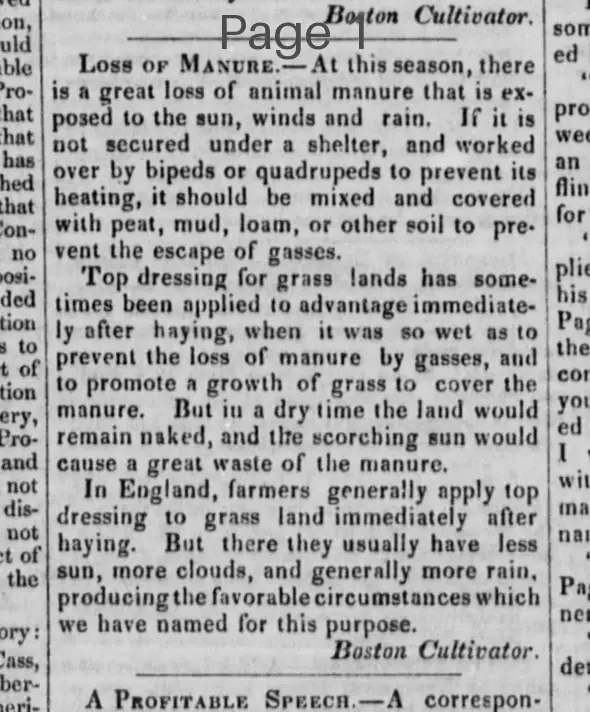
Loss of Manure.—At this season, there is a great loss of animal manure that is exposed to the sun, winds and rain. If it is not secured under a shelter, and worked over by bipeds or quadrupeds to prevent its heating, it should be mixed and covered with peat, mud, loam, or other soil to prevent the escape of gasses.
Top dressing for grass lands has sometimes been applied to advantage immediately after haying, when it was so wet as to prevent the loss of manure by gasses, and to promote a growth of grass to cover the manure. But in a dry time the land would remain naked, and the scorching sun would cause a great waste of the manure.
In England, farmers generally apply top dressing to grass land immediately after haying. But there they usually have less sun, more clouds, and generally more rain, producing the favorable circumstances which we have named for this purpose.
Boston Cultivator.
Top dressing for grass lands has sometimes been applied to advantage immediately after haying, when it was so wet as to prevent the loss of manure by gasses, and to promote a growth of grass to cover the manure. But in a dry time the land would remain naked, and the scorching sun would cause a great waste of the manure.
In England, farmers generally apply top dressing to grass land immediately after haying. But there they usually have less sun, more clouds, and generally more rain, producing the favorable circumstances which we have named for this purpose.
Boston Cultivator.
What sub-type of article is it?
Agriculture
What keywords are associated?
Manure Loss
Animal Manure
Top Dressing
Grass Lands
Agricultural Advice
Domestic News Details
Event Details
Advises securing animal manure under shelter or mixing with soil to prevent loss from exposure; discusses top dressing grass lands after haying, with comparisons to English practices.