Thank you for visiting SNEWPapers!
Sign up free
The Orangeburg News
Orangeburg, Orangeburg County, South Carolina
What is this article about?
The Nashville Gazette reports on the South Carolina Negro Convention, where negro delegates, holding a majority, set their daily pay at eleven dollars and passed resolutions to open state institutions to negro pupils and inmates, and to require equal admission for negroes to public hotels, tables, amusements, and entertainments, with penalties for discrimination.
Clipping
OCR Quality
Full Text
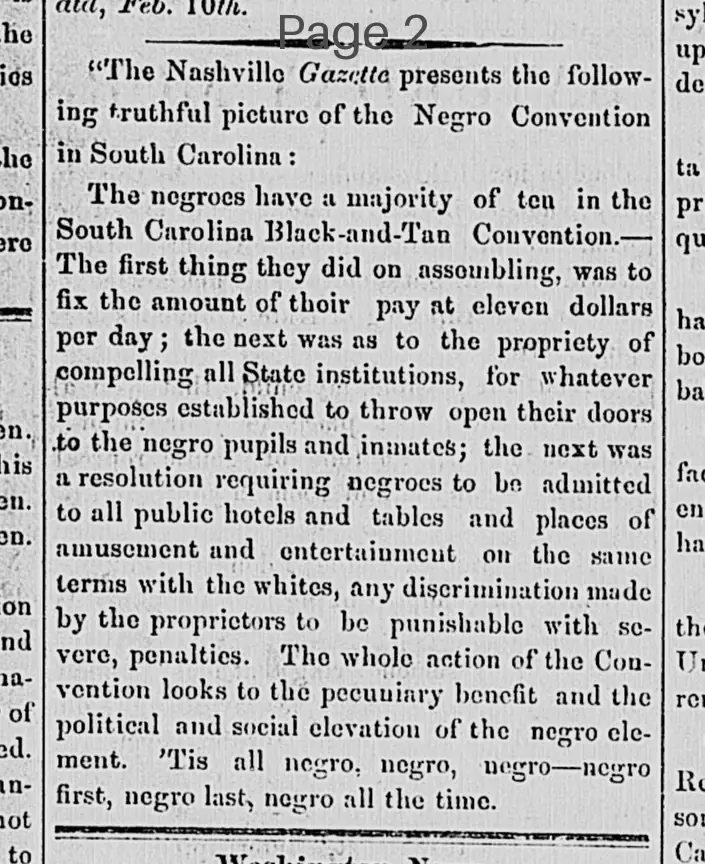
The negroes have a majority of ten in the South Carolina Black-and-Tan Convention. The first thing they did on assembling, was to fix the amount of their pay at eleven dollars per day; the next was as to the propriety of compelling all State institutions, for whatever purposes established to throw open their doors to the negro pupils and inmates; the next was a resolution requiring negroes to be admitted to all public hotels and tables and places of amusement and entertainment on the same terms with the whites, any discrimination made by the proprietors to be punishable with severe penalties. The whole action of the Convention looks to the pecuniary benefit and the political and social elevation of the negro element.
"Tis all negro, negro, negro--negro first, negro last, negro all the time.
What sub-type of article is it?
What keywords are associated?
Where did it happen?
Domestic News Details
Primary Location
South Carolina
Outcome
resolutions passed for negro pay at eleven dollars per day, opening state institutions to negroes, and equal admission to public facilities with penalties for discrimination.
Event Details
Negroes hold a majority of ten in the South Carolina Black-and-Tan Convention. They fixed their pay at eleven dollars per day, resolved to compel state institutions to admit negro pupils and inmates, and required negroes to be admitted to public hotels, tables, amusements, and entertainments on equal terms with whites, punishing proprietors for discrimination. The convention focuses on pecuniary, political, and social elevation of negroes.