Thank you for visiting SNEWPapers!
Sign up free
Story
March 19, 1924
Willmar Tribune
Willmar, Kandiyohi County, Minnesota
What is this article about?
Fieldman Alfred Anderson advises Cooperative Creamery patrons on producing high-quality sweet cream via cleanliness, immediate cooling to 50-55°F, stirring, and daily morning deliveries to maximize butter prices and save costs for dairymen.
Clipping
OCR Quality
95%
Excellent
Full Text
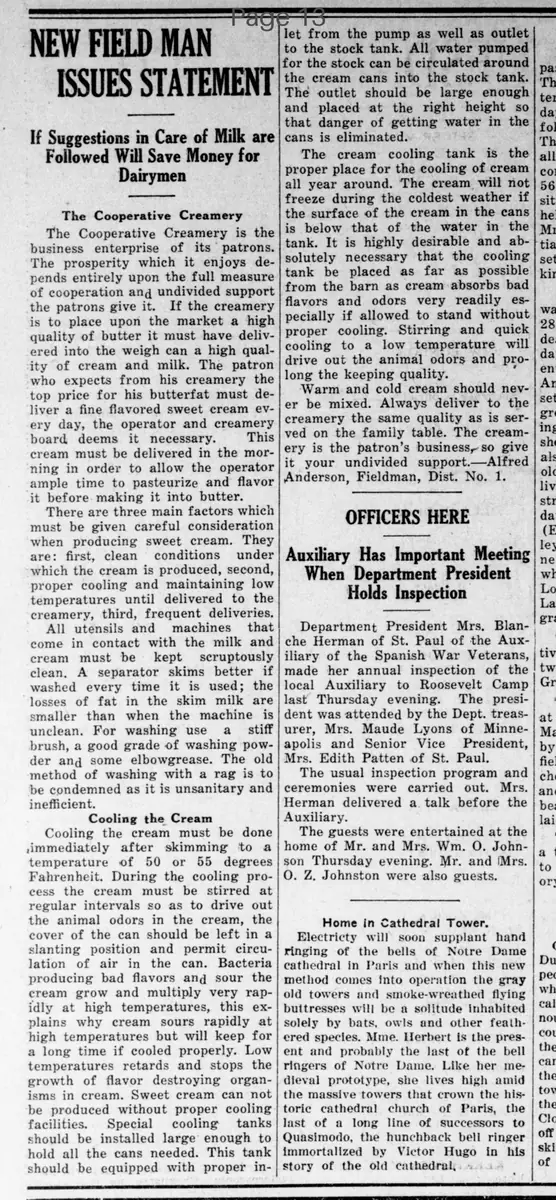
NEW FIELD MAN
ISSUES STATEMENT
If Suggestions in Care of Milk are
Followed Will Save Money for
Dairymen
The Cooperative Creamery
The Cooperative Creamery is the
business enterprise of its patrons.
The prosperity which it enjoys depends entirely upon the full measure
of cooperation and undivided support
the patrons give it. If the creamery
is to place upon the market a high
quality of butter it must have delivered into the weigh can a high quality of cream and milk. The patron
who expects from his creamery the
top price for his butterfat must deliver a fine flavored sweet cream every day, the operator and creamery
board deems it necessary.
This
cream must be delivered in the morning in order to allow the operator
ample time to pasteurize and flavor
it before making it into butter.
There are three main factors which
must be given careful consideration
when producing sweet cream.
They
are: first, clean conditions under
which the cream is produced, second,
proper cooling and maintaining low
temperatures until delivered to the
creamery, third, frequent deliveries.
All utensils and machines that
come in contact with the milk and
cream must be kept scrupulously
clean. A separator skims better if
washed every time it is used; the
losses of fat in the skim milk are
smaller than when the machine is
unclean. For washing use a
stiff
brush, a good grade of washing powder and some elbow grease. The old
method of washing with a rag is to
be condemned as it is unsanitary and
inefficient.
Cooling the Cream
Cooling the cream must be done
immediately after skimming to a
temperature of 50 or 55 degrees
Fahrenheit. During the cooling process the cream must be stirred at
regular intervals so as to drive out
the animal odors in the cream, the
cover of the can should be left in a
slanting position and permit circulation of air in the can. Bacteria
producing bad flavors and sour the
cream grow and multiply very rapidly at high temperatures, this explains why cream sours rapidly at
high temperatures but will keep for
a long time if cooled properly. Low
temperatures retards and stops the
growth of flavor destroying organisms in cream. Sweet cream can not
be produced without proper cooling
facilities.
Special cooling tanks
should be installed large enough to
hold all the cans needed. This tank
should be equipped with proper inlet from the pump as well as outlet
to the stock tank. All water pumped
for the stock can be circulated around
the cream cans into the stock tank.
The outlet should be large enough
and placed at the right height so
that danger of getting water in the
cans is eliminated.
The cream cooling tank is the
proper place for the cooling of cream
all year around. The cream will not
freeze during the coldest weather if
the surface of the cream in the cans
is below that of the water in the
tank. It is highly desirable and absolutely necessary that the cooling
tank be placed as far as possible
from the barn as cream absorbs bad
flavors and odors very readily especially if allowed to stand without
proper cooling. Stirring and quick
cooling to a low temperature will
drive out the animal odors and prolong the keeping quality.
Warm and cold cream should never be mixed. Always deliver to the
creamery the same quality as is served on the family table. The creamery is the patron's business, so give
it your undivided support.--Alfred
Anderson, Fieldman, Dist. No. 1.
ISSUES STATEMENT
If Suggestions in Care of Milk are
Followed Will Save Money for
Dairymen
The Cooperative Creamery
The Cooperative Creamery is the
business enterprise of its patrons.
The prosperity which it enjoys depends entirely upon the full measure
of cooperation and undivided support
the patrons give it. If the creamery
is to place upon the market a high
quality of butter it must have delivered into the weigh can a high quality of cream and milk. The patron
who expects from his creamery the
top price for his butterfat must deliver a fine flavored sweet cream every day, the operator and creamery
board deems it necessary.
This
cream must be delivered in the morning in order to allow the operator
ample time to pasteurize and flavor
it before making it into butter.
There are three main factors which
must be given careful consideration
when producing sweet cream.
They
are: first, clean conditions under
which the cream is produced, second,
proper cooling and maintaining low
temperatures until delivered to the
creamery, third, frequent deliveries.
All utensils and machines that
come in contact with the milk and
cream must be kept scrupulously
clean. A separator skims better if
washed every time it is used; the
losses of fat in the skim milk are
smaller than when the machine is
unclean. For washing use a
stiff
brush, a good grade of washing powder and some elbow grease. The old
method of washing with a rag is to
be condemned as it is unsanitary and
inefficient.
Cooling the Cream
Cooling the cream must be done
immediately after skimming to a
temperature of 50 or 55 degrees
Fahrenheit. During the cooling process the cream must be stirred at
regular intervals so as to drive out
the animal odors in the cream, the
cover of the can should be left in a
slanting position and permit circulation of air in the can. Bacteria
producing bad flavors and sour the
cream grow and multiply very rapidly at high temperatures, this explains why cream sours rapidly at
high temperatures but will keep for
a long time if cooled properly. Low
temperatures retards and stops the
growth of flavor destroying organisms in cream. Sweet cream can not
be produced without proper cooling
facilities.
Special cooling tanks
should be installed large enough to
hold all the cans needed. This tank
should be equipped with proper inlet from the pump as well as outlet
to the stock tank. All water pumped
for the stock can be circulated around
the cream cans into the stock tank.
The outlet should be large enough
and placed at the right height so
that danger of getting water in the
cans is eliminated.
The cream cooling tank is the
proper place for the cooling of cream
all year around. The cream will not
freeze during the coldest weather if
the surface of the cream in the cans
is below that of the water in the
tank. It is highly desirable and absolutely necessary that the cooling
tank be placed as far as possible
from the barn as cream absorbs bad
flavors and odors very readily especially if allowed to stand without
proper cooling. Stirring and quick
cooling to a low temperature will
drive out the animal odors and prolong the keeping quality.
Warm and cold cream should never be mixed. Always deliver to the
creamery the same quality as is served on the family table. The creamery is the patron's business, so give
it your undivided support.--Alfred
Anderson, Fieldman, Dist. No. 1.
What sub-type of article is it?
Agricultural Advice
Instructional Guide
What themes does it cover?
Moral Virtue
What keywords are associated?
Cooperative Creamery
Sweet Cream Production
Cream Cooling
Dairy Hygiene
Butter Quality
What entities or persons were involved?
Alfred Anderson
Story Details
Key Persons
Alfred Anderson
Story Details
Alfred Anderson, Fieldman for Dist. No. 1, explains the importance of cooperation in the Cooperative Creamery and provides detailed instructions on producing high-quality sweet cream through clean conditions, proper cooling to 50-55°F, stirring to remove odors, and frequent morning deliveries to ensure top butterfat prices and savings for dairymen.