Thank you for visiting SNEWPapers!
Sign up free
Editorial
October 13, 1792
Gazette Of The United States
New York, New York County, New York
What is this article about?
An editorial defends the early U.S. federal government and Congress against critics who oppose financial measures like the funding act, excise, and bank laws, arguing that fostering public affection through just governance is preferable to fear, and calling for rational vindication to counter seditious misrepresentations.
Clipping
OCR Quality
98%
Excellent
Full Text
COMMUNICATIONS.
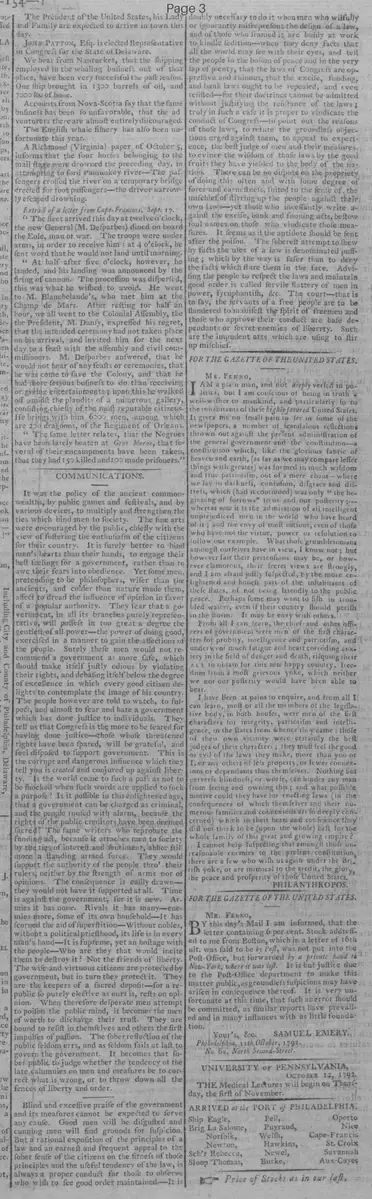
It was the policy of the ancient commonwealths, by public games and festivals, and by various devices, to multiply and strengthen the ties which bind men to society. The fine arts were encouraged by the public, chiefly with the view of fostering the enthusiasm of the citizens for their country. It is surely better to bind men's hearts than their hands, to engage their best feelings for a government, rather than to awe their fears into obedience. Yet some men, pretending to be philosophers, wiser than the ancients, and colder than nature made them, affect to dread the influence of opinion in favor of a popular authority. They fear that a government, in all its branches purely representative, will possess in too great a degree the gentlest of all power—the power of doing good, exercised in a manner to gain the affections of the people. Surely these men would not recommend a government as more safe, which should make itself justly odious by violating their rights, and debasing itself below the degree of excellence in which every good citizen delights to contemplate the image of his country.
The people however are told to watch, to suspect, and almost to fear and hate a government which has done justice to individuals. They tell us that Congress is the more to be feared for having done justice—those whose threatened rights have been preserved, will be grateful, and feel disposed to support government. This is the corrupt and dangerous influence which they tell you is created and conjured up against liberty. Is the world come to such a pass as not to be shocked when such words are applied to such a purpose? Is it possible in this enlightened age, that a government can be charged as criminal, and the people roused with alarm, because the rights of the public creditors have been deemed sacred? The same writers who reprobate the funding act, because it attaches men to society by the ties of interest and sentiment, abhor still more a standing armed force. They would support the authority of the people thro' their rulers, neither by the strength of arms nor of opinions. The consequence is easily drawn—they would not have it supported at all. Time is against the government, for it is new. Armies it has none. Rivals it has many—enemies more, some of its own household—It has scorned the aid of superstition—Without nobles, without a political priesthood, its life is in every man's hand—It is supreme, yet a hostage with the people—Who are they that would incite them to destroy it? Not the friends of liberty.
The wise and virtuous citizens are protected by government, but in turn they protect it. They are the keepers of a sacred deposit—for a republic so purely elective as ours is, rests on opinion. When therefore desperate men attempt to poison the public mind, it becomes the men of worth to discharge their trust. They are bound to resist in themselves and others the first impulses of passion. The sober reflection of the public seldom errs, and as seldom fails at last to govern the government. It becomes that sober public to judge whether the tendency of the late calumnies on men and measures be to correct what is wrong, or to throw down all the fences of liberty and order.
Blind and excessive praise of the government and its measures cannot be expected to serve any cause. Good men will be disgusted and cunning men will find grounds for suspicion.
But a rational exposition of the principles of a law and an earnest and frequent appeal to the sober sense of the citizens on the fitness of those principles and the useful tendency of the law, is always a proper conduct for those to observe who wish to see good order maintained.—It is doubly necessary to do it when men who wilfully or ignorantly misrepresent the design of a law, and of those who framed it are busily at work to kindle sedition—when they deny facts that all the world may see with their eyes, and tell the people in the bosom of peace and in the very lap of plenty, that the laws of Congress are oppressive and ruinous, that the excise, funding, and bank laws ought to be repealed, and even resisted—for their doctrines cannot be admitted without justifying the resistance of the laws; truly in such a case it is proper to vindicate the conduct of Congress—to point out the reasons of those laws, to refute the groundless objections urged against them, to appeal to experience, the best judge of men and their measures. to evince the wisdom of those laws by the good fruits they have yielded to the body of the nation. There can be no dispute on the propriety of doing this often and with such degree of force and earnestness, suited to the sense of, the mischief of stirring up the people against their own laws—yet those who incessantly write against the excise, bank and funding acts, bestow foul names on those who vindicate those measures. It seems as if the antidote should be sent after the poison. The soberest attempt to show by facts the uses of a law is denominated puffing; which by the way is safer than to deny the facts which stare them in the face. Advising the people to respect the laws and maintain good order is called servile flattery of men in power, sycophancy, &c. The court—that is to say, the servants of a free people are to be slandered to manifest the spirit of freemen and those who approve their conduct are base dependents or secret enemies of liberty. Such are the impudent arts which are using to stir up mischief.
It was the policy of the ancient commonwealths, by public games and festivals, and by various devices, to multiply and strengthen the ties which bind men to society. The fine arts were encouraged by the public, chiefly with the view of fostering the enthusiasm of the citizens for their country. It is surely better to bind men's hearts than their hands, to engage their best feelings for a government, rather than to awe their fears into obedience. Yet some men, pretending to be philosophers, wiser than the ancients, and colder than nature made them, affect to dread the influence of opinion in favor of a popular authority. They fear that a government, in all its branches purely representative, will possess in too great a degree the gentlest of all power—the power of doing good, exercised in a manner to gain the affections of the people. Surely these men would not recommend a government as more safe, which should make itself justly odious by violating their rights, and debasing itself below the degree of excellence in which every good citizen delights to contemplate the image of his country.
The people however are told to watch, to suspect, and almost to fear and hate a government which has done justice to individuals. They tell us that Congress is the more to be feared for having done justice—those whose threatened rights have been preserved, will be grateful, and feel disposed to support government. This is the corrupt and dangerous influence which they tell you is created and conjured up against liberty. Is the world come to such a pass as not to be shocked when such words are applied to such a purpose? Is it possible in this enlightened age, that a government can be charged as criminal, and the people roused with alarm, because the rights of the public creditors have been deemed sacred? The same writers who reprobate the funding act, because it attaches men to society by the ties of interest and sentiment, abhor still more a standing armed force. They would support the authority of the people thro' their rulers, neither by the strength of arms nor of opinions. The consequence is easily drawn—they would not have it supported at all. Time is against the government, for it is new. Armies it has none. Rivals it has many—enemies more, some of its own household—It has scorned the aid of superstition—Without nobles, without a political priesthood, its life is in every man's hand—It is supreme, yet a hostage with the people—Who are they that would incite them to destroy it? Not the friends of liberty.
The wise and virtuous citizens are protected by government, but in turn they protect it. They are the keepers of a sacred deposit—for a republic so purely elective as ours is, rests on opinion. When therefore desperate men attempt to poison the public mind, it becomes the men of worth to discharge their trust. They are bound to resist in themselves and others the first impulses of passion. The sober reflection of the public seldom errs, and as seldom fails at last to govern the government. It becomes that sober public to judge whether the tendency of the late calumnies on men and measures be to correct what is wrong, or to throw down all the fences of liberty and order.
Blind and excessive praise of the government and its measures cannot be expected to serve any cause. Good men will be disgusted and cunning men will find grounds for suspicion.
But a rational exposition of the principles of a law and an earnest and frequent appeal to the sober sense of the citizens on the fitness of those principles and the useful tendency of the law, is always a proper conduct for those to observe who wish to see good order maintained.—It is doubly necessary to do it when men who wilfully or ignorantly misrepresent the design of a law, and of those who framed it are busily at work to kindle sedition—when they deny facts that all the world may see with their eyes, and tell the people in the bosom of peace and in the very lap of plenty, that the laws of Congress are oppressive and ruinous, that the excise, funding, and bank laws ought to be repealed, and even resisted—for their doctrines cannot be admitted without justifying the resistance of the laws; truly in such a case it is proper to vindicate the conduct of Congress—to point out the reasons of those laws, to refute the groundless objections urged against them, to appeal to experience, the best judge of men and their measures. to evince the wisdom of those laws by the good fruits they have yielded to the body of the nation. There can be no dispute on the propriety of doing this often and with such degree of force and earnestness, suited to the sense of, the mischief of stirring up the people against their own laws—yet those who incessantly write against the excise, bank and funding acts, bestow foul names on those who vindicate those measures. It seems as if the antidote should be sent after the poison. The soberest attempt to show by facts the uses of a law is denominated puffing; which by the way is safer than to deny the facts which stare them in the face. Advising the people to respect the laws and maintain good order is called servile flattery of men in power, sycophancy, &c. The court—that is to say, the servants of a free people are to be slandered to manifest the spirit of freemen and those who approve their conduct are base dependents or secret enemies of liberty. Such are the impudent arts which are using to stir up mischief.
What sub-type of article is it?
Partisan Politics
Economic Policy
Constitutional
What keywords are associated?
Federal Government
Funding Act
Excise Law
Bank Law
Public Opinion
Representative Authority
Sedition
Liberty
Financial Policy
Congress Defense
What entities or persons were involved?
Congress
Public Creditors
Desperate Men
Wise And Virtuous Citizens
Editorial Details
Primary Topic
Defense Of Federal Government Against Critics Of Financial Laws
Stance / Tone
Strongly Supportive Of Representative Government And Its Measures
Key Figures
Congress
Public Creditors
Desperate Men
Wise And Virtuous Citizens
Key Arguments
Ancient Commonwealths Used Arts To Foster Citizen Enthusiasm For Country
Better To Engage Affections Than Awe Fears
Critics Dread Influence Of Opinion Favoring Popular Authority
Government Safer When Gaining Affections Through Doing Good
People Should Not Fear Government That Does Justice
Funding Act Attaches Men To Society By Interest And Sentiment
Critics Abhor Standing Army And Support Neither By Arms Nor Opinions
Republic Rests On Opinion; Men Of Worth Must Resist Poisoning Public Mind
Rational Exposition Of Laws Needed To Counter Misrepresentations
Vindicate Congress Laws Like Excise, Funding, Bank Against Calls For Repeal And Resistance