Thank you for visiting SNEWPapers!
Sign up free
Literary
December 30, 1837
The Phenix
Bristol, Bristol County, Rhode Island
What is this article about?
A wealthy woman encounters a destitute seamstress begging for work, discovers her dying husband in poverty, provides aid, learns their backstory of lost fortune and illness, takes her home, but the seamstress soon dies, teaching a lesson on kindness to strangers.
Clipping
OCR Quality
95%
Excellent
Full Text
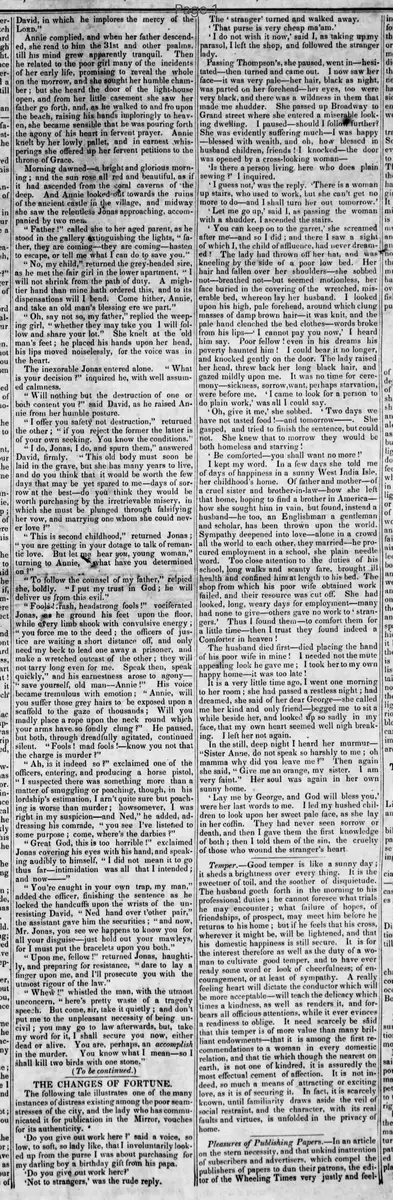
THE CHANGES OF FORTUNE,
The following tale illustrates one of the many instances of distress existing among the poor seamstresses of the city, and the lady who has communicated it for publication in the Mirror, vouches for its authenticity.
'Do you give out work here?' said a voice, so low, so soft, so lady like, that I involuntarily looked up from the purse I was about purchasing for my darling boy a birthday gift from his papa.
'Do you give out work here?'
'Not to strangers,' was the rude reply.
The 'stranger' turned and walked away
'That purse is very cheap ma'am.'
'I do not wish it now,' said I, as taking up my parasol, I left the shop, and followed the stranger lady.
Passing Thompson's, she paused, went in—hesitated—then turned and came out. I now saw her face—it was very pale—her hair, black as night, was parted on her forehead—her eyes, too were very black, and there was a wildness in them that made me shudder. She passed up Broadway to Grand street where she entered a miserable looking dwelling. I paused—should I follow further?
She was evidently suffering much—I was happy—blessed with wealth, and oh, how blessed in husband children, friends! I knocked—the door was opened by a cross-looking woman—
'Is there a person living here who does plain sewing?' I inquired.
'I guess not,' was the reply. 'There is a woman up stairs, who used to work, but she can't get no more to do—and I shall turn her out tomorrow.'
'Let me go up,' said I, as passing the woman with a shudder, I ascended the stairs.
'You can keep on to the garret,' she screamed after me and so I did; and there I saw a sight of which I, the child of affluence, had never dreamed! The lady had thrown off her hat, and was kneeling by the side of a poor low bed. Her hair had fallen over her shoulders—she sobbed not—breathed not—but seemed motionless, her face buried in the covering of the wretched, miserable bed, whereon lay her husband. I looked upon his high, pale forehead, around which clung masses of damp brown hair—it was knit, and the pale hand clenched the bed clothes—words broke from his lips—'I cannot pay you now,' I heard him say. Poor fellow! even in his dreams his poverty haunted him! I could bear it no longer, and knocked gently on the door. The lady raised her head, threw back her long black hair, and gazed mildly upon me. It was no time for ceremony—sickness, sorrow, want, perhaps starvation, were before me. I came to look for a person to do plain work,' was all I could say.
'Oh, give it me,' she sobbed. 'Two days we have not tasted food! and tomorrow—.'
She gasped, and tried to finish the sentence, but could not. She knew that tomorrow they would be both homeless and starving!
'Be comforted you shall want no more!'
I kept my word. In a few days she told me of days of happiness in a sunny West India Isle, her childhood's home. Of father and mother—of a cruel sister and brother-in-law—how she left that home, hoping to find a brother in America—how she sought him in vain, but found, instead a husband—he too, an Englishman a gentleman and scholar, has been thrown upon the world.
Sympathy deepened into love—alone in a crowd all the world to each other. they married—he procured employment in a school, she plain needle work. Too close attention to the duties of his school, long walks and scanty fare, brought ill health and confined him at length to his bed. The shop from which his poor wife obtained work failed, and their resource was cut off. She had looked, long, weary days for employment many had none to give—others gave no work to strangers.' Thus I found them—to comfort them for a little time—then I trust they found indeed a Comforter in heaven!
The husband died first died placing the hand of his poor wife in mine! I needed not the mute appealing look he gave me; I took her to my own happy home—it was too late!
It is a very little time ago, I went one morning to her room; she had passed a restless night; had dreamed, she said of her dear George—she called me her kind and only friend—begged me to sit a while beside her, and looked up so sadly in my face, that my own heart seemed well nigh breaking. I left her not again.
In the still, deep night I heard her murmur—
"Sister Anne, do not speak so harshly to me; oh mamma why did you leave me?" Then again she said, "Give me an orange, my sister. I am very faint." Her soul was again in her own sunny home.
"Lay me by George, and God will bless you,"
were her last words to me. I led my hushed children to look upon her sweet pale face, as she lay in her coffin. They had never seen sorrow or death, and then I gave them the first knowledge of both; then I told them of the sin, the cruelty of those who wound the stranger's heart.
The following tale illustrates one of the many instances of distress existing among the poor seamstresses of the city, and the lady who has communicated it for publication in the Mirror, vouches for its authenticity.
'Do you give out work here?' said a voice, so low, so soft, so lady like, that I involuntarily looked up from the purse I was about purchasing for my darling boy a birthday gift from his papa.
'Do you give out work here?'
'Not to strangers,' was the rude reply.
The 'stranger' turned and walked away
'That purse is very cheap ma'am.'
'I do not wish it now,' said I, as taking up my parasol, I left the shop, and followed the stranger lady.
Passing Thompson's, she paused, went in—hesitated—then turned and came out. I now saw her face—it was very pale—her hair, black as night, was parted on her forehead—her eyes, too were very black, and there was a wildness in them that made me shudder. She passed up Broadway to Grand street where she entered a miserable looking dwelling. I paused—should I follow further?
She was evidently suffering much—I was happy—blessed with wealth, and oh, how blessed in husband children, friends! I knocked—the door was opened by a cross-looking woman—
'Is there a person living here who does plain sewing?' I inquired.
'I guess not,' was the reply. 'There is a woman up stairs, who used to work, but she can't get no more to do—and I shall turn her out tomorrow.'
'Let me go up,' said I, as passing the woman with a shudder, I ascended the stairs.
'You can keep on to the garret,' she screamed after me and so I did; and there I saw a sight of which I, the child of affluence, had never dreamed! The lady had thrown off her hat, and was kneeling by the side of a poor low bed. Her hair had fallen over her shoulders—she sobbed not—breathed not—but seemed motionless, her face buried in the covering of the wretched, miserable bed, whereon lay her husband. I looked upon his high, pale forehead, around which clung masses of damp brown hair—it was knit, and the pale hand clenched the bed clothes—words broke from his lips—'I cannot pay you now,' I heard him say. Poor fellow! even in his dreams his poverty haunted him! I could bear it no longer, and knocked gently on the door. The lady raised her head, threw back her long black hair, and gazed mildly upon me. It was no time for ceremony—sickness, sorrow, want, perhaps starvation, were before me. I came to look for a person to do plain work,' was all I could say.
'Oh, give it me,' she sobbed. 'Two days we have not tasted food! and tomorrow—.'
She gasped, and tried to finish the sentence, but could not. She knew that tomorrow they would be both homeless and starving!
'Be comforted you shall want no more!'
I kept my word. In a few days she told me of days of happiness in a sunny West India Isle, her childhood's home. Of father and mother—of a cruel sister and brother-in-law—how she left that home, hoping to find a brother in America—how she sought him in vain, but found, instead a husband—he too, an Englishman a gentleman and scholar, has been thrown upon the world.
Sympathy deepened into love—alone in a crowd all the world to each other. they married—he procured employment in a school, she plain needle work. Too close attention to the duties of his school, long walks and scanty fare, brought ill health and confined him at length to his bed. The shop from which his poor wife obtained work failed, and their resource was cut off. She had looked, long, weary days for employment many had none to give—others gave no work to strangers.' Thus I found them—to comfort them for a little time—then I trust they found indeed a Comforter in heaven!
The husband died first died placing the hand of his poor wife in mine! I needed not the mute appealing look he gave me; I took her to my own happy home—it was too late!
It is a very little time ago, I went one morning to her room; she had passed a restless night; had dreamed, she said of her dear George—she called me her kind and only friend—begged me to sit a while beside her, and looked up so sadly in my face, that my own heart seemed well nigh breaking. I left her not again.
In the still, deep night I heard her murmur—
"Sister Anne, do not speak so harshly to me; oh mamma why did you leave me?" Then again she said, "Give me an orange, my sister. I am very faint." Her soul was again in her own sunny home.
"Lay me by George, and God will bless you,"
were her last words to me. I led my hushed children to look upon her sweet pale face, as she lay in her coffin. They had never seen sorrow or death, and then I gave them the first knowledge of both; then I told them of the sin, the cruelty of those who wound the stranger's heart.
What sub-type of article is it?
Prose Fiction
What themes does it cover?
Social Manners
Death Mortality
Moral Virtue
What keywords are associated?
Poor Seamstresses
Changes Of Fortune
Poverty
Kindness
Death
Strangers
Cruelty
Literary Details
Title
The Changes Of Fortune
Subject
Distress Among The Poor Seamstresses Of The City
Key Lines
'Do You Give Out Work Here?' Said A Voice, So Low, So Soft, So Lady Like, That I Involuntarily Looked Up From The Purse I Was About Purchasing For My Darling Boy A Birthday Gift From His Papa.
'Oh, Give It Me,' She Sobbed. 'Two Days We Have Not Tasted Food! And Tomorrow—.'
Sympathy Deepened Into Love—Alone In A Crowd All The World To Each Other.
The Husband Died First Died Placing The Hand Of His Poor Wife In Mine!
Then I Told Them Of The Sin, The Cruelty Of Those Who Wound The Stranger's Heart.