Thank you for visiting SNEWPapers!
Sign up free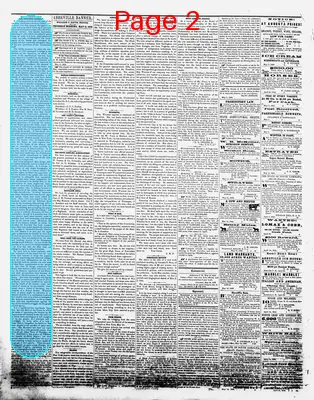
Editorial
May 15, 1856
The Abbeville Banner
Abbeville, Abbeville County, South Carolina
What is this article about?
Editorial from Carolina Times critiques the popular election of presidential electors as promoting federal consolidation at the expense of state sovereignty, praising South Carolina's legislative method and warning of party corruption in other states.
Clipping

OCR Quality
95%
Excellent
Full Text
From the Carolina Times.
THE ELECTORAL QUESTION.
If a thinking man should ask himself the question, what operation of our federal government had done most to disorganize the great system to which it belonged, he could not avoid the conclusion that it was the Presidential election. The intense excitement attending it—and which the splendid party issues at stake in it have made perpetual—has not only overshadowed the sovereignty of the States and corrupted the people, but has practically abrogated many of the best provisions of the Constitution itself.
The feeble measures by which the convention of 1787 attempted to hedge in the election of the Executive, of which the mode of his appointment was one, have long since been annulled by the system of party caucuses. The several electoral colleges, having been effectually removed, by being pledged beforehand, this election is now, to all intents, in all the States but our own, made directly by the people at large. In a federal government like ours, where the natural tendency of power is to fall into the hands that administer it, the friends of consolidation could have found no ally so efficacious as this great central election, as conducted in all these States.
The value of popular excitement, as an element of strength, was fully foreseen in the convention, by the party which favored a strong government, and was relied on by them as a hopeful means of future success, when they were defeated in the framing of the Constitution. By the design of that instrument, the sovereignty of the States is acknowledged in a two fold character in the federal legislature; one representing it in its equal, other in its popular form.
It was a misfortune that the popular energies of the one were not more restrained by wholesome checks, that they should not overrun the conservative elements of the other; for it has been by taking advantage of this oversight, that the consolidationists have been enabled to achieve their grand hypocrisy—of arraying the masses in the States against the States, under the pretence of bestowing upon them their own rights, under the cry for popular rights, of enslaving the people. It has always been the settled purpose of leading minds among the Federalists, or Consolidationists, to promote general elections among the people; with the double view to transfer power from the States in their organic character, to the hands of the masses, and then to centralize it, when possible, by the sure means of federal politics. It is palpable, that for this purpose, no means has been more useful than the Presidential election, which subordinates to itself all the machinery, and converges all the aims of party to a single end.
And it has prospered their design that all parties habitually, and by a kind of necessity, court the people. It is always in the power of any single demagogue of address, by dint of a constant clamor for popular rights, to silence the opposition of the true friends of the people, who may be compelled to relinquish their opposition, even against their better judgment; for it is too obvious to be denied, that, in the subserviency of these degenerate times, they will never fail to be deserted by that larger number, who, in looking forward to a long service of the public, begin in time to take the safe side. In many instances, too, these elections have been forced upon the people, when they never asked for them. They have been urged by the determined leader and his followers (and even by his trimming, time-serving adversary—each party endeavoring to outdo the other in deluding and corrupting the populace,) to receive the proffered privilege; and to accept it without discussion, for fear of excitement; though it is manifest that the very election itself, when secured, must be attended both with excitement and corruption for all time to come. Moreover, the lips of the freeman himself, on whom the uncalled for franchise has been pressed, have often been sealed against the assertion of his right to choose for himself, whether he will receive it or not; and his equal right to determine—for himself in what way he shall be governed; and this has not unfrequently been accomplished by the stale and insulting inquiry of the demagogue and his stupid follower, "do you doubt the capacity of the people for self-government?"—as if, in the very act, they were not stifling his right to self-government.
By such arts as these—perhaps, without variation—all the States but our own have been induced to adopt the popular mode of appointing their electoral colleges; and, by a sure consequence—as one such election leads to another—to refer most of their State appointments to the people. In this state of things, experience has shown that federal politics have soon over run the domestic legislation of the States; and their governments have become degraded to the dimensions of a mere local police. And thus, the strength and dignity best fitted to secure their balance of power as States, have been sacrificed by removal into the hands of the masses; every individual of whom, is, by the transfer, transmuted from a citizen of the State, into a member of a federal faction. Whatever kind of policy might be allowable in an isolated republic, in a confederacy it should be a maxim with every citizen to strengthen the separate communities, so far as consistent with true republicanism, against the day of the inevitable struggle with the great central agency.
It is a significant fact, that South Carolina, the only State in the Union in which the mode of appointing the electors by the Legislature still obtains, is also the only one in which State sovereignty is well recognized by the people, as a principle and a sentiment. In every other, it is only a loose—notion, altogether too feeble to lead their people to the sacrifice of party trammels. The Southern sun does not warm the veins of a more generous people than those of our sister State of Georgia; the Old Dominion is the mother of Jefferson, the apostle of State Rights; yet their solemn assemblies, called under the spur of their burning wrongs, no longer speak the language of their people. When the great Presidential struggle comes, Georgia platforms and Virginia resolutions all melt away demagogue leaders uplift the party banners: rank and file fall into line; and are marshalled into one or other of the great national camps which hold sway over the Union.
We deem it unnecessary to enlarge upon these points; and that we have further contented ourselves with a brief argument, upon the danger and tyranny of the popular mode of election.
THE ELECTORAL QUESTION.
If a thinking man should ask himself the question, what operation of our federal government had done most to disorganize the great system to which it belonged, he could not avoid the conclusion that it was the Presidential election. The intense excitement attending it—and which the splendid party issues at stake in it have made perpetual—has not only overshadowed the sovereignty of the States and corrupted the people, but has practically abrogated many of the best provisions of the Constitution itself.
The feeble measures by which the convention of 1787 attempted to hedge in the election of the Executive, of which the mode of his appointment was one, have long since been annulled by the system of party caucuses. The several electoral colleges, having been effectually removed, by being pledged beforehand, this election is now, to all intents, in all the States but our own, made directly by the people at large. In a federal government like ours, where the natural tendency of power is to fall into the hands that administer it, the friends of consolidation could have found no ally so efficacious as this great central election, as conducted in all these States.
The value of popular excitement, as an element of strength, was fully foreseen in the convention, by the party which favored a strong government, and was relied on by them as a hopeful means of future success, when they were defeated in the framing of the Constitution. By the design of that instrument, the sovereignty of the States is acknowledged in a two fold character in the federal legislature; one representing it in its equal, other in its popular form.
It was a misfortune that the popular energies of the one were not more restrained by wholesome checks, that they should not overrun the conservative elements of the other; for it has been by taking advantage of this oversight, that the consolidationists have been enabled to achieve their grand hypocrisy—of arraying the masses in the States against the States, under the pretence of bestowing upon them their own rights, under the cry for popular rights, of enslaving the people. It has always been the settled purpose of leading minds among the Federalists, or Consolidationists, to promote general elections among the people; with the double view to transfer power from the States in their organic character, to the hands of the masses, and then to centralize it, when possible, by the sure means of federal politics. It is palpable, that for this purpose, no means has been more useful than the Presidential election, which subordinates to itself all the machinery, and converges all the aims of party to a single end.
And it has prospered their design that all parties habitually, and by a kind of necessity, court the people. It is always in the power of any single demagogue of address, by dint of a constant clamor for popular rights, to silence the opposition of the true friends of the people, who may be compelled to relinquish their opposition, even against their better judgment; for it is too obvious to be denied, that, in the subserviency of these degenerate times, they will never fail to be deserted by that larger number, who, in looking forward to a long service of the public, begin in time to take the safe side. In many instances, too, these elections have been forced upon the people, when they never asked for them. They have been urged by the determined leader and his followers (and even by his trimming, time-serving adversary—each party endeavoring to outdo the other in deluding and corrupting the populace,) to receive the proffered privilege; and to accept it without discussion, for fear of excitement; though it is manifest that the very election itself, when secured, must be attended both with excitement and corruption for all time to come. Moreover, the lips of the freeman himself, on whom the uncalled for franchise has been pressed, have often been sealed against the assertion of his right to choose for himself, whether he will receive it or not; and his equal right to determine—for himself in what way he shall be governed; and this has not unfrequently been accomplished by the stale and insulting inquiry of the demagogue and his stupid follower, "do you doubt the capacity of the people for self-government?"—as if, in the very act, they were not stifling his right to self-government.
By such arts as these—perhaps, without variation—all the States but our own have been induced to adopt the popular mode of appointing their electoral colleges; and, by a sure consequence—as one such election leads to another—to refer most of their State appointments to the people. In this state of things, experience has shown that federal politics have soon over run the domestic legislation of the States; and their governments have become degraded to the dimensions of a mere local police. And thus, the strength and dignity best fitted to secure their balance of power as States, have been sacrificed by removal into the hands of the masses; every individual of whom, is, by the transfer, transmuted from a citizen of the State, into a member of a federal faction. Whatever kind of policy might be allowable in an isolated republic, in a confederacy it should be a maxim with every citizen to strengthen the separate communities, so far as consistent with true republicanism, against the day of the inevitable struggle with the great central agency.
It is a significant fact, that South Carolina, the only State in the Union in which the mode of appointing the electors by the Legislature still obtains, is also the only one in which State sovereignty is well recognized by the people, as a principle and a sentiment. In every other, it is only a loose—notion, altogether too feeble to lead their people to the sacrifice of party trammels. The Southern sun does not warm the veins of a more generous people than those of our sister State of Georgia; the Old Dominion is the mother of Jefferson, the apostle of State Rights; yet their solemn assemblies, called under the spur of their burning wrongs, no longer speak the language of their people. When the great Presidential struggle comes, Georgia platforms and Virginia resolutions all melt away demagogue leaders uplift the party banners: rank and file fall into line; and are marshalled into one or other of the great national camps which hold sway over the Union.
We deem it unnecessary to enlarge upon these points; and that we have further contented ourselves with a brief argument, upon the danger and tyranny of the popular mode of election.
What sub-type of article is it?
Constitutional
Partisan Politics
What keywords are associated?
Presidential Election
State Sovereignty
Consolidation
Electoral Colleges
Popular Vote
Federalism
Party Caucuses
What entities or persons were involved?
Federalists
Consolidationists
South Carolina
Georgia
Virginia
Jefferson
Editorial Details
Primary Topic
Critique Of Popular Presidential Elections And Advocacy For Legislative Appointment To Preserve State Sovereignty
Stance / Tone
Critical Of Consolidation And Popular Elections, Supportive Of State Sovereignty
Key Figures
Federalists
Consolidationists
South Carolina
Georgia
Virginia
Jefferson
Key Arguments
Presidential Election Has Disorganized Federal System And Overshadowed State Sovereignty
Party Caucuses Have Annulled Original Constitutional Provisions For Electoral Colleges
Popular Elections Transfer Power From States To Masses, Aiding Consolidation
Consolidationists Use Popular Excitement To Array Masses Against States
All States Except South Carolina Have Adopted Popular Mode, Leading To Federal Politics Overriding State Legislation
South Carolina's Legislative Appointment Preserves State Sovereignty Recognition