Thank you for visiting SNEWPapers!
Sign up free
Nashville Union And American
Nashville, Davidson County, Tennessee
What is this article about?
London report details exorbitant costs of buying British cavalry commissions, from £840 for cornetcy to £12,000 for command, making it for the wealthy. Notes low returns, high living expenses, easy duties, yet cavalry's strong performance in past year.
Clipping
OCR Quality
Full Text
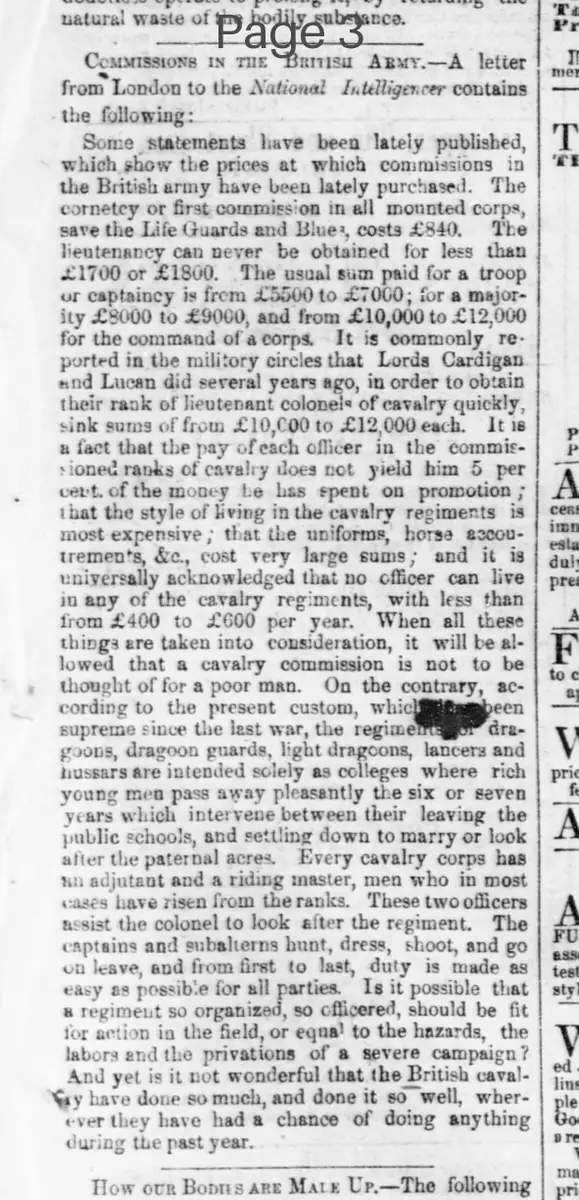
Some statements have been lately published, which show the prices at which commissions in the British army have been lately purchased. The cornetcy or first commission in all mounted corps, save the Life Guards and Blues, costs £840. The lieutenancy can never be obtained for less than £1700 or £1800. The usual sum paid for a troop or captaincy is from £5500 to £7000; for a majority £8000 to £9000, and from £10,000 to £12,000 for the command of a corps. It is commonly reported in the military circles that Lords Cardigan and Lucan did several years ago, in order to obtain their rank of lieutenant colonels of cavalry quickly, sink sums of from £10,000 to £12,000 each. It is a fact that the pay of each officer in the commissioned ranks of cavalry does not yield him 5 per cent. of the money he has spent on promotion; that the style of living in the cavalry regiments is most expensive; that the uniforms, horse accoutrements, &c., cost very large sums; and it is universally acknowledged that no officer can live in any of the cavalry regiments, with less than from £400 to £600 per year. When all these things are taken into consideration, it will be allowed that a cavalry commission is not to be thought of for a poor man. On the contrary, according to the present custom, which has been supreme since the last war, the regiments or dragoons, dragoon guards, light dragoons, lancers and hussars are intended solely as colleges where rich young men pass away pleasantly the six or seven years which intervene between their leaving the public schools, and settling down to marry or look after the paternal acres. Every cavalry corps has an adjutant and a riding master, men who in most cases have risen from the ranks. These two officers assist the colonel to look after the regiment. The captains and subalterns hunt, dress, shoot, and go on leave, and from first to last, duty is made as easy as possible for all parties. Is it possible that a regiment so organized, so officered, should be fit for action in the field, or equal to the hazards, the labors and the privations of a severe campaign? And yet is it not wonderful that the British cavalry have done so much, and done it so well, wherever they have had a chance of doing anything during the past year.
What sub-type of article is it?
What keywords are associated?
What entities or persons were involved?
Where did it happen?
Foreign News Details
Primary Location
London
Key Persons
Outcome
british cavalry have done much and well in the past year despite organizational issues
Event Details
Statements show prices for commissions in British army: cornetcy £840, lieutenancy £1700-£1800, captaincy £5500-£7000, majority £8000-£9000, colonel £10000-£12000. Lords Cardigan and Lucan reportedly paid £10000-£12000 each for lieutenant colonel ranks. Pay yields less than 5% return; living costs £400-£600 yearly. Cavalry regiments serve as colleges for rich young men; duty is easy. Questions fitness for severe campaigns.