Thank you for visiting SNEWPapers!
Sign up free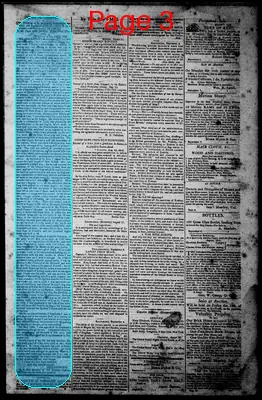
Literary
September 7, 1810
Norfolk Gazette And Publick Ledger
Norfolk, Virginia
What is this article about?
Lord Collingwood's autobiographical letter to Mr. Joyce Gold recounts his naval career starting in 1770, including service under admirals, friendship with Nelson, expeditions to Spanish Main and Nicaragua, shipwrecks, battles like Cape St. Vincent, and blockade duties, emphasizing faithful service to Britain despite personal sacrifices.
Clipping

OCR Quality
95%
Excellent
Full Text
LORD COLLINGWOOD
The following is an interesting biographical memoir, and was furnished by his lordship in compliance with the wishes of the publick.
To Mr. Joyce Gold, publisher of the Naval Chronicle.
On board Queen, at Sea, Jan. 7, 1806
Sir,
You have really made a request to me, that notwithstanding I have every desire to comply with your wish, I find a great difficulty in, that is, in writing anything relating to myself, that can be very interesting or entertaining to the publick:-- my life has been a continued service at sea, but unmarked by any of those extraordinary events, or brilliant scenes, which hold men up to particular attention, and distinguish them from those officers who are zealous and anxious for the public service.
I went into the navy at a very early period of my life, in the year 1770, in the Shannon, under the protection and care of a kind friend and relation, the late admiral Bladen Capel, to whose regard for me, and the interest he took in whatever related to my improvement in nautical knowledge, I owe great obligations: I served with him many years, and afterwards with admiral Roddam. In 1774, I went to Boston with admiral Graves, and in 1775, was made a lieutenant by him on the day the battle was fought at Bunker's Hill, where I was with a party of seamen, supplying the army with what was necessary to them. In 1776, I went to Jamaica lieutenant of the Hornet sloop, and soon after the Lowestoffe came to the same station, of which lord Nelson was lieutenant; we had been long before in the habits of great friendship, and it happened here that admiral Sir Peter Parker, the commander in chief, being the friend of both, whenever lord Nelson got step in rank, I succeeded him: 1st in the Lowestoffe, and then in the Badger, into which ship I was made a commander in 1779, and afterwards the Hinchinbroke, a 28 gun frigate, which made us both post captains; the Hinchinbroke was in the spring of 1780 employed on an expedition to the Spanish Main, where it was proposed, by the river San Juan, and the lakes Nicaragua and Leon, to pass a navigation of boats into the South Sea. The plan was formed without a sufficient knowledge of the current, which presented difficulties that were not to be surmounted by human skill or perseverance. The river was difficult to proceed on from the rapidity of the current, and the several falls over the rocks, which intercepted the navigation, and the climate was deadly; no constitution could resist its effects. At the port of St. Juan I joined the Hinchinbroke, and succeeded lord Nelson, who was promoted to a larger ship; but he had received the infection of the climate before he went from the port, and had a fever from which he could not recover until he quitted his ship and went to England; my constitution received many attacks, and I survived most of my ship's company, having lost in four months 180 of the 200 which composed it. Mine was not a singular case, all the ships that were as long there suffered in the same degree: the transports' men all died, and some of the ships having none left to take care of them, sunk in the harbor; but transport ships were not wanted, for the troops they brought were no more; they had fallen, not by the hand of an enemy, but sunk under the contagion of the climate. From this scene I was relieved in August 1780, and in December following was appointed to the command of the Pelican, a small frigate of 24 guns. In August the following year, a severe hurricane blew, in which she was wrecked, being cast on the rocks at the Morant Keys, in the middle of a most tremendous night; the next day with great difficulty the ship's company got on shore on rafts, made of the small and broken yards, and on those small sandy keys, with little food and water, we remained ten days, until a boat went to Jamaica, and the Diamond frigate came and took us off.
The ship I next commanded was the Sampson, of 64 guns, which ship at the peace of 1783 being paid off, I was appointed to the Mediator, and went to the West Indies, where, with lord Nelson, who then commanded the Boreas on the same station, I remained until the latter end of 1786. From 1786 to 1790, I was in Northumberland making my acquaintance with my own family, to whom I had hitherto been as it were a stranger. In 1790 an armament being prepared against Spain, I was appointed to the command of the Mermaid, and went to the West Indies with admiral Cornish; but affairs with Spain and Russia being accommodated, and no prospect of having employment at sea again soon, I went into the north, and was married, and thought I was settling myself in great comfort; but I was mistaken; for in eighteen months the French war broke out, and in 1793 I was appointed captain of the Prince, rear admiral Bowyer's flag ship, and served with him until he was wounded in the action of the 1st June, in the Barfleur. After that ship I commanded the Hector and then the Excellent, in which ship I went to the Mediterranean, blockading Toulon; and in this ship I was on the 14th February, 1797, in the action off Cape St. Vincent; in 1799 I was appointed to the rank of rear admiral, and soon after hoisted my flag in the Triumph, in which ship and the Barfleur I served until the end of the war.
On the re-commencement of hostilities I was again employed in the channel fleet, in a variety of ships, by which means I was always in a complete one, without having the inconvenience of quitting my station for the purpose of replenishing.
In May 1805, I was appointed to command a squadron on foreign service. I remained before Cadiz, maintaining the blockade of that port, until lord Nelson superseded me in my command in September last.
In this sketch of my life you may perceive, Sir, how great a part of it has been spent at sea; since the year 1786, I have only been one year at home; to my own children I am scarcely known; yet while I have health and strength to serve my country, I consider that health and strength due to it; and if I serve it successfully, as I have ever done faithfully, my children will not want friends.
I am, Sir, your most obedient,
And very humble servant,
COLLINGWOOD
P.S. Mr. Bowyer, the Historic Gallery. We have my miniature portrait
WANTED
A YOUTH of respectable connexions and of good moral character, to attend: Wholesale and Retail Dry Good Store. Enquire
The following is an interesting biographical memoir, and was furnished by his lordship in compliance with the wishes of the publick.
To Mr. Joyce Gold, publisher of the Naval Chronicle.
On board Queen, at Sea, Jan. 7, 1806
Sir,
You have really made a request to me, that notwithstanding I have every desire to comply with your wish, I find a great difficulty in, that is, in writing anything relating to myself, that can be very interesting or entertaining to the publick:-- my life has been a continued service at sea, but unmarked by any of those extraordinary events, or brilliant scenes, which hold men up to particular attention, and distinguish them from those officers who are zealous and anxious for the public service.
I went into the navy at a very early period of my life, in the year 1770, in the Shannon, under the protection and care of a kind friend and relation, the late admiral Bladen Capel, to whose regard for me, and the interest he took in whatever related to my improvement in nautical knowledge, I owe great obligations: I served with him many years, and afterwards with admiral Roddam. In 1774, I went to Boston with admiral Graves, and in 1775, was made a lieutenant by him on the day the battle was fought at Bunker's Hill, where I was with a party of seamen, supplying the army with what was necessary to them. In 1776, I went to Jamaica lieutenant of the Hornet sloop, and soon after the Lowestoffe came to the same station, of which lord Nelson was lieutenant; we had been long before in the habits of great friendship, and it happened here that admiral Sir Peter Parker, the commander in chief, being the friend of both, whenever lord Nelson got step in rank, I succeeded him: 1st in the Lowestoffe, and then in the Badger, into which ship I was made a commander in 1779, and afterwards the Hinchinbroke, a 28 gun frigate, which made us both post captains; the Hinchinbroke was in the spring of 1780 employed on an expedition to the Spanish Main, where it was proposed, by the river San Juan, and the lakes Nicaragua and Leon, to pass a navigation of boats into the South Sea. The plan was formed without a sufficient knowledge of the current, which presented difficulties that were not to be surmounted by human skill or perseverance. The river was difficult to proceed on from the rapidity of the current, and the several falls over the rocks, which intercepted the navigation, and the climate was deadly; no constitution could resist its effects. At the port of St. Juan I joined the Hinchinbroke, and succeeded lord Nelson, who was promoted to a larger ship; but he had received the infection of the climate before he went from the port, and had a fever from which he could not recover until he quitted his ship and went to England; my constitution received many attacks, and I survived most of my ship's company, having lost in four months 180 of the 200 which composed it. Mine was not a singular case, all the ships that were as long there suffered in the same degree: the transports' men all died, and some of the ships having none left to take care of them, sunk in the harbor; but transport ships were not wanted, for the troops they brought were no more; they had fallen, not by the hand of an enemy, but sunk under the contagion of the climate. From this scene I was relieved in August 1780, and in December following was appointed to the command of the Pelican, a small frigate of 24 guns. In August the following year, a severe hurricane blew, in which she was wrecked, being cast on the rocks at the Morant Keys, in the middle of a most tremendous night; the next day with great difficulty the ship's company got on shore on rafts, made of the small and broken yards, and on those small sandy keys, with little food and water, we remained ten days, until a boat went to Jamaica, and the Diamond frigate came and took us off.
The ship I next commanded was the Sampson, of 64 guns, which ship at the peace of 1783 being paid off, I was appointed to the Mediator, and went to the West Indies, where, with lord Nelson, who then commanded the Boreas on the same station, I remained until the latter end of 1786. From 1786 to 1790, I was in Northumberland making my acquaintance with my own family, to whom I had hitherto been as it were a stranger. In 1790 an armament being prepared against Spain, I was appointed to the command of the Mermaid, and went to the West Indies with admiral Cornish; but affairs with Spain and Russia being accommodated, and no prospect of having employment at sea again soon, I went into the north, and was married, and thought I was settling myself in great comfort; but I was mistaken; for in eighteen months the French war broke out, and in 1793 I was appointed captain of the Prince, rear admiral Bowyer's flag ship, and served with him until he was wounded in the action of the 1st June, in the Barfleur. After that ship I commanded the Hector and then the Excellent, in which ship I went to the Mediterranean, blockading Toulon; and in this ship I was on the 14th February, 1797, in the action off Cape St. Vincent; in 1799 I was appointed to the rank of rear admiral, and soon after hoisted my flag in the Triumph, in which ship and the Barfleur I served until the end of the war.
On the re-commencement of hostilities I was again employed in the channel fleet, in a variety of ships, by which means I was always in a complete one, without having the inconvenience of quitting my station for the purpose of replenishing.
In May 1805, I was appointed to command a squadron on foreign service. I remained before Cadiz, maintaining the blockade of that port, until lord Nelson superseded me in my command in September last.
In this sketch of my life you may perceive, Sir, how great a part of it has been spent at sea; since the year 1786, I have only been one year at home; to my own children I am scarcely known; yet while I have health and strength to serve my country, I consider that health and strength due to it; and if I serve it successfully, as I have ever done faithfully, my children will not want friends.
I am, Sir, your most obedient,
And very humble servant,
COLLINGWOOD
P.S. Mr. Bowyer, the Historic Gallery. We have my miniature portrait
WANTED
A YOUTH of respectable connexions and of good moral character, to attend: Wholesale and Retail Dry Good Store. Enquire
What sub-type of article is it?
Epistolary
Essay
What themes does it cover?
Patriotism
War Peace
What keywords are associated?
Naval Career
Lord Nelson
Cape St Vincent
Spanish Main Expedition
Biographical Memoir
British Navy
Patriotism
What entities or persons were involved?
Lord Collingwood
Literary Details
Author
Lord Collingwood
Subject
Biographical Memoir In Response To Public Interest
Form / Style
Autobiographical Letter In Prose
Key Lines
My Life Has Been A Continued Service At Sea, But Unmarked By Any Of Those Extraordinary Events, Or Brilliant Scenes, Which Hold Men Up To Particular Attention
We Had Been Long Before In The Habits Of Great Friendship
Yet While I Have Health And Strength To Serve My Country, I Consider That Health And Strength Due To It; And If I Serve It Successfully, As I Have Ever Done Faithfully, My Children Will Not Want Friends.