Thank you for visiting SNEWPapers!
Sign up free
Literary
July 18, 1833
Herald Of The Times
Newport, Newport County, Rhode Island
What is this article about?
Extract from Rev. Robert Ashland's sermon on the Sabbath, advocating its observance as a time for meditation and spiritual reflection, resisting worldly intrusions, and emphasizing its role in pious lives as a 'Truce of God.' References Genesis 22:5.
Clipping
OCR Quality
98%
Excellent
Full Text
Extract from a volume of practical Sermons by the Rev. Robert Ashland, Minister of the Gravel Chapel, Hackney, (England.)
THE SABBATH.
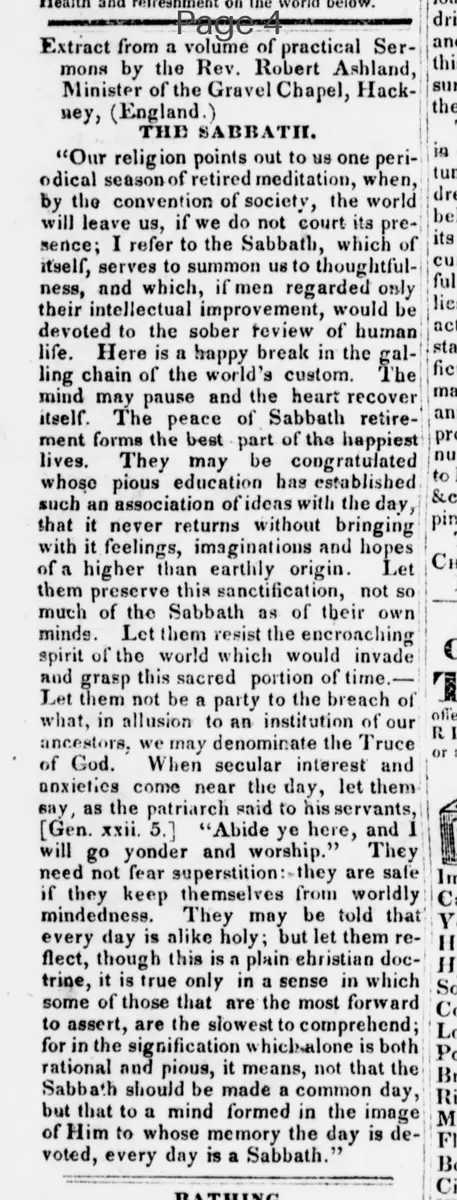
"Our religion points out to us one periodical season of retired meditation, when, by the convention of society, the world will leave us, if we do not court its presence; I refer to the Sabbath, which of itself serves to summon us to thoughtfulness, and which, if men regarded only their intellectual improvement, would be devoted to the sober review of human life. Here is a happy break in the galling chain of the world's custom. The mind may pause and the heart recover itself. The peace of Sabbath retirement forms the best part of the happiest lives. They may be congratulated whose pious education has established such an association of ideas with the day, that it never returns without bringing with it feelings, imaginations and hopes of a higher than earthly origin. Let them preserve this sanctification, not so much of the Sabbath as of their own minds. Let them resist the encroaching spirit of the world which would invade and grasp this sacred portion of time. Let them not be a party to the breach of what, in allusion to an institution of our ancestors, we may denominate the Truce of God. When secular interest and anxieties come near the day, let them say, as the patriarch said to his servants, [Gen. xxii. 5.] "Abide ye here, and I will go yonder and worship." They need not fear superstition: they are safe if they keep themselves from worldly mindedness. They may be told that every day is alike holy; but let them reflect, though this is a plain Christian doctrine, it is true only in a sense in which some of those that are the most forward to assert, are the slowest to comprehend; for in the signification which alone is both rational and pious, it means, not that the Sabbath should be made a common day, but that to a mind formed in the image of Him to whose memory the day is devoted, every day is a Sabbath."
THE SABBATH.
"Our religion points out to us one periodical season of retired meditation, when, by the convention of society, the world will leave us, if we do not court its presence; I refer to the Sabbath, which of itself serves to summon us to thoughtfulness, and which, if men regarded only their intellectual improvement, would be devoted to the sober review of human life. Here is a happy break in the galling chain of the world's custom. The mind may pause and the heart recover itself. The peace of Sabbath retirement forms the best part of the happiest lives. They may be congratulated whose pious education has established such an association of ideas with the day, that it never returns without bringing with it feelings, imaginations and hopes of a higher than earthly origin. Let them preserve this sanctification, not so much of the Sabbath as of their own minds. Let them resist the encroaching spirit of the world which would invade and grasp this sacred portion of time. Let them not be a party to the breach of what, in allusion to an institution of our ancestors, we may denominate the Truce of God. When secular interest and anxieties come near the day, let them say, as the patriarch said to his servants, [Gen. xxii. 5.] "Abide ye here, and I will go yonder and worship." They need not fear superstition: they are safe if they keep themselves from worldly mindedness. They may be told that every day is alike holy; but let them reflect, though this is a plain Christian doctrine, it is true only in a sense in which some of those that are the most forward to assert, are the slowest to comprehend; for in the signification which alone is both rational and pious, it means, not that the Sabbath should be made a common day, but that to a mind formed in the image of Him to whose memory the day is devoted, every day is a Sabbath."
What sub-type of article is it?
Essay
What themes does it cover?
Religious
Moral Virtue
What keywords are associated?
Sabbath
Meditation
Religion
Worldliness
Truce Of God
Pious Education
Christian Doctrine
What entities or persons were involved?
The Rev. Robert Ashland, Minister Of The Gravel Chapel, Hackney, (England.)
Literary Details
Title
The Sabbath.
Author
The Rev. Robert Ashland, Minister Of The Gravel Chapel, Hackney, (England.)
Subject
On The Observance Of The Sabbath
Key Lines
Our Religion Points Out To Us One Periodical Season Of Retired Meditation, When, By The Convention Of Society, The World Will Leave Us, If We Do Not Court Its Presence; I Refer To The Sabbath, Which Of Itself Serves To Summon Us To Thoughtfulness.
The Peace Of Sabbath Retirement Forms The Best Part Of The Happiest Lives.
Let Them Preserve This Sanctification, Not So Much Of The Sabbath As Of Their Own Minds.
Let Them Not Be A Party To The Breach Of What, In Allusion To An Institution Of Our Ancestors, We May Denominate The Truce Of God.
They May Be Told That Every Day Is Alike Holy; But Let Them Reflect, Though This Is A Plain Christian Doctrine, It Is True Only In A Sense In Which Some Of Those That Are The Most Forward To Assert, Are The Slowest To Comprehend;