Thank you for visiting SNEWPapers!
Sign up free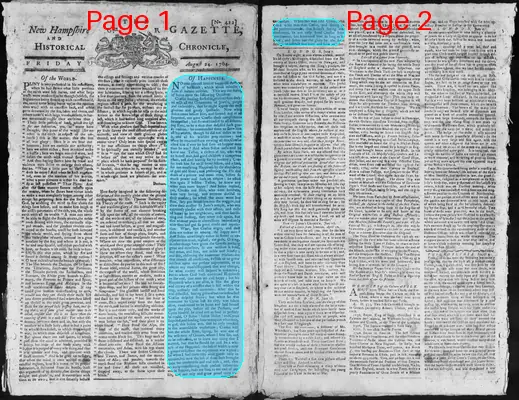
Literary
August 24, 1764
The New Hampshire Gazette And Historical Chronicle
Portsmouth, Greenland, Rockingham County, New Hampshire
What is this article about?
Solon advises Croesus that true happiness cannot be judged by wealth or power but only at life's end, citing examples of Tellus, Cleobis, and Biton. Croesus later, facing execution after defeat by Cyrus, invokes Solon, leading Cyrus to spare him and honor Solon's wisdom.
Merged-components note: Continuation of the story about Solon, Croesus, and Cyrus across pages.
Clippings
1 of 2
OCR Quality
95%
Excellent
Full Text
Of HAPPINESS.
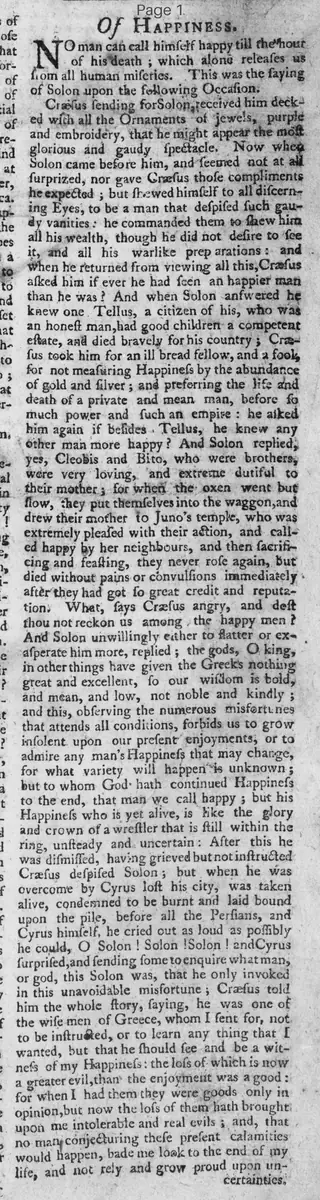
No man among all human miseries. This was the saying of Solon upon the following occasion. Croesus sending for Solon, received him decked with all the ornaments of jewels, purple and embroidery, that he might appear the most glorious and gaudy spectacle. Now when Solon came before him, and seemed not at all surprised, nor gave Croesus those compliments he expected: but shewed himself to all discerning eyes, to be a man that despised such gaudy vanities: he commanded them to shew him all his wealth, though he did not desire to see it, and all his warlike preparations: and when he returned from viewing all this, Croesus asked him if ever he had seen a happier man than he was? And when Solon answered he knew one, Tellus, a citizen of his, who was an honest man, had good children a competent estate, and died bravely for his country; Croesus took him for an ill bred fellow, and a fool for not measuring Happiness by the abundance of gold and silver; and preferring the life and death of a private and mean man, before so much power and such an empire: he asked him again if besides Tellus, he knew any other man more happy? And Solon replied, yes, Cleobis and Biton, who were brothers, were very loving, and extreme dutiful to their mother: for when the oxen went but slow, they put themselves into the waggon, and drew their mother to Juno's temple, who was extremely pleased with their action, and called happy by her neighbours, and then sacrificing and feasting, they never rose again, but died without pains or convulsions immediately after they had got so great credit and reputation. What, says Croesus angry, and dost thou not reckon us among the happy men? And Solon unwillingly either to flatter or exasperate him more, replied; the gods, O king, in other things have given the Greeks nothing great and excellent, so our wisdom is bold, and mean, and low, not noble and kindly; and this, observing the numerous misfortunes that attends all conditions, forbids us to grow insolent upon our present enjoyments; or to admire any man's Happiness that may change, for what variety will happen is unknown; but to whom Gods hath continued Happiness to the end, that man we call happy; but his Happiness who is yet alive, is like the glory and crown of a wrestler that is still within the ring, unsteady and uncertain: After this he was dismissed, having grieved but not instructed Croesus despised Solon; but when he was overcome by Cyrus lost his city, was taken alive, condemned to be burnt and laid bound upon the pile, before all the Persians, and Cyrus himself, he cried out as loud as possibly he could, O Solon! Solon! Solon! and Cyrus surprised, and sending some to enquire what man, or god, this Solon was, that he only invoked in this unavoidable misfortune; Croesus told him the whole story, saying, he was one of the wise men of Greece, whom I sent for, not to be instructed, or to learn any thing that I wanted, but that he should see and be a witness of my Happiness: the loss of which is now a greater evil, than the enjoyment was a good: for when I had them they were goods only in opinion, but now the loss of them hath brought upon me intolerable and real evils; and, that, no man conjecturing these present calamities would happen, bade me look to the end of my life, and not rely and grow proud upon uncertainties.
Certainties. When this was told to Cyrus, who was a wiser man than Croesus, and seeing in the present example, that Solon's saying was confirmed, he not only freed Croesus from punishment, but honoured him as long as he lived; and Solon had the glory by the same saying, to instruct one king and save another.
No man among all human miseries. This was the saying of Solon upon the following occasion. Croesus sending for Solon, received him decked with all the ornaments of jewels, purple and embroidery, that he might appear the most glorious and gaudy spectacle. Now when Solon came before him, and seemed not at all surprised, nor gave Croesus those compliments he expected: but shewed himself to all discerning eyes, to be a man that despised such gaudy vanities: he commanded them to shew him all his wealth, though he did not desire to see it, and all his warlike preparations: and when he returned from viewing all this, Croesus asked him if ever he had seen a happier man than he was? And when Solon answered he knew one, Tellus, a citizen of his, who was an honest man, had good children a competent estate, and died bravely for his country; Croesus took him for an ill bred fellow, and a fool for not measuring Happiness by the abundance of gold and silver; and preferring the life and death of a private and mean man, before so much power and such an empire: he asked him again if besides Tellus, he knew any other man more happy? And Solon replied, yes, Cleobis and Biton, who were brothers, were very loving, and extreme dutiful to their mother: for when the oxen went but slow, they put themselves into the waggon, and drew their mother to Juno's temple, who was extremely pleased with their action, and called happy by her neighbours, and then sacrificing and feasting, they never rose again, but died without pains or convulsions immediately after they had got so great credit and reputation. What, says Croesus angry, and dost thou not reckon us among the happy men? And Solon unwillingly either to flatter or exasperate him more, replied; the gods, O king, in other things have given the Greeks nothing great and excellent, so our wisdom is bold, and mean, and low, not noble and kindly; and this, observing the numerous misfortunes that attends all conditions, forbids us to grow insolent upon our present enjoyments; or to admire any man's Happiness that may change, for what variety will happen is unknown; but to whom Gods hath continued Happiness to the end, that man we call happy; but his Happiness who is yet alive, is like the glory and crown of a wrestler that is still within the ring, unsteady and uncertain: After this he was dismissed, having grieved but not instructed Croesus despised Solon; but when he was overcome by Cyrus lost his city, was taken alive, condemned to be burnt and laid bound upon the pile, before all the Persians, and Cyrus himself, he cried out as loud as possibly he could, O Solon! Solon! Solon! and Cyrus surprised, and sending some to enquire what man, or god, this Solon was, that he only invoked in this unavoidable misfortune; Croesus told him the whole story, saying, he was one of the wise men of Greece, whom I sent for, not to be instructed, or to learn any thing that I wanted, but that he should see and be a witness of my Happiness: the loss of which is now a greater evil, than the enjoyment was a good: for when I had them they were goods only in opinion, but now the loss of them hath brought upon me intolerable and real evils; and, that, no man conjecturing these present calamities would happen, bade me look to the end of my life, and not rely and grow proud upon uncertainties.
Certainties. When this was told to Cyrus, who was a wiser man than Croesus, and seeing in the present example, that Solon's saying was confirmed, he not only freed Croesus from punishment, but honoured him as long as he lived; and Solon had the glory by the same saying, to instruct one king and save another.
What sub-type of article is it?
Prose Fiction
Essay
What themes does it cover?
Moral Virtue
Death Mortality
What keywords are associated?
Solon
Croesus
Happiness
Moral Tale
Ancient Greece
Cyrus
Tellus
Cleobis
Biton
Literary Details
Title
Of Happiness.
Key Lines
The Gods, O King, In Other Things Have Given The Greeks Nothing Great And Excellent, So Our Wisdom Is Bold, And Mean, And Low, Not Noble And Kindly; And This, Observing The Numerous Misfortunes That Attends All Conditions, Forbids Us To Grow Insolent Upon Our Present Enjoyments; Or To Admire Any Man's Happiness That May Change, For What Variety Will Happen Is Unknown; But To Whom Gods Hath Continued Happiness To The End, That Man We Call Happy; But His Happiness Who Is Yet Alive, Is Like The Glory And Crown Of A Wrestler That Is Still Within The Ring, Unsteady And Uncertain:
O Solon! Solon! Solon!
No Man Among All Human Miseries.