Thank you for visiting SNEWPapers!
Sign up free
Gazette Of The United States
New York, New York County, New York
What is this article about?
A French gentleman reports from New-London on the slave revolt in Saint-Domingue, where slaves burned about 50 plantations and killed planters in late August 1791, destroying areas from Port Maligo to Limanard, with similar uprisings suspected in Port-au-Prince and Aux-Cayes.
Clipping
OCR Quality
Full Text
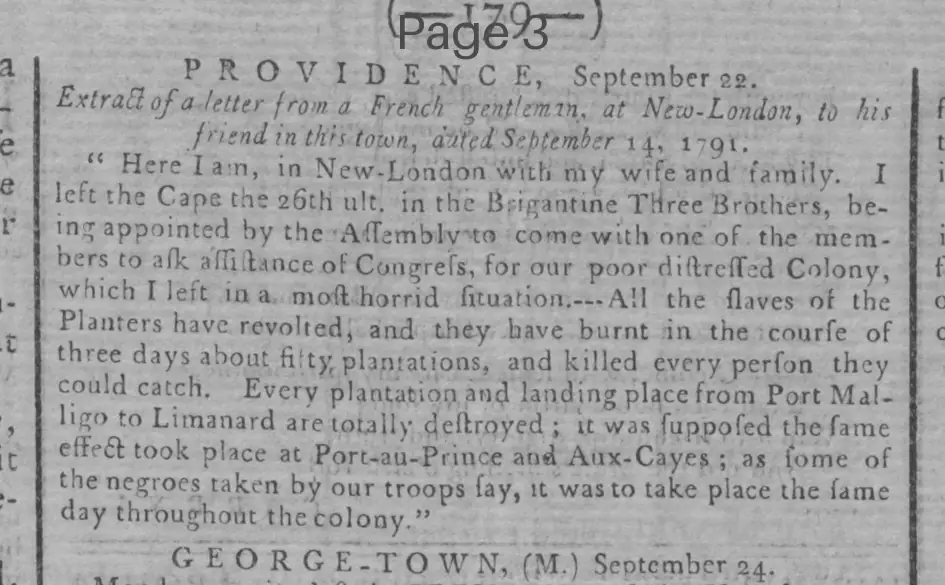
Extract of a letter from a French gentleman, at New-London, to his friend in this town, dated September 14, 1791.
"Here I am, in New-London with my wife and family. I left the Cape the 26th ult. in the Brigantine Three Brothers, being appointed by the Assembly to come with one of the members to ask assistance of Congress, for our poor distressed Colony, which I left in a most horrid situation.—All the slaves of the Planters have revolted, and they have burnt in the course of three days about fifty plantations, and killed every person they could catch. Every plantation and landing place from Port Maligo to Limanard are totally destroyed; it was supposed the same effect took place at Port-au-Prince and Aux-Cayes; as some of the negroes taken by our troops say, it was to take place the same day throughout the colony."
What sub-type of article is it?
What keywords are associated?
What entities or persons were involved?
Where did it happen?
Foreign News Details
Primary Location
The Cape, Saint Domingue
Event Date
Late August 1791
Key Persons
Outcome
about fifty plantations burnt; every person caught killed; plantations and landing places from port maligo to limanard totally destroyed; similar effects supposed at port-au-prince and aux-cayes
Event Details
Slaves of the planters revolted, burning about fifty plantations and killing every person they could catch over three days. Every plantation and landing place from Port Maligo to Limanard destroyed. Supposed coordinated revolt throughout the colony on the same day, as per captured negroes. The French gentleman left the Cape on August 26, 1791, appointed by the Assembly to seek assistance from Congress.