Thank you for visiting SNEWPapers!
Sign up free
Literary
March 29, 1928
The Milwaukee Leader
Milwaukee, Milwaukee County, Wisconsin
What is this article about?
John D. Barry reflects on a proposed memorial turning O. Henry's old Texas jail into a tribute, pondering how success transformed his disgrace. He discusses O. Henry's sensitivity, prison silence, financial carelessness, writing struggles, depression, and potential for future adaptations.
Clipping
OCR Quality
98%
Excellent
Full Text
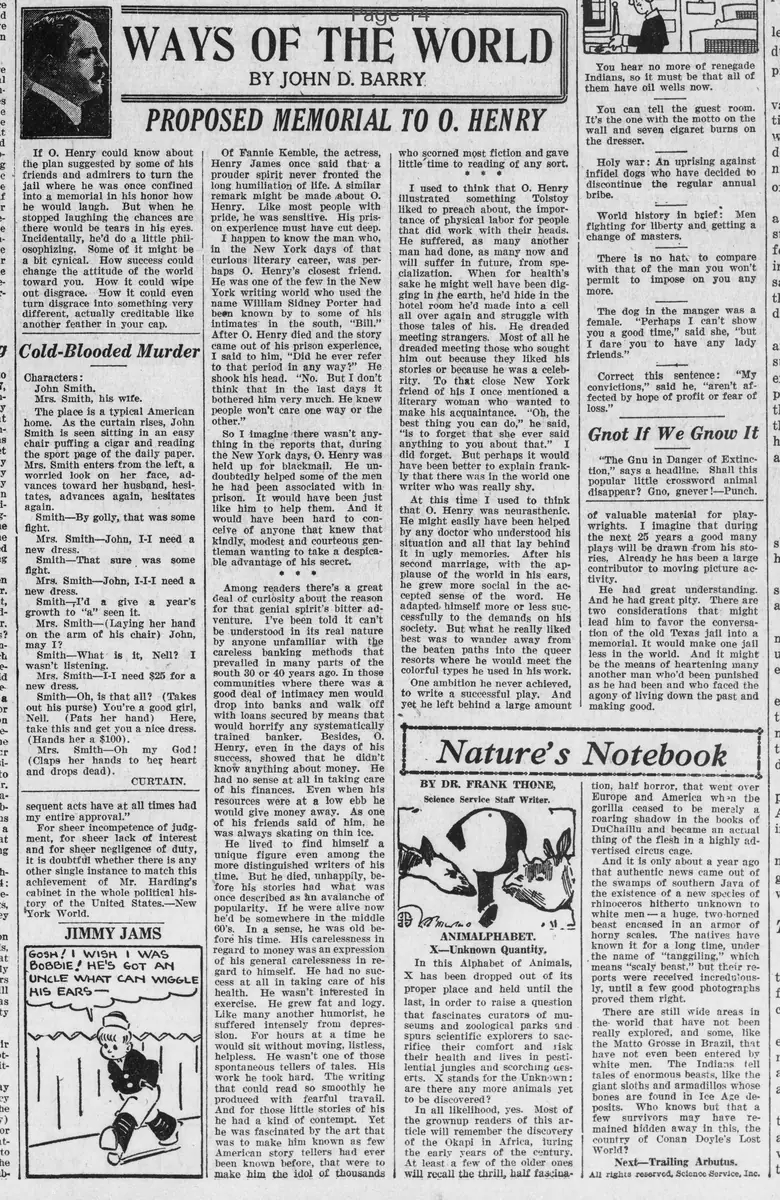
WAYS OF THE WORLD
BY JOHN D. BARRY.
PROPOSED MEMORIAL TO O. HENRY
If O. Henry could know about the plan suggested by some of his friends and admirers to turn the jail where he was once confined into a memorial in his honor how he would laugh. But when he stopped laughing the chances are there would be tears in his eyes.
Incidentally, he'd do a little philosophizing. Some of it might be a bit cynical. How success could change the attitude of the world toward you. How it could wipe out disgrace. How it could even turn disgrace into something very different, actually creditable like another feather in your cap.
Of Fannie Kemble, the actress, Henry James once said that a prouder spirit never fronted the long humiliation of life. A similar remark might be made about O. Henry. Like most people with pride, he was sensitive. His prison experience must have cut deep.
I happen to know the man who, in the New York days of that curious literary career, was perhaps O. Henry's closest friend. He was one of the few in the New York writing world who used the name William Sidney Porter had been known by to some of his intimates in the south. "Bill."
After O. Henry died and the story came out of his prison experience, I said to him, "Did he ever refer to that period in any way?" He shook his head. "No. But I don't think that in the last days it bothered him very much. He knew people won't care one way or the other."
So I imagine there wasn't anything in the reports that, during the New York days, O. Henry was held up for blackmail. He undoubtedly helped some of the men he had been associated with in prison. It would have been just like him to help them. And it would have been hard to conceive of anyone that knew that kindly, modest and courteous gentleman wanting to take a despicable advantage of his secret.
Among readers there's a great deal of curiosity about the reason for that genial spirit's bitter adventure. I've been told it can't be understood in its real nature by anyone unfamiliar with the careless banking methods that prevailed in many parts of the south 30 or 40 years ago. In those communities where there was a good deal of intimacy men would drop into banks and walk off with loans secured by means that would horrify any systematically trained banker. Besides, O. Henry, even in the days of his success, showed that he didn't know anything about money. He had no sense at all in taking care of his finances. Even when his resources were at a low ebb he would give money away. As one of his friends said of him, he was always skating on thin ice.
He lived to find himself a unique figure even among the more distinguished writers of his time. But he died, unhappily, before his stories had what was once described as an avalanche of popularity. If he were alive now he'd be somewhere in the middle 60's. In a sense, he was old before his time. His carelessness in regard to money was an expression of his general carelessness in regard to himself. He had no success at all in taking care of his health. He wasn't interested in exercise. He grew fat and logy.
Like many another humorist, he suffered intensely from depression. For hours at a time he would sit without moving, listless, helpless. He wasn't one of those spontaneous tellers of tales. His work he took hard. The writing that could read so smoothly he produced with fearful travail.
And for those little stories of his he had a kind of contempt. Yet he was fascinated by the art that was to make him known as few American story tellers had ever been known before, that were to make him the idol of thousands.
who scorned most fiction and gave little time to reading of any sort.
I used to think that O. Henry illustrated something Tolstoy liked to preach about, the importance of physical labor for people that did work with their heads.
He suffered, as many another man had done, as many now and will suffer in future, from specialization. When for health's sake he might well have been digging in the earth, he'd hide in the hotel room he'd made into a cell all over again and struggle with those tales of his. He dreaded meeting strangers. Most of all he dreaded meeting those who sought him out because they liked his stories or because he was a celebrity. To that close New York society. But what he really liked best was to wander away from the beaten paths into the queer resorts where he would meet the colorful types he used in his work.
One ambition he never achieved, to write a successful play. And yet he left behind a large amount of valuable material for playwrights. I imagine that during the next 25 years a good many plays will be drawn from his stories. Already he has been a large contributor to moving picture activity.
He had great understanding. And he had great pity. There are two considerations that might lead him to favor the conversation of the old Texas jail into a memorial. It would make one jail less in the world. And it might be the means of heartening many another man who'd been punished as he had been and who faced the agony of living down the past and making good.
BY JOHN D. BARRY.
PROPOSED MEMORIAL TO O. HENRY
If O. Henry could know about the plan suggested by some of his friends and admirers to turn the jail where he was once confined into a memorial in his honor how he would laugh. But when he stopped laughing the chances are there would be tears in his eyes.
Incidentally, he'd do a little philosophizing. Some of it might be a bit cynical. How success could change the attitude of the world toward you. How it could wipe out disgrace. How it could even turn disgrace into something very different, actually creditable like another feather in your cap.
Of Fannie Kemble, the actress, Henry James once said that a prouder spirit never fronted the long humiliation of life. A similar remark might be made about O. Henry. Like most people with pride, he was sensitive. His prison experience must have cut deep.
I happen to know the man who, in the New York days of that curious literary career, was perhaps O. Henry's closest friend. He was one of the few in the New York writing world who used the name William Sidney Porter had been known by to some of his intimates in the south. "Bill."
After O. Henry died and the story came out of his prison experience, I said to him, "Did he ever refer to that period in any way?" He shook his head. "No. But I don't think that in the last days it bothered him very much. He knew people won't care one way or the other."
So I imagine there wasn't anything in the reports that, during the New York days, O. Henry was held up for blackmail. He undoubtedly helped some of the men he had been associated with in prison. It would have been just like him to help them. And it would have been hard to conceive of anyone that knew that kindly, modest and courteous gentleman wanting to take a despicable advantage of his secret.
Among readers there's a great deal of curiosity about the reason for that genial spirit's bitter adventure. I've been told it can't be understood in its real nature by anyone unfamiliar with the careless banking methods that prevailed in many parts of the south 30 or 40 years ago. In those communities where there was a good deal of intimacy men would drop into banks and walk off with loans secured by means that would horrify any systematically trained banker. Besides, O. Henry, even in the days of his success, showed that he didn't know anything about money. He had no sense at all in taking care of his finances. Even when his resources were at a low ebb he would give money away. As one of his friends said of him, he was always skating on thin ice.
He lived to find himself a unique figure even among the more distinguished writers of his time. But he died, unhappily, before his stories had what was once described as an avalanche of popularity. If he were alive now he'd be somewhere in the middle 60's. In a sense, he was old before his time. His carelessness in regard to money was an expression of his general carelessness in regard to himself. He had no success at all in taking care of his health. He wasn't interested in exercise. He grew fat and logy.
Like many another humorist, he suffered intensely from depression. For hours at a time he would sit without moving, listless, helpless. He wasn't one of those spontaneous tellers of tales. His work he took hard. The writing that could read so smoothly he produced with fearful travail.
And for those little stories of his he had a kind of contempt. Yet he was fascinated by the art that was to make him known as few American story tellers had ever been known before, that were to make him the idol of thousands.
who scorned most fiction and gave little time to reading of any sort.
I used to think that O. Henry illustrated something Tolstoy liked to preach about, the importance of physical labor for people that did work with their heads.
He suffered, as many another man had done, as many now and will suffer in future, from specialization. When for health's sake he might well have been digging in the earth, he'd hide in the hotel room he'd made into a cell all over again and struggle with those tales of his. He dreaded meeting strangers. Most of all he dreaded meeting those who sought him out because they liked his stories or because he was a celebrity. To that close New York society. But what he really liked best was to wander away from the beaten paths into the queer resorts where he would meet the colorful types he used in his work.
One ambition he never achieved, to write a successful play. And yet he left behind a large amount of valuable material for playwrights. I imagine that during the next 25 years a good many plays will be drawn from his stories. Already he has been a large contributor to moving picture activity.
He had great understanding. And he had great pity. There are two considerations that might lead him to favor the conversation of the old Texas jail into a memorial. It would make one jail less in the world. And it might be the means of heartening many another man who'd been punished as he had been and who faced the agony of living down the past and making good.
What sub-type of article is it?
Essay
What themes does it cover?
Moral Virtue
What keywords are associated?
O Henry
Memorial
Prison
Success
Disgrace
Writing
Depression
Redemption
What entities or persons were involved?
By John D. Barry.
Literary Details
Title
Proposed Memorial To O. Henry
Author
By John D. Barry.
Subject
Reflections On O. Henry's Life, Prison Experience, And Proposed Jail Memorial
Key Lines
How Success Could Change The Attitude Of The World Toward You. How It Could Wipe Out Disgrace. How It Could Even Turn Disgrace Into Something Very Different, Actually Creditable Like Another Feather In Your Cap.
He Knew People Won't Care One Way Or The Other.
As One Of His Friends Said Of Him, He Was Always Skating On Thin Ice.
Like Many Another Humorist, He Suffered Intensely From Depression.
It Would Make One Jail Less In The World. And It Might Be The Means Of Heartening Many Another Man Who'd Been Punished As He Had Been And Who Faced The Agony Of Living Down The Past And Making Good.