Thank you for visiting SNEWPapers!
Sign up free
Literary
November 28, 1846
Wisconsin Herald
Lancaster, Grant County, Wisconsin
What is this article about?
A narrative account of Napoleon's profound grief over the death of his close friend and Grand Marshal Duroc, mortally wounded by a cannonball during battle. Napoleon visits the dying Duroc, shares an emotional farewell, and spends the night in mourning, neglecting military duties amid the aftermath of victory.
Merged-components note: Sequential reading order and clear textual continuation of the narrative 'Death of Duroc'.
Clipping
OCR Quality
95%
Excellent
Full Text
Death of Duroc.
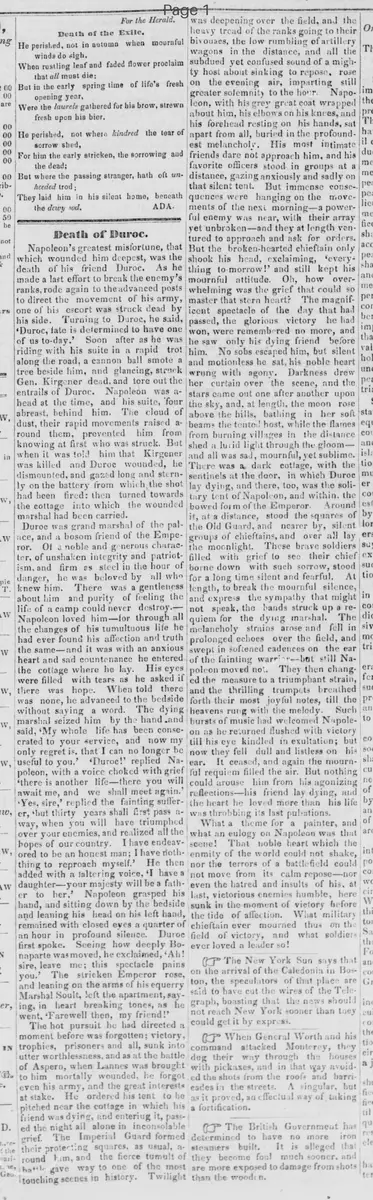
Napoleon's greatest misfortune, that which wounded him deepest, was the death of his friend Duroc. As he made a last effort to break the enemy's ranks, rode again to the advanced posts to direct the movement of his army, one of his escort was struck dead by his side. Turning to Duroc, he said, 'Duroc, fate is determined to have one of us to-day.' Soon after as he was riding with his suite in a rapid trot along the road, a cannon ball smote a tree beside him, and glancing, struck Gen. Kirgener dead, and tore out the entrails of Duroc. Napoleon was ahead at the time, and his suite, four abreast, behind him. The cloud of dust, their rapid movements raised around them, prevented him from knowing at first who was struck. But when it was told him that Kirgener was killed and Duroc wounded, he dismounted, and gazed long and sternly on the battery from which the shot had been fired: then turned towards the cottage into which the wounded marshal had been carried.
Duroc was grand marshal of the palace, and a bosom friend of the Emperor. Of a noble and generous character, of unshaken integrity and patriotism, and firm as steel in the hour of danger, he was beloved by all who knew him. There was a gentleness about him and purity of feeling the life of a camp could never destroy. Napoleon loved him—for through all the changes of his tumultuous life he had ever found his affection and truth the same—and it was with an anxious heart and sad countenance he entered the cottage where he lay. His eyes were filled with tears as he asked if there was hope. When told there was none, he advanced to the bedside without saying a word. The dying marshal seized him by the hand and said, 'My whole life has been consecrated to your service, and now my only regret is that I can no longer be useful to you.' 'Duroc!' replied Napoleon, with a voice choked with grief 'there is another life—there you will await me, and we shall meet again.' 'Yes, sire,' replied the fainting sufferer, 'but thirty years shall first pass away, when you will have triumphed over your enemies and realized all the hopes of our country. I have endeavored to be an honest man; I have nothing to reproach myself.' He then added with a faltering voice, 'I have a daughter—your majesty will be a father to her.' Napoleon grasped his hand, and sitting down by the bedside and leaning his head on his left hand, remained with closed eyes a quarter of an hour in profound silence. Duroc first spoke. Seeing how deeply Bonaparte was moved, he exclaimed, 'Ah! sire, leave me; this spectacle pains you.' The stricken Emperor rose, and leaning on the arms of his equerry Marshal Soult, left the apartment, saying, in heart breaking tones, as he went, 'Farewell then, my friend!'
The hot pursuit he had directed a moment before was forgotten; victory, trophies, prisoners and all, sunk into utter worthlessness, and as at the battle of Aspern, when Lannes was brought to him mortally wounded, he forgot even his army, and the great interests at stake. He ordered his tent to be pitched near the cottage in which his friend was dying, and entering it, passed the night all alone in inconsolable grief. The Imperial Guard formed their protecting squares, as usual, around him, and the fierce tumult of battle gave way to one of the most touching scenes in history. Twilight was deepening over the field, and the heavy tread of the ranks going to their bivouacs, the low rumbling of artillery wagons in the distance, and all the subdued yet confused sound of a mighty host about sinking to repose, rose on the evening air, imparting still greater solemnity to the hour. Napoleon, with his grey great coat wrapped about him, his elbows on his knees, and his forehead resting on his hands, sat apart from all, buried in the profoundest melancholy. His most intimate friends dare not approach him, and his favorite officers stood in groups at a distance, gazing anxiously and sadly on that silent tent. But immense consequences were hanging on the movements of the next morning—a powerful enemy was near, with their array yet unbroken—and they at length ventured to approach and ask for orders. But the broken-hearted chieftain only shook his head, exclaiming, 'everything to-morrow!' and still kept his mournful attitude. Oh, how overwhelming was the grief that could so master that stern heart? The magnificent spectacle of the day that had passed, the glorious victory he had won, were remembered no more, and he saw only his dying friend before him. No sobs escaped him, but silent and motionless he sat, his noble heart wrung with agony. Darkness drew her curtain over the scene, and the stars came out one after another upon the sky, and, at length, the moon rose above the hills, bathing in her soft beams the tented host, while the flames from burning villages in the distance shed a lurid light through the gloom—and all was sad, mournful, yet sublime. There was a dark cottage, with the sentinels at the door, in which Duroc lay dying, and there, too, was the solitary tent of Napoleon, and within, the bowed form of the Emperor. Around it, at a distance, stood the squares of the Old Guard, and nearer by, silent groups of chieftains, and over all lay the moonlight. These brave soldiers filled with grief to see their chief borne down with such sorrow, stood for a long time silent and fearful. At length, to break the mournful silence, and express the sympathy that might not speak, the bands struck up a requiem for the dying marshal. The melancholy strains arose and fell in prolonged echoes over the field, and swept in softened cadences on the ear of the fainting warrior—but still Napoleon moved not. They then changed the measure to a triumphant strain, and the thrilling trumpets breathed forth their most joyful notes, till the heavens rung with the melody. Such bursts of music had welcomed Napoleon as he returned flushed with victory till his eye kindled in exultation; but now they fell dull and listless on his ear. It ceased, and again the mournful requiem filled the air. But nothing could arouse him from his agonizing reflections—his friend lay dying, and the heart he loved more than his life was throbbing its last pulsations.
What a theme for a painter, and what an eulogy on Napoleon was that scene! That noble heart which the enmity of the world could not shake, nor the terrors of a battlefield could not move from its calm repose—nor even the hatred and insults of his, at last, victorious enemies humble, here sunk in the moment of victory before the tide of affection. What military chieftain ever mourned thus on the field of victory, and what soldiers ever loved a leader so!
Napoleon's greatest misfortune, that which wounded him deepest, was the death of his friend Duroc. As he made a last effort to break the enemy's ranks, rode again to the advanced posts to direct the movement of his army, one of his escort was struck dead by his side. Turning to Duroc, he said, 'Duroc, fate is determined to have one of us to-day.' Soon after as he was riding with his suite in a rapid trot along the road, a cannon ball smote a tree beside him, and glancing, struck Gen. Kirgener dead, and tore out the entrails of Duroc. Napoleon was ahead at the time, and his suite, four abreast, behind him. The cloud of dust, their rapid movements raised around them, prevented him from knowing at first who was struck. But when it was told him that Kirgener was killed and Duroc wounded, he dismounted, and gazed long and sternly on the battery from which the shot had been fired: then turned towards the cottage into which the wounded marshal had been carried.
Duroc was grand marshal of the palace, and a bosom friend of the Emperor. Of a noble and generous character, of unshaken integrity and patriotism, and firm as steel in the hour of danger, he was beloved by all who knew him. There was a gentleness about him and purity of feeling the life of a camp could never destroy. Napoleon loved him—for through all the changes of his tumultuous life he had ever found his affection and truth the same—and it was with an anxious heart and sad countenance he entered the cottage where he lay. His eyes were filled with tears as he asked if there was hope. When told there was none, he advanced to the bedside without saying a word. The dying marshal seized him by the hand and said, 'My whole life has been consecrated to your service, and now my only regret is that I can no longer be useful to you.' 'Duroc!' replied Napoleon, with a voice choked with grief 'there is another life—there you will await me, and we shall meet again.' 'Yes, sire,' replied the fainting sufferer, 'but thirty years shall first pass away, when you will have triumphed over your enemies and realized all the hopes of our country. I have endeavored to be an honest man; I have nothing to reproach myself.' He then added with a faltering voice, 'I have a daughter—your majesty will be a father to her.' Napoleon grasped his hand, and sitting down by the bedside and leaning his head on his left hand, remained with closed eyes a quarter of an hour in profound silence. Duroc first spoke. Seeing how deeply Bonaparte was moved, he exclaimed, 'Ah! sire, leave me; this spectacle pains you.' The stricken Emperor rose, and leaning on the arms of his equerry Marshal Soult, left the apartment, saying, in heart breaking tones, as he went, 'Farewell then, my friend!'
The hot pursuit he had directed a moment before was forgotten; victory, trophies, prisoners and all, sunk into utter worthlessness, and as at the battle of Aspern, when Lannes was brought to him mortally wounded, he forgot even his army, and the great interests at stake. He ordered his tent to be pitched near the cottage in which his friend was dying, and entering it, passed the night all alone in inconsolable grief. The Imperial Guard formed their protecting squares, as usual, around him, and the fierce tumult of battle gave way to one of the most touching scenes in history. Twilight was deepening over the field, and the heavy tread of the ranks going to their bivouacs, the low rumbling of artillery wagons in the distance, and all the subdued yet confused sound of a mighty host about sinking to repose, rose on the evening air, imparting still greater solemnity to the hour. Napoleon, with his grey great coat wrapped about him, his elbows on his knees, and his forehead resting on his hands, sat apart from all, buried in the profoundest melancholy. His most intimate friends dare not approach him, and his favorite officers stood in groups at a distance, gazing anxiously and sadly on that silent tent. But immense consequences were hanging on the movements of the next morning—a powerful enemy was near, with their array yet unbroken—and they at length ventured to approach and ask for orders. But the broken-hearted chieftain only shook his head, exclaiming, 'everything to-morrow!' and still kept his mournful attitude. Oh, how overwhelming was the grief that could so master that stern heart? The magnificent spectacle of the day that had passed, the glorious victory he had won, were remembered no more, and he saw only his dying friend before him. No sobs escaped him, but silent and motionless he sat, his noble heart wrung with agony. Darkness drew her curtain over the scene, and the stars came out one after another upon the sky, and, at length, the moon rose above the hills, bathing in her soft beams the tented host, while the flames from burning villages in the distance shed a lurid light through the gloom—and all was sad, mournful, yet sublime. There was a dark cottage, with the sentinels at the door, in which Duroc lay dying, and there, too, was the solitary tent of Napoleon, and within, the bowed form of the Emperor. Around it, at a distance, stood the squares of the Old Guard, and nearer by, silent groups of chieftains, and over all lay the moonlight. These brave soldiers filled with grief to see their chief borne down with such sorrow, stood for a long time silent and fearful. At length, to break the mournful silence, and express the sympathy that might not speak, the bands struck up a requiem for the dying marshal. The melancholy strains arose and fell in prolonged echoes over the field, and swept in softened cadences on the ear of the fainting warrior—but still Napoleon moved not. They then changed the measure to a triumphant strain, and the thrilling trumpets breathed forth their most joyful notes, till the heavens rung with the melody. Such bursts of music had welcomed Napoleon as he returned flushed with victory till his eye kindled in exultation; but now they fell dull and listless on his ear. It ceased, and again the mournful requiem filled the air. But nothing could arouse him from his agonizing reflections—his friend lay dying, and the heart he loved more than his life was throbbing its last pulsations.
What a theme for a painter, and what an eulogy on Napoleon was that scene! That noble heart which the enmity of the world could not shake, nor the terrors of a battlefield could not move from its calm repose—nor even the hatred and insults of his, at last, victorious enemies humble, here sunk in the moment of victory before the tide of affection. What military chieftain ever mourned thus on the field of victory, and what soldiers ever loved a leader so!
What sub-type of article is it?
Prose Fiction
Essay
What themes does it cover?
Death Mortality
Friendship
War Peace
What keywords are associated?
Duroc Death
Napoleon Grief
Battlefield Mourning
Friendship Loyalty
Victory Sorrow
Historical Anecdote
Marshal Duroc
Imperial Guard
Literary Details
Title
Death Of Duroc.
Key Lines
'Duroc, Fate Is Determined To Have One Of Us To Day.'
'My Whole Life Has Been Consecrated To Your Service, And Now My Only Regret Is That I Can No Longer Be Useful To You.'
'Duroc!' Replied Napoleon, With A Voice Choked With Grief 'There Is Another Life—There You Will Await Me, And We Shall Meet Again.'
'Ah! Sire, Leave Me; This Spectacle Pains You.'
'Farewell Then, My Friend!'