Thank you for visiting SNEWPapers!
Sign up free
Editorial
December 3, 1943
The Nome Nugget
Nome, Nome County, Alaska
What is this article about?
The editorial analyzes 1941 Treasury data showing that individuals earning over $5,000 (one-eighth of national income) paid more than two-thirds of income taxes ($approx. $2.57B of $3.81B total), while those under $5,000 (seven-eighths) paid less than one-third. It critiques this uneven burden for failing to curb inflation effectively.
Clipping
OCR Quality
95%
Excellent
Full Text
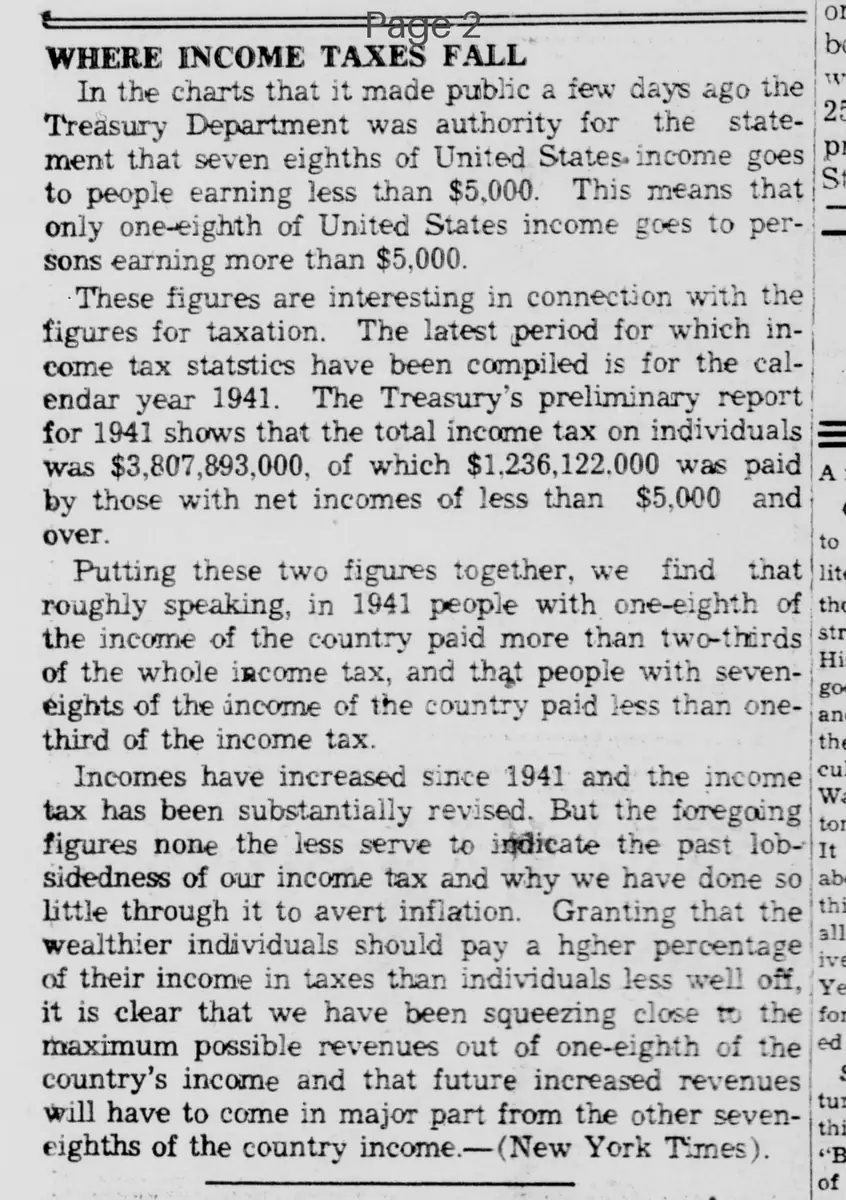
WHERE INCOME TAXES FALL
In the charts that it made public a few days ago the Treasury Department was authority for the statement that seven eighths of United States income goes to people earning less than $5,000. This means that only one-eighth of United States income goes to persons earning more than $5,000.
These figures are interesting in connection with the figures for taxation. The latest period for which income tax statistics have been compiled is for the calendar year 1941. The Treasury's preliminary report for 1941 shows that the total income tax on individuals was $3,807,893,000, of which $1,236,122,000 was paid by those with net incomes of less than $5,000 and over.
Putting these two figures together, we find that roughly speaking, in 1941 people with one-eighth of the income of the country paid more than two-thirds of the whole income tax, and that people with seven-eighths of the income of the country paid less than one-third of the income tax.
Incomes have increased since 1941 and the income tax has been substantially revised. But the foregoing figures none the less serve to indicate the past lopsidedness of our income tax and why we have done so little through it to avert inflation. Granting that the wealthier individuals should pay a higher percentage of their income in taxes than individuals less well off, it is clear that we have been squeezing close to the maximum possible revenues out of one-eighth of the country's income and that future increased revenues will have to come in major part from the other seven-eighths of the country income.-(New York Times).
In the charts that it made public a few days ago the Treasury Department was authority for the statement that seven eighths of United States income goes to people earning less than $5,000. This means that only one-eighth of United States income goes to persons earning more than $5,000.
These figures are interesting in connection with the figures for taxation. The latest period for which income tax statistics have been compiled is for the calendar year 1941. The Treasury's preliminary report for 1941 shows that the total income tax on individuals was $3,807,893,000, of which $1,236,122,000 was paid by those with net incomes of less than $5,000 and over.
Putting these two figures together, we find that roughly speaking, in 1941 people with one-eighth of the income of the country paid more than two-thirds of the whole income tax, and that people with seven-eighths of the income of the country paid less than one-third of the income tax.
Incomes have increased since 1941 and the income tax has been substantially revised. But the foregoing figures none the less serve to indicate the past lopsidedness of our income tax and why we have done so little through it to avert inflation. Granting that the wealthier individuals should pay a higher percentage of their income in taxes than individuals less well off, it is clear that we have been squeezing close to the maximum possible revenues out of one-eighth of the country's income and that future increased revenues will have to come in major part from the other seven-eighths of the country income.-(New York Times).
What sub-type of article is it?
Taxation
Economic Policy
What keywords are associated?
Income Tax
Tax Distribution
1941 Statistics
Treasury Report
Inflation Control
Economic Inequality
Tax Burden
What entities or persons were involved?
Treasury Department
New York Times
Editorial Details
Primary Topic
Distribution Of 1941 Income Tax Burden
Stance / Tone
Critique Of Lopsided Income Taxation
Key Figures
Treasury Department
New York Times
Key Arguments
Seven Eighths Of Us Income Goes To Earners Under $5,000
One Eighth Of Income To Those Over $5,000
In 1941, Total Individual Income Tax Was $3,807,893,000
$1,236,122,000 Paid By Those With Net Incomes Under $5,000
Top Income Group Paid Over Two Thirds Of Total Income Tax
Bottom Group Paid Under One Third
Post 1941 Tax Revisions Insufficient To Address Lopsidedness
Uneven Taxation Limits Anti Inflation Efforts
Future Revenues Must Come More From Lower Income Groups