Thank you for visiting SNEWPapers!
Sign up free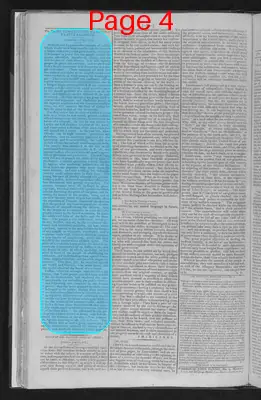
Literary
June 27, 1789
Gazette Of The United States
New York, New York County, New York
What is this article about?
This essay excerpt critiques Nedham's views on government using Roman history, particularly Cassius's career, to argue for balanced constitutions with executive and representative powers, as in English and American systems. It covers patrician-plebeian conflicts, the tribunate, and Cassius's agrarian law proposal.
Clipping
OCR Quality
95%
Excellent
Full Text
The RIGHT CONSTITUTION of a COMMONWEALTH.
WEALTH EXAMINED.
[Continued from No. XX.]
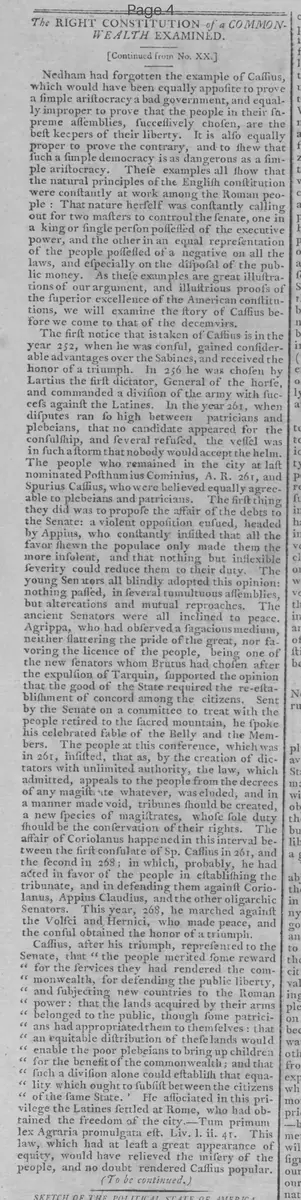
Nedham had forgotten the example of Cassius, which would have been equally apposite to prove a simple aristocracy a bad government, and equally improper to prove that the people in their supreme assemblies, successively chosen, are the best keepers of their liberty. It is also equally proper to prove the contrary, and to show that such a simple democracy is as dangerous as a simple aristocracy. These examples all show that the natural principles of the English constitution were constantly at work among the Roman people: That nature herself was constantly calling out for two masters to control the senate, one in a king or single person possessed of the executive power, and the other in an equal representation of the people possessed of a negative on all the laws, and especially on the disposal of the public money. As these examples are great illustrations of our argument, and illustrious proofs of the superior excellence of the American constitutions, we will examine the story of Cassius before we come to that of the decemvirs.
The first notice that is taken of Cassius is in the year 252, when he was consul, gained considerable advantages over the Sabines, and received the honor of a triumph. In 256 he was chosen by Lartius the first dictator, General of the horse, and commanded a division of the army with success against the Latins. In the year 261, when disputes ran so high between patricians and plebeians, that no candidate appeared for the consulship, and several refused, the vessel was in such a storm that nobody would accept the helm. The people who remained in the city at last nominated Posthumius Cominius, A. R. 261, and Spurius Cassius, who were believed equally agreeable to plebeians and patricians. The first thing they did was to propose the affair of the debts to the Senate: a violent opposition ensued, headed by Appius, who constantly insisted that all the favor shown the populace only made them the more insolent, and that nothing but inflexible severity could reduce them to their duty. The young Senators all blindly adopted this opinion: nothing passed, in several tumultuous assemblies, but altercations and mutual reproaches. The ancient Senators were all inclined to peace. Agrippa, who had observed a sagacious medium, neither flattering the pride of the great, nor favoring the license of the people, being one of the new senators whom Brutus had chosen after the expulsion of Tarquin, supported the opinion that the good of the State required the re-establishment of concord among the citizens. Sent by the Senate on a committee to treat with the people retired to the sacred mountain, he spoke his celebrated fable of the Belly and the Members. The people at this conference, which was in 261, insisted, that as, by the creation of dictators with unlimited authority, the law, which admitted appeals to the people from the decrees of any magistrate whatever, was eluded, and in a manner made void, tribunes should be created, a new species of magistrates, whose sole duty should be the conservation of their rights. The affair of Coriolanus happened in this interval between the first consulship of Sp. Cassius in 261, and the second in 268; in which, probably, he had acted in favor of the people in establishing the tribunate, and in defending them against Coriolanus, Appius Claudius, and the other oligarchic Senators. "This year, 268, he marched against the Volsci and Hernici, who made peace, and the consul obtained the honor of a triumph."
Caius, after his triumph, represented to the Senate, that "the people merited some reward for the services they had rendered the commonwealth, for defending the public liberty, and subjecting new countries to the Roman power: that the lands acquired by their arms belonged to the public, though some patricians had appropriated them to themselves: that an equitable distribution of these lands would enable the poor plebeians to bring up children for the benefit of the commonwealth; and that such a division alone could establish that equality which ought to subsist between the citizens of the same State." He associated in this privilege the Latins settled at Rome, who had obtained the freedom of the city.—Tum primum lex Agraria promulgata est. Liv. l. ii. 41. This law, which had at least a great appearance of equity, would have relieved the misery of the people, and no doubt rendered Cassius popular.
(To be continued.)
WEALTH EXAMINED.
[Continued from No. XX.]
Nedham had forgotten the example of Cassius, which would have been equally apposite to prove a simple aristocracy a bad government, and equally improper to prove that the people in their supreme assemblies, successively chosen, are the best keepers of their liberty. It is also equally proper to prove the contrary, and to show that such a simple democracy is as dangerous as a simple aristocracy. These examples all show that the natural principles of the English constitution were constantly at work among the Roman people: That nature herself was constantly calling out for two masters to control the senate, one in a king or single person possessed of the executive power, and the other in an equal representation of the people possessed of a negative on all the laws, and especially on the disposal of the public money. As these examples are great illustrations of our argument, and illustrious proofs of the superior excellence of the American constitutions, we will examine the story of Cassius before we come to that of the decemvirs.
The first notice that is taken of Cassius is in the year 252, when he was consul, gained considerable advantages over the Sabines, and received the honor of a triumph. In 256 he was chosen by Lartius the first dictator, General of the horse, and commanded a division of the army with success against the Latins. In the year 261, when disputes ran so high between patricians and plebeians, that no candidate appeared for the consulship, and several refused, the vessel was in such a storm that nobody would accept the helm. The people who remained in the city at last nominated Posthumius Cominius, A. R. 261, and Spurius Cassius, who were believed equally agreeable to plebeians and patricians. The first thing they did was to propose the affair of the debts to the Senate: a violent opposition ensued, headed by Appius, who constantly insisted that all the favor shown the populace only made them the more insolent, and that nothing but inflexible severity could reduce them to their duty. The young Senators all blindly adopted this opinion: nothing passed, in several tumultuous assemblies, but altercations and mutual reproaches. The ancient Senators were all inclined to peace. Agrippa, who had observed a sagacious medium, neither flattering the pride of the great, nor favoring the license of the people, being one of the new senators whom Brutus had chosen after the expulsion of Tarquin, supported the opinion that the good of the State required the re-establishment of concord among the citizens. Sent by the Senate on a committee to treat with the people retired to the sacred mountain, he spoke his celebrated fable of the Belly and the Members. The people at this conference, which was in 261, insisted, that as, by the creation of dictators with unlimited authority, the law, which admitted appeals to the people from the decrees of any magistrate whatever, was eluded, and in a manner made void, tribunes should be created, a new species of magistrates, whose sole duty should be the conservation of their rights. The affair of Coriolanus happened in this interval between the first consulship of Sp. Cassius in 261, and the second in 268; in which, probably, he had acted in favor of the people in establishing the tribunate, and in defending them against Coriolanus, Appius Claudius, and the other oligarchic Senators. "This year, 268, he marched against the Volsci and Hernici, who made peace, and the consul obtained the honor of a triumph."
Caius, after his triumph, represented to the Senate, that "the people merited some reward for the services they had rendered the commonwealth, for defending the public liberty, and subjecting new countries to the Roman power: that the lands acquired by their arms belonged to the public, though some patricians had appropriated them to themselves: that an equitable distribution of these lands would enable the poor plebeians to bring up children for the benefit of the commonwealth; and that such a division alone could establish that equality which ought to subsist between the citizens of the same State." He associated in this privilege the Latins settled at Rome, who had obtained the freedom of the city.—Tum primum lex Agraria promulgata est. Liv. l. ii. 41. This law, which had at least a great appearance of equity, would have relieved the misery of the people, and no doubt rendered Cassius popular.
(To be continued.)
What sub-type of article is it?
Essay
What themes does it cover?
Political
Liberty Freedom
What keywords are associated?
Roman Constitution
Spurius Cassius
Agrarian Law
Patricians Plebeians
Tribunate
Political Liberty
American Constitutions
Literary Details
Title
The Right Constitution Of A Commonwealth. Wealth Examined.
Key Lines
These Examples All Show That The Natural Principles Of The English Constitution Were Constantly At Work Among The Roman People: That Nature Herself Was Constantly Calling Out For Two Masters To Control The Senate, One In A King Or Single Person Possessed Of The Executive Power, And The Other In An Equal Representation Of The People Possessed Of A Negative On All The Laws, And Especially On The Disposal Of The Public Money.
Sent By The Senate On A Committee To Treat With The People Retired To The Sacred Mountain, He Spoke His Celebrated Fable Of The Belly And The Members.
The People Merited Some Reward For The Services They Had Rendered The Commonwealth, For Defending The Public Liberty, And Subjecting New Countries To The Roman Power: That The Lands Acquired By Their Arms Belonged To The Public, Though Some Patricians Had Appropriated Them To Themselves