Thank you for visiting SNEWPapers!
Sign up free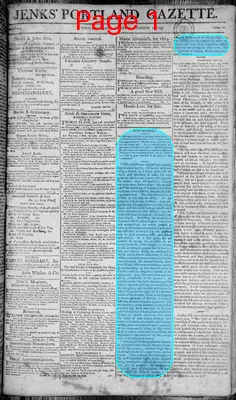
Literary
December 17, 1803
Jenks' Portland Gazette
Portland, Cumberland County, Maine
What is this article about?
Excerpt from the 'British Spy' letters in the Virginia Argus, presenting a vivid portrait of Chief Justice John Marshall. It praises his supernatural intellectual faculty for instantly grasping complex subjects, his effortless penetration, logical argumentation, and oratorical style that convinces hearers without fanciful flourishes. Debates the utility of fancy in non-poetic discourse.
Clipping
OCR Quality
92%
Excellent
Full Text
JUDGE MARSHALL.
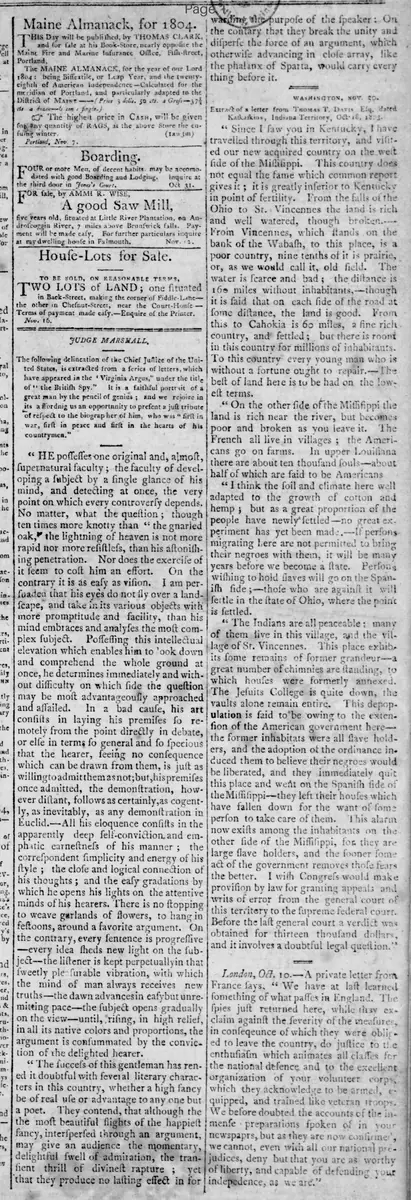
The following delineation of the Chief Justice of the United States, is extracted from a series of letters, which have appeared in the 'Virginia Argus,' under the title of 'the British Spy.' It is a faithful portrait of a great man by the pencil of genius; and we rejoice in its affording us an opportunity to present a just tribute of respect to the biographer of him, who was 'first in war, first in peace and first in the hearts of his countrymen.'
'HE possesses one original and, almost, supernatural faculty; the faculty of developing a subject by a single glance of his mind, and detecting at once, the very point on which every controversy depends. No matter, what the question; though ten times more knotty than "the gnarled oak, the lightning of heaven is not more rapid nor more resistless, than his astonishing penetration. Nor does the exercise of it seem to cost him an effort. On the contrary it is as easy as vision. I am persuaded that his eyes do not fly over a landscape, and take in its various objects with more promptitude and facility, than his mind embraces and analyses the most complex subject. Possessing this intellectual elevation which enables him to look down and comprehend the whole ground at once, he determines immediately and without difficulty on which side the question may be most advantageously approached and assailed. In a bad cause, his art consists in laying his premises so remotely from the point directly in debate, or else in terms so general and so specious that the hearer, seeing no consequence which can be drawn from them, is just as willing to admit them as not; but, his premises once admitted, the demonstration, however distant, follows as certainly, as cogently, as inevitably, as any demonstration in Euclid.--All his eloquence consists in the apparently deep self-conviction and emphatic earnestness of his manner; the correspondent simplicity and energy of his style: the close and logical connection of his thoughts; and the easy gradations by which he opens his lights on the attentive minds of his hearers. There is no stooping to weave garlands of flowers, to hang in festoon, around a favorite argument. On the contrary, every sentence is progressive--every idea sheds new light on the subject--the listener is kept perpetually in that sweetly pleasurable vibration, with which the mind of man always receives new truths--the dawn advances in easy but unremitting pace--the subject opens gradually on the view--until, rising, in high relief, in all its native colors and proportions, the argument is consummated by the conviction of the delighted hearer.
'The success of this gentleman has rendered it doubtful with several literary characters in this country, whether a high fancy be of real use or advantage to any one but a poet. They contend, that although the most beautiful flights of the happiest fancy, interspersed through an argument, may give an audience the momentary, delightful swell of admiration, the transient thrill of divine rapture; yet that they produce no lasting effect in forwarding the purpose of the speaker: On the contrary that they break the unity and disperse the force of an argument, which otherwise advancing in close array, like the phalanx of Sparta, would carry everything before it.''
The following delineation of the Chief Justice of the United States, is extracted from a series of letters, which have appeared in the 'Virginia Argus,' under the title of 'the British Spy.' It is a faithful portrait of a great man by the pencil of genius; and we rejoice in its affording us an opportunity to present a just tribute of respect to the biographer of him, who was 'first in war, first in peace and first in the hearts of his countrymen.'
'HE possesses one original and, almost, supernatural faculty; the faculty of developing a subject by a single glance of his mind, and detecting at once, the very point on which every controversy depends. No matter, what the question; though ten times more knotty than "the gnarled oak, the lightning of heaven is not more rapid nor more resistless, than his astonishing penetration. Nor does the exercise of it seem to cost him an effort. On the contrary it is as easy as vision. I am persuaded that his eyes do not fly over a landscape, and take in its various objects with more promptitude and facility, than his mind embraces and analyses the most complex subject. Possessing this intellectual elevation which enables him to look down and comprehend the whole ground at once, he determines immediately and without difficulty on which side the question may be most advantageously approached and assailed. In a bad cause, his art consists in laying his premises so remotely from the point directly in debate, or else in terms so general and so specious that the hearer, seeing no consequence which can be drawn from them, is just as willing to admit them as not; but, his premises once admitted, the demonstration, however distant, follows as certainly, as cogently, as inevitably, as any demonstration in Euclid.--All his eloquence consists in the apparently deep self-conviction and emphatic earnestness of his manner; the correspondent simplicity and energy of his style: the close and logical connection of his thoughts; and the easy gradations by which he opens his lights on the attentive minds of his hearers. There is no stooping to weave garlands of flowers, to hang in festoon, around a favorite argument. On the contrary, every sentence is progressive--every idea sheds new light on the subject--the listener is kept perpetually in that sweetly pleasurable vibration, with which the mind of man always receives new truths--the dawn advances in easy but unremitting pace--the subject opens gradually on the view--until, rising, in high relief, in all its native colors and proportions, the argument is consummated by the conviction of the delighted hearer.
'The success of this gentleman has rendered it doubtful with several literary characters in this country, whether a high fancy be of real use or advantage to any one but a poet. They contend, that although the most beautiful flights of the happiest fancy, interspersed through an argument, may give an audience the momentary, delightful swell of admiration, the transient thrill of divine rapture; yet that they produce no lasting effect in forwarding the purpose of the speaker: On the contrary that they break the unity and disperse the force of an argument, which otherwise advancing in close array, like the phalanx of Sparta, would carry everything before it.''
What sub-type of article is it?
Essay
What themes does it cover?
Political
Moral Virtue
What keywords are associated?
Chief Justice
John Marshall
British Spy
Virginia Argus
Intellectual Faculty
Oratory
Argumentation
Eloquence
Literary Details
Title
Judge Marshall.
Subject
Delineation Of The Chief Justice Of The United States
Key Lines
He Possesses One Original And, Almost, Supernatural Faculty; The Faculty Of Developing A Subject By A Single Glance Of His Mind, And Detecting At Once, The Very Point On Which Every Controversy Depends.
All His Eloquence Consists In The Apparently Deep Self Conviction And Emphatic Earnestness Of His Manner ; The Correspondent Simplicity And Energy Of His Style : The Close And Logical Connection Of His Thoughts; And The Easy Gradations By Which He Opens His Lights On The Attentive Minds Of His Hearers.
The Success Of This Gentleman Has Rendered It Doubtful With Several Literary Characters In This Country, Whether A High Fancy Be Of Real Use Or Advantage To Any One But A Poet.