Thank you for visiting SNEWPapers!
Sign up free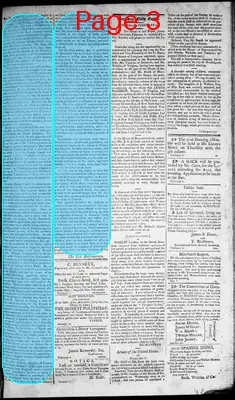
Editorial
February 9, 1809
Alexandria Daily Gazette, Commercial & Political
Alexandria, Virginia
What is this article about?
An editorial advocating U.S. support for Spanish patriots resisting French imperialism under Bonaparte, warning of global dangers if Spain falls, and drawing parallels to the American Revolution's fight for independence.
Clipping
OCR Quality
88%
Good
Full Text
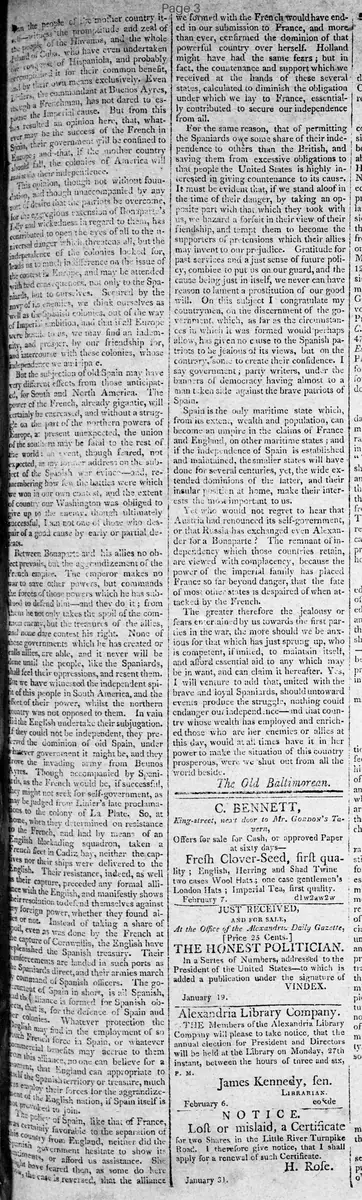
Can the people of our mother country witness the promptitude and zeal of the convoy of Hispaniola, and probably of the island of Cuba, who have even undertaken the people of the Havanna, and the whole accomplished it for their common benefit, and by their own means exclusively. Even Liniers, the commandant at Buenos Ayres, though a Frenchman, has not dared to espouse the Imperial cause. But from this, whatever may be the success of the French in Spain, their government will be confined to Europe; and that, if the mother country should fall, the colonies of America will maintain their independence.
This opinion, though not without foundation, and though unaccompanied by any sort of desire that the patriots be overcome, for the egregious extension of Bonaparte's fully and wickedness in regard to them, has contributed to open the eyes of all to the universal danger which threatens all, but the independence of the colonies looked for, leads us to much indifference on the issue of the contest in Europe, and may be attended with bad consequences, not only to the Spaniards, but to ourselves. Secured by the navy of its enemies, we think ourselves as well as the Spanish colonies, out of the way of Imperial ambition, and that if all Europe were hostile to us, we may find an indemnity, and prosper, by our friendship for, and intercourse with these colonies, whose independence we anticipate.
But the subjection of old Spain may have very different effects from those anticipated, for South and North America. The power of the French, already gigantic, will certainly be increased, and without a struggle on the part of the northern powers of Europe, at present unexpected, the union of the southern may be fatal to the rest of the world: an event, though feared, not expected, as now journal address on the subject of the Spanish war evince--and, remembering how ill the battles were which we won in our own contest, and the extent of country our Washington was obliged to give up to the enemy, though ultimately successful, I am not one of those who despair of a good cause by early or partial defeats.
Between Bonaparte and his allies no object prevails, but the aggrandizement of the French empire. The Emperor makes no war to save other powers, but commands the forces of those powers which he has subjugated to defend him--and they do it; from them he not only takes the spoil of the common enemy, but the treasures of the allies, and none dare contest his right. None of these governments which he has created or calls allies, are able, and it never will be done until the people, like the Spaniards, shall feel their oppressions, and resent them.
But we have witnessed the independent spirit of this people in South America, and the effect of their power, whilst the northern country was not opposed to them. In vain did the English undertake their subjugation. If they could not be independent, they preferred the dominion of old Spain, under whatever government it might be, and they drove the invading army from Buenos Ayres. Though accompanied by Spaniards, as the French would be, if successful, they might not seek for self-government, as may be judged from Liniers' late proclamations to the colony of La Plata. So, at home, when they determined on resistance to the French, and had by means of an English blockading squadron, taken a French fleet in Cadiz bay, neither the captives nor their ships were delivered to the English. Their resistance, indeed, as well as their capture, preceded any formal alliance with the English, and manifestly shows their resolution to defend themselves against any foreign power, whether they found allies or not. Instead of taking a share of spoil, even as was done by the French at the capture of Cornwallis, the English have replenished the Spanish treasury. Their reinforcements are landed in such ports as the Spaniards direct, and their armies march by command of Spanish officers. The government of Spain in short, is all Spanish, and the alliance is formed for Spanish objects, that is, for the defence of Spain and her colonies.
Whatever protection the British may find in the employment of so much French force in Spain, or whatever commercial benefits may accrue to them from this alliance, no one can at this moment, that England can appropriate to itself the Spanish territory or treasure, much less employ their forces for the aggrandizement of the English nation, if Spain itself is not provoked to join.
The policy of Spain, like that of France, was certainly favorable to the separation of this country from England; neither Spanish sentiments government or afford hesitate us assistance. She to show its right have feared then, as some do here, the case is reversed, that the alliance we formed with the French would have ended in our submission to France, and more than ever, confirmed the dominion of that powerful country over herself. Holland might have had the same fears: but in fact, the countenance and support which we received at the hands of these several states, calculated to diminish the obligation under which we lay to France, essentially contributed to secure our independence from all.
For the same reason, that of permitting the Spaniards owe some share of their independence to others than the British, and saving them from excessive obligations to that people the United States is highly interested in giving countenance to its cause. It must be evident that, if we stand aloof in the time of their danger, by taking an opposite part with that which they took with us, we hazard a forfeit in their view of their friendship, and tempt them to become the supporters of pretensions which their allies may invent to our prejudice. Gratitude for past services and a just sense of future policy, combine to put us on our guard, and the cause being just in itself, we never can have reason to lament a prostitution of our good will. On this subject I congratulate my countrymen, on the discernment of the government, which, as far as the circumstances in which it was formed would perhaps allow, has given no cause to the Spanish patriots to be jealous of its views, but on the contrary, some to create their confidence. I say government; party writers, under the banners of democracy having almost to a man taken side against the brave patriots of Spain.
Spain is the only maritime state which, from its extent, wealth and population, can become an umpire in the claims of France and England, on other maritime states; and if the independence of Spain is established and maintained, the smaller states will have done for several centuries, yet, the wide extended dominions of the latter, and their insular position at home, make their interests the most important to us.
Yet who would not regret to hear that Austria had renounced its self-government, or that Russia has exchanged even Alexander for a Bonaparte? The remnant of independence which those countries retain, are viewed with complacency, because the power of the imperial family has placed France so far beyond danger, that the fate of most other states is despaired of when attacked by the French.
The greater therefore the jealousy or fears entertained by us towards the first parties in the war, the more should we be anxious for that which has just sprung up, who is competent, if united, to maintain itself, and afford essential aid to any which may be in want, and can claim it hereafter. Yes, I will venture to add that, united with the brave and loyal Spaniards, should untoward events produce the struggle, nothing could endanger our independence--and that country whose wealth has employed and enriched those who are her enemies or allies at this day, would at all times have it in her power to make the situation of this country prosperous, were we shut out from all the world beside.
This opinion, though not without foundation, and though unaccompanied by any sort of desire that the patriots be overcome, for the egregious extension of Bonaparte's fully and wickedness in regard to them, has contributed to open the eyes of all to the universal danger which threatens all, but the independence of the colonies looked for, leads us to much indifference on the issue of the contest in Europe, and may be attended with bad consequences, not only to the Spaniards, but to ourselves. Secured by the navy of its enemies, we think ourselves as well as the Spanish colonies, out of the way of Imperial ambition, and that if all Europe were hostile to us, we may find an indemnity, and prosper, by our friendship for, and intercourse with these colonies, whose independence we anticipate.
But the subjection of old Spain may have very different effects from those anticipated, for South and North America. The power of the French, already gigantic, will certainly be increased, and without a struggle on the part of the northern powers of Europe, at present unexpected, the union of the southern may be fatal to the rest of the world: an event, though feared, not expected, as now journal address on the subject of the Spanish war evince--and, remembering how ill the battles were which we won in our own contest, and the extent of country our Washington was obliged to give up to the enemy, though ultimately successful, I am not one of those who despair of a good cause by early or partial defeats.
Between Bonaparte and his allies no object prevails, but the aggrandizement of the French empire. The Emperor makes no war to save other powers, but commands the forces of those powers which he has subjugated to defend him--and they do it; from them he not only takes the spoil of the common enemy, but the treasures of the allies, and none dare contest his right. None of these governments which he has created or calls allies, are able, and it never will be done until the people, like the Spaniards, shall feel their oppressions, and resent them.
But we have witnessed the independent spirit of this people in South America, and the effect of their power, whilst the northern country was not opposed to them. In vain did the English undertake their subjugation. If they could not be independent, they preferred the dominion of old Spain, under whatever government it might be, and they drove the invading army from Buenos Ayres. Though accompanied by Spaniards, as the French would be, if successful, they might not seek for self-government, as may be judged from Liniers' late proclamations to the colony of La Plata. So, at home, when they determined on resistance to the French, and had by means of an English blockading squadron, taken a French fleet in Cadiz bay, neither the captives nor their ships were delivered to the English. Their resistance, indeed, as well as their capture, preceded any formal alliance with the English, and manifestly shows their resolution to defend themselves against any foreign power, whether they found allies or not. Instead of taking a share of spoil, even as was done by the French at the capture of Cornwallis, the English have replenished the Spanish treasury. Their reinforcements are landed in such ports as the Spaniards direct, and their armies march by command of Spanish officers. The government of Spain in short, is all Spanish, and the alliance is formed for Spanish objects, that is, for the defence of Spain and her colonies.
Whatever protection the British may find in the employment of so much French force in Spain, or whatever commercial benefits may accrue to them from this alliance, no one can at this moment, that England can appropriate to itself the Spanish territory or treasure, much less employ their forces for the aggrandizement of the English nation, if Spain itself is not provoked to join.
The policy of Spain, like that of France, was certainly favorable to the separation of this country from England; neither Spanish sentiments government or afford hesitate us assistance. She to show its right have feared then, as some do here, the case is reversed, that the alliance we formed with the French would have ended in our submission to France, and more than ever, confirmed the dominion of that powerful country over herself. Holland might have had the same fears: but in fact, the countenance and support which we received at the hands of these several states, calculated to diminish the obligation under which we lay to France, essentially contributed to secure our independence from all.
For the same reason, that of permitting the Spaniards owe some share of their independence to others than the British, and saving them from excessive obligations to that people the United States is highly interested in giving countenance to its cause. It must be evident that, if we stand aloof in the time of their danger, by taking an opposite part with that which they took with us, we hazard a forfeit in their view of their friendship, and tempt them to become the supporters of pretensions which their allies may invent to our prejudice. Gratitude for past services and a just sense of future policy, combine to put us on our guard, and the cause being just in itself, we never can have reason to lament a prostitution of our good will. On this subject I congratulate my countrymen, on the discernment of the government, which, as far as the circumstances in which it was formed would perhaps allow, has given no cause to the Spanish patriots to be jealous of its views, but on the contrary, some to create their confidence. I say government; party writers, under the banners of democracy having almost to a man taken side against the brave patriots of Spain.
Spain is the only maritime state which, from its extent, wealth and population, can become an umpire in the claims of France and England, on other maritime states; and if the independence of Spain is established and maintained, the smaller states will have done for several centuries, yet, the wide extended dominions of the latter, and their insular position at home, make their interests the most important to us.
Yet who would not regret to hear that Austria had renounced its self-government, or that Russia has exchanged even Alexander for a Bonaparte? The remnant of independence which those countries retain, are viewed with complacency, because the power of the imperial family has placed France so far beyond danger, that the fate of most other states is despaired of when attacked by the French.
The greater therefore the jealousy or fears entertained by us towards the first parties in the war, the more should we be anxious for that which has just sprung up, who is competent, if united, to maintain itself, and afford essential aid to any which may be in want, and can claim it hereafter. Yes, I will venture to add that, united with the brave and loyal Spaniards, should untoward events produce the struggle, nothing could endanger our independence--and that country whose wealth has employed and enriched those who are her enemies or allies at this day, would at all times have it in her power to make the situation of this country prosperous, were we shut out from all the world beside.
What sub-type of article is it?
Foreign Affairs
War Or Peace
Imperialism
What keywords are associated?
Spanish Independence
Bonaparte Imperialism
Us Foreign Policy
Spanish Colonies
American Revolution Parallels
French Subjugation
European War
British Alliance
What entities or persons were involved?
Bonaparte
Spain
Spanish Patriots
United States
England
French Empire
Liniers
Washington
Editorial Details
Primary Topic
U.S. Support For Spanish Independence Against French Imperialism
Stance / Tone
Advocacy For Aiding Spanish Patriots And Warning Of Bonaparte's Threats
Key Figures
Bonaparte
Spain
Spanish Patriots
United States
England
French Empire
Liniers
Washington
Key Arguments
Colonies Will Maintain Independence If Spain Falls To France
U.S. Indifference To European Contest Risks Consequences For America
Subjection Of Spain Would Increase French Power Fatally For The World
Bonaparte Seeks Only French Empire Aggrandizement, Subjugating Allies
Spanish Resistance Shows Independent Spirit, Preferring Old Spain Over Invaders
U.S. Should Support Spain To Repay Past Aid And Secure Future Friendship
Government's Neutral Stance Builds Spanish Confidence
Spain As Maritime Power Balances France And England
Regret Loss Of Independence In Other Nations Like Austria And Russia
Alliance With Spaniards Would Protect U.S. Independence