Thank you for visiting SNEWPapers!
Sign up free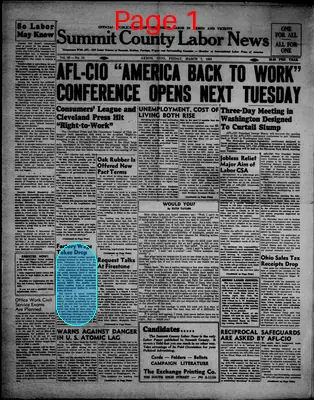
Summit County Labor News
Akron, Summit County, Ohio
What is this article about?
U.S. factory workers' weekly spendable earnings dropped $1.20 from December to January due to shorter hours, per Bureau of Labor Statistics. Average pay after taxes: $87.05 (with 3 dependents), $66.67 (without). Buying power fell >2% monthly, >4.5% yearly amid rising prices.
Clipping
OCR Quality
Full Text
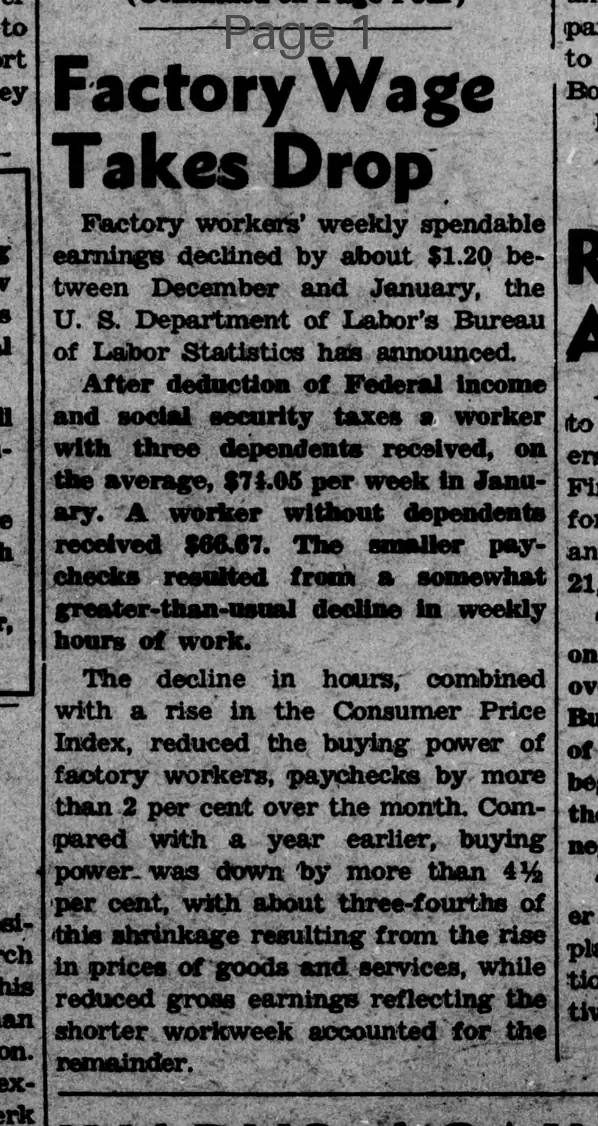
Factory workers' weekly spendable earnings declined by about $1.20 between December and January, the U. S. Department of Labor's Bureau of Labor Statistics has announced.
After deduction of Federal income and social security taxes a worker with three dependents received, on the average, $87.05 per week in January. A worker without dependents received $66.67. The smaller paychecks resulted from a somewhat greater-than-usual decline in weekly hours of work.
The decline in hours, combined with a rise in the Consumer Price Index, reduced the buying power of factory workers' paychecks by more than 2 per cent over the month. Compared with a year earlier, buying power was down by more than 4½ per cent, with about three-fourths of this shrinkage resulting from the rise in prices of goods and services, while reduced gross earnings reflecting the shorter workweek accounted for the remainder.
What sub-type of article is it?
What keywords are associated?
Domestic News Details
Event Date
Between December And January
Outcome
weekly spendable earnings declined by about $1.20; worker with three dependents received $87.05 per week; worker without dependents received $66.67; buying power reduced by more than 2 per cent over the month and more than 4½ per cent compared with a year earlier
Event Details
Factory workers' weekly spendable earnings declined by about $1.20 between December and January, announced by the U. S. Department of Labor's Bureau of Labor Statistics. After deduction of Federal income and social security taxes, a worker with three dependents received $87.05 per week in January, and a worker without dependents received $66.67. The decline resulted from a greater-than-usual decline in weekly hours of work. The decline in hours, combined with a rise in the Consumer Price Index, reduced buying power by more than 2 per cent over the month, and compared with a year earlier, buying power was down by more than 4½ per cent, with about three-fourths due to rise in prices and the remainder due to reduced gross earnings from shorter workweek.