Thank you for visiting SNEWPapers!
Sign up free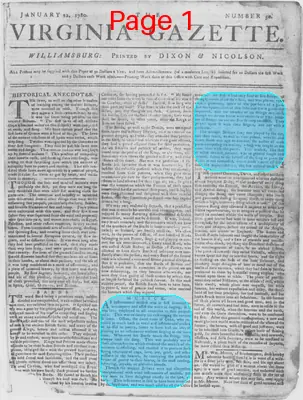
Literary
January 22, 1780
The Virginia Gazette
Richmond, Williamsburg, Richmond County, Virginia
What is this article about?
The text explores the history of ancient British music, its origins in accompanying vocal poetry as in Ossian's works, the preference for the lyre or harp among Celts, and the oral transmission of simple, natural tunes suited to poetic subjects.
Clipping
OCR Quality
95%
Excellent
Full Text
MUSIC.
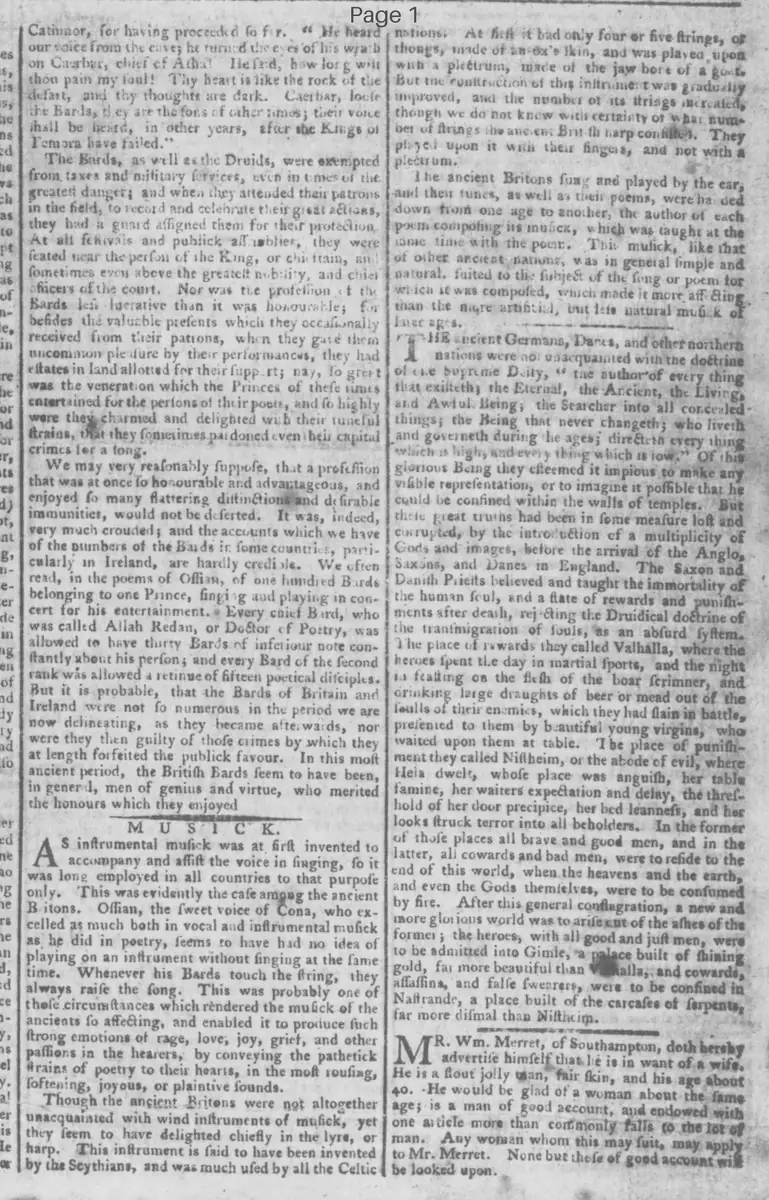
As instrumental music was at first invented to accompany and assist the voice in singing, so it was long employed in all countries to that purpose only. This was evidently the case among the ancient Britons. Ossian, the sweet voice of Cona, who excelled as much both in vocal and instrumental music as he did in poetry, seems to have had no idea of playing on an instrument without singing at the same time. Whenever his Bards touch the string, they always raise the song. This was probably one of those circumstances which rendered the music of the ancients so affecting, and enabled it to produce such strong emotions of rage, love, joy, grief, and other passions in the hearers, by conveying the pathetic strains of poetry to their hearts, in the most rousing, softening, joyous, or plaintive sounds.
Though the ancient Britons were not altogether unacquainted with wind instruments of music, yet they seem to have delighted chiefly in the lyre, or harp. This instrument is said to have been invented by the Scythians, and was much used by all the Celtic nations. At first it had only four or five strings, or thongs, made of an ox's skin, and was played upon with a plectrum, made of the jaw bone of a goat. But the construction of this instrument was gradually improved, and the number of its strings increased, though we do not know with certainty of what number of strings the ancient British harp consisted. They played upon it with their fingers, and not with a plectrum.
The ancient Britons sung and played by the ear, and their tunes, as well as their poems, were handed down from one age to another, the author of each poem composing its music, which was taught at the same time with the poem. This music, like that of other ancient nations, was in general simple and natural, suited to the subject of the song or poem for which it was composed, which made it more affecting than the mere artificial, but less natural music of later ages.
As instrumental music was at first invented to accompany and assist the voice in singing, so it was long employed in all countries to that purpose only. This was evidently the case among the ancient Britons. Ossian, the sweet voice of Cona, who excelled as much both in vocal and instrumental music as he did in poetry, seems to have had no idea of playing on an instrument without singing at the same time. Whenever his Bards touch the string, they always raise the song. This was probably one of those circumstances which rendered the music of the ancients so affecting, and enabled it to produce such strong emotions of rage, love, joy, grief, and other passions in the hearers, by conveying the pathetic strains of poetry to their hearts, in the most rousing, softening, joyous, or plaintive sounds.
Though the ancient Britons were not altogether unacquainted with wind instruments of music, yet they seem to have delighted chiefly in the lyre, or harp. This instrument is said to have been invented by the Scythians, and was much used by all the Celtic nations. At first it had only four or five strings, or thongs, made of an ox's skin, and was played upon with a plectrum, made of the jaw bone of a goat. But the construction of this instrument was gradually improved, and the number of its strings increased, though we do not know with certainty of what number of strings the ancient British harp consisted. They played upon it with their fingers, and not with a plectrum.
The ancient Britons sung and played by the ear, and their tunes, as well as their poems, were handed down from one age to another, the author of each poem composing its music, which was taught at the same time with the poem. This music, like that of other ancient nations, was in general simple and natural, suited to the subject of the song or poem for which it was composed, which made it more affecting than the mere artificial, but less natural music of later ages.
What sub-type of article is it?
Essay
What keywords are associated?
Ossian
Ancient Britons
Harp
Lyre
Celtic Nations
Bardic Music
Oral Tradition
Literary Details
Subject
On Ancient British Music
Key Lines
Ossian, The Sweet Voice Of Cona, Who Excelled As Much Both In Vocal And Instrumental Music As He Did In Poetry, Seems To Have Had No Idea Of Playing On An Instrument Without Singing At The Same Time.
Whenever His Bards Touch The String, They Always Raise The Song.
This Music, Like That Of Other Ancient Nations, Was In General Simple And Natural, Suited To The Subject Of The Song Or Poem For Which It Was Composed, Which Made It More Affecting Than The Mere Artificial, But Less Natural Music Of Later Ages.