Thank you for visiting SNEWPapers!
Sign up free
Literary
August 19, 1811
Portland Gazette, And Maine Advertiser
Portland, Cumberland County, Maine
What is this article about?
This continued essay argues that Congregational church order aligns with primitive Christian practice and scripture, critiquing Presbyterian and Episcopalian structures as human inventions that violate Christ's authority. It uses a hypothetical scenario of members withdrawing from a Presbyterian church to form a Congregational one, emphasizing liberty of conscience.
Clipping
OCR Quality
95%
Excellent
Full Text
Monitorial.
[Continued from our last.]
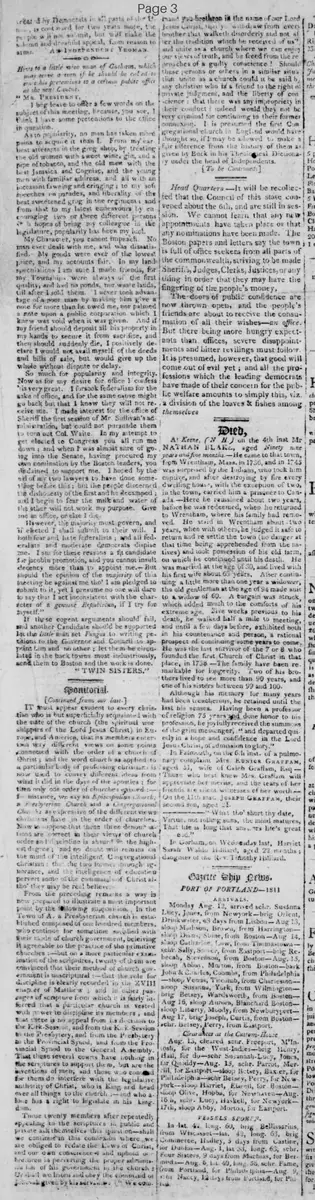
IT must appear evident to every christian who is but superficially acquainted with the state of the church (the spiritual worshippers of the Lord Jesus Christ) in Europe, and America, that its members entertain very different views on some points connected with the order of a church of Christ; and the word church as applied to a particular body of professing christians, is now used to convey different ideas from what it did in the days of the apostles; for then only one order of churches existed: for instance, we say an Episcopalian Church, a Presbyterian Church and a Congregational Church: as expressive of the different views christians have in the order of churches.
Now to suppose that these three denominations are correct in their views of church order and discipline is absurd in the highest degree; and no doubt will remain on the mind of the intelligent Congregational christian: that the two former through ignorance, and the intelligence of education pervert some of the commandments of Christ altho' they may be real believers
From the preceding remarks a way is now prepared to illustrate a most important point by the following supposition. In the Town of A. a Presbyterian church is established composed of one hundred members, who continue for some time satisfied with their modes of church government, believing it agreeable to the practice of the primitive churches: but on a more particular examination of the scriptures, twenty of them are convinced that their method of church government is unscriptural :-that the rule for discipline is clearly recorded in the XVIII chapter of Matthew: and in other passages of scripture from which it is fairly inferred that a particular church is vested with power to discipline its members; and that there is no appeal from its decision to the Kirk Session, and from the Kirk Session to the Presbytery, and from the Presbytery to the Provincial Synod, and from the Provincial Synod to the General Assembly.
That these several courts have nothing in the scriptures to support them, but are the inventions of men, and those who contend for them do interfere with the legislative authority of Christ, who is King and head over all things to the church ;-and who alone has a right to legislate in his Kingdom.
These twenty members after repeatedly appealing to the scriptures in public and private ask themselves this question-shall we continue in this connexion where we are obliged to violate the Laws of Christ, and our Own conscience and uphold our brethren in perverting the proper administration of his government in the church: Or shall we listen and obey the command of the Lord given by his servants: ("We command you, brethren in the name of our Lord Jesus Christ, that ye withdraw from every brother that walketh disorderly and not after the tradition which he received of us")
and unite as a church where we can enjoy our views of truth, and be freed from the reproaches of a guilty conscience? Should these persons or others in a similar situation unite as a church could it be said by any christian who is a friend to the right of private judgment, and the liberty of conscience ; that there was any impropriety in their conduct ? indeed would they not be very criminal for continuing in their former connexion. It is presumed the first Congregational church in England would have thought so, if I may be allowed to make a fair inference from the history of them as given by Buck in his Theological Dictionary under the head of Independents.
To be Continued.
[Continued from our last.]
IT must appear evident to every christian who is but superficially acquainted with the state of the church (the spiritual worshippers of the Lord Jesus Christ) in Europe, and America, that its members entertain very different views on some points connected with the order of a church of Christ; and the word church as applied to a particular body of professing christians, is now used to convey different ideas from what it did in the days of the apostles; for then only one order of churches existed: for instance, we say an Episcopalian Church, a Presbyterian Church and a Congregational Church: as expressive of the different views christians have in the order of churches.
Now to suppose that these three denominations are correct in their views of church order and discipline is absurd in the highest degree; and no doubt will remain on the mind of the intelligent Congregational christian: that the two former through ignorance, and the intelligence of education pervert some of the commandments of Christ altho' they may be real believers
From the preceding remarks a way is now prepared to illustrate a most important point by the following supposition. In the Town of A. a Presbyterian church is established composed of one hundred members, who continue for some time satisfied with their modes of church government, believing it agreeable to the practice of the primitive churches: but on a more particular examination of the scriptures, twenty of them are convinced that their method of church government is unscriptural :-that the rule for discipline is clearly recorded in the XVIII chapter of Matthew: and in other passages of scripture from which it is fairly inferred that a particular church is vested with power to discipline its members; and that there is no appeal from its decision to the Kirk Session, and from the Kirk Session to the Presbytery, and from the Presbytery to the Provincial Synod, and from the Provincial Synod to the General Assembly.
That these several courts have nothing in the scriptures to support them, but are the inventions of men, and those who contend for them do interfere with the legislative authority of Christ, who is King and head over all things to the church ;-and who alone has a right to legislate in his Kingdom.
These twenty members after repeatedly appealing to the scriptures in public and private ask themselves this question-shall we continue in this connexion where we are obliged to violate the Laws of Christ, and our Own conscience and uphold our brethren in perverting the proper administration of his government in the church: Or shall we listen and obey the command of the Lord given by his servants: ("We command you, brethren in the name of our Lord Jesus Christ, that ye withdraw from every brother that walketh disorderly and not after the tradition which he received of us")
and unite as a church where we can enjoy our views of truth, and be freed from the reproaches of a guilty conscience? Should these persons or others in a similar situation unite as a church could it be said by any christian who is a friend to the right of private judgment, and the liberty of conscience ; that there was any impropriety in their conduct ? indeed would they not be very criminal for continuing in their former connexion. It is presumed the first Congregational church in England would have thought so, if I may be allowed to make a fair inference from the history of them as given by Buck in his Theological Dictionary under the head of Independents.
To be Continued.
What sub-type of article is it?
Essay
What themes does it cover?
Religious
Political
Liberty Freedom
What keywords are associated?
Church Order
Congregational Church
Presbyterian Church
Scriptural Authority
Liberty Of Conscience
Christian Denominations
Ecclesiastical Discipline
Literary Details
Title
Monitorial.
Subject
On Church Order And Discipline Among Christian Denominations
Form / Style
Argumentative Prose Essay
Key Lines
It Must Appear Evident To Every Christian Who Is But Superficially Acquainted With The State Of The Church... That The Two Former Through Ignorance, And The Intelligence Of Education Pervert Some Of The Commandments Of Christ Altho' They May Be Real Believers
That The Rule For Discipline Is Clearly Recorded In The Xviii Chapter Of Matthew: And In Other Passages Of Scripture From Which It Is Fairly Inferred That A Particular Church Is Vested With Power To Discipline Its Members;
"We Command You, Brethren In The Name Of Our Lord Jesus Christ, That Ye Withdraw From Every Brother That Walketh Disorderly And Not After The Tradition Which He Received Of Us"
That There Was Any Impropriety In Their Conduct ? Indeed Would They Not Be Very Criminal For Continuing In Their Former Connexion.