Thank you for visiting SNEWPapers!
Sign up free
Editorial
July 24, 1861
Weekly Standard
Raleigh, Wake County, North Carolina
What is this article about?
Editorial critiques arrogant officers in the Confederate army, using Count De Estang's dismissive phrase as example, advocating firm yet kind leadership to foster discipline and troop loyalty, urging North Carolina authorities to vet appointments carefully.
Clipping
OCR Quality
95%
Excellent
Full Text
"JAUN FOUTRE DE SOLDIER."
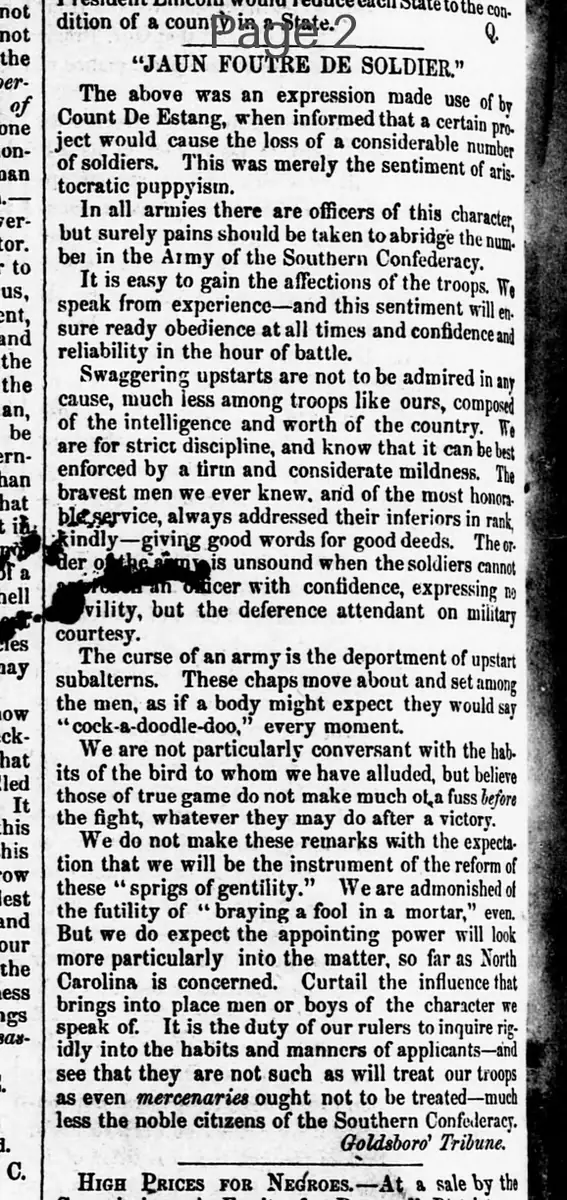
The above was an expression made use of by Count De Estang, when informed that a certain project would cause the loss of a considerable number of soldiers. This was merely the sentiment of aristocratic puppyism. In all armies there are officers of this character, but surely pains should be taken to abridge the number in the Army of the Southern Confederacy. It is easy to gain the affections of the troops. We speak from experience—and this sentiment will ensure ready obedience at all times and confidence and reliability in the hour of battle. Swaggering upstarts are not to be admired in any cause, much less among troops like ours, composed of the intelligence and worth of the country. We are for strict discipline, and know that it can be best enforced by a firm and considerate mildness. The bravest men we ever knew, and of the most honorable service, always addressed their inferiors in rank kindly—giving good words for good deeds. The order of heaven is unsound when the soldiers cannot approach an officer with confidence, expressing civility, but the deference attendant on military courtesy. The curse of an army is the deportment of upstart subalterns. These chaps move about and strut among the men, as if a body might expect they would say "cock-a-doodle-doo," every moment. We are not particularly conversant with the habits of the bird to whom we have alluded, but believe those of true game do not make much of a fuss before the fight, whatever they may do after a victory. We do not make these remarks with the expectation that we will be the instrument of the reform of these "sprigs of gentility." We are admonished of the futility of "braying a fool in a mortar," even. But we do expect the appointing power will look more particularly into the matter, so far as North Carolina is concerned. Curtail the influence that brings into place men or boys of the character we speak of. It is the duty of our rulers to inquire rigidly into the habits and manners of applicants—and see that they are not such as will treat our troops as even mercenaries ought not to be treated—much less the noble citizens of the Southern Confederacy.
Goldsboro' Tribune.
The above was an expression made use of by Count De Estang, when informed that a certain project would cause the loss of a considerable number of soldiers. This was merely the sentiment of aristocratic puppyism. In all armies there are officers of this character, but surely pains should be taken to abridge the number in the Army of the Southern Confederacy. It is easy to gain the affections of the troops. We speak from experience—and this sentiment will ensure ready obedience at all times and confidence and reliability in the hour of battle. Swaggering upstarts are not to be admired in any cause, much less among troops like ours, composed of the intelligence and worth of the country. We are for strict discipline, and know that it can be best enforced by a firm and considerate mildness. The bravest men we ever knew, and of the most honorable service, always addressed their inferiors in rank kindly—giving good words for good deeds. The order of heaven is unsound when the soldiers cannot approach an officer with confidence, expressing civility, but the deference attendant on military courtesy. The curse of an army is the deportment of upstart subalterns. These chaps move about and strut among the men, as if a body might expect they would say "cock-a-doodle-doo," every moment. We are not particularly conversant with the habits of the bird to whom we have alluded, but believe those of true game do not make much of a fuss before the fight, whatever they may do after a victory. We do not make these remarks with the expectation that we will be the instrument of the reform of these "sprigs of gentility." We are admonished of the futility of "braying a fool in a mortar," even. But we do expect the appointing power will look more particularly into the matter, so far as North Carolina is concerned. Curtail the influence that brings into place men or boys of the character we speak of. It is the duty of our rulers to inquire rigidly into the habits and manners of applicants—and see that they are not such as will treat our troops as even mercenaries ought not to be treated—much less the noble citizens of the Southern Confederacy.
Goldsboro' Tribune.
What sub-type of article is it?
Military Affairs
What keywords are associated?
Confederate Army
Officer Conduct
Military Discipline
Troop Morale
Leadership Style
What entities or persons were involved?
Count De Estang
Army Of The Southern Confederacy
North Carolina Appointing Power
Editorial Details
Primary Topic
Critique Of Arrogant Officers In The Confederate Army
Stance / Tone
Critical Of Upstart Officers, Advocating Kind And Firm Leadership
Key Figures
Count De Estang
Army Of The Southern Confederacy
North Carolina Appointing Power
Key Arguments
Officers' Dismissive Attitudes Like Count De Estang's Harm Troop Morale
Strict Discipline Best Enforced By Firm And Considerate Mildness
Brave Officers Address Inferiors Kindly To Ensure Obedience And Confidence
Upstart Subalterns Curse The Army With Their Strutting Deportment
Appointing Power Should Rigidly Inquire Into Habits Of Officer Applicants