Thank you for visiting SNEWPapers!
Sign up free
Literary
March 19, 1908
Lewiston Evening Teller
Lewiston, Nez Perce County, Idaho
What is this article about?
Margaret E. Sangster, in the Woman's Home Companion, addresses overproduction in American women via education. She questions what true education is—making the best use of one's powers and influencing others positively—and criticizes rushed, uniform schooling that ignores individual temperaments, leading to burdensome lives.
Clipping
OCR Quality
95%
Excellent
Full Text
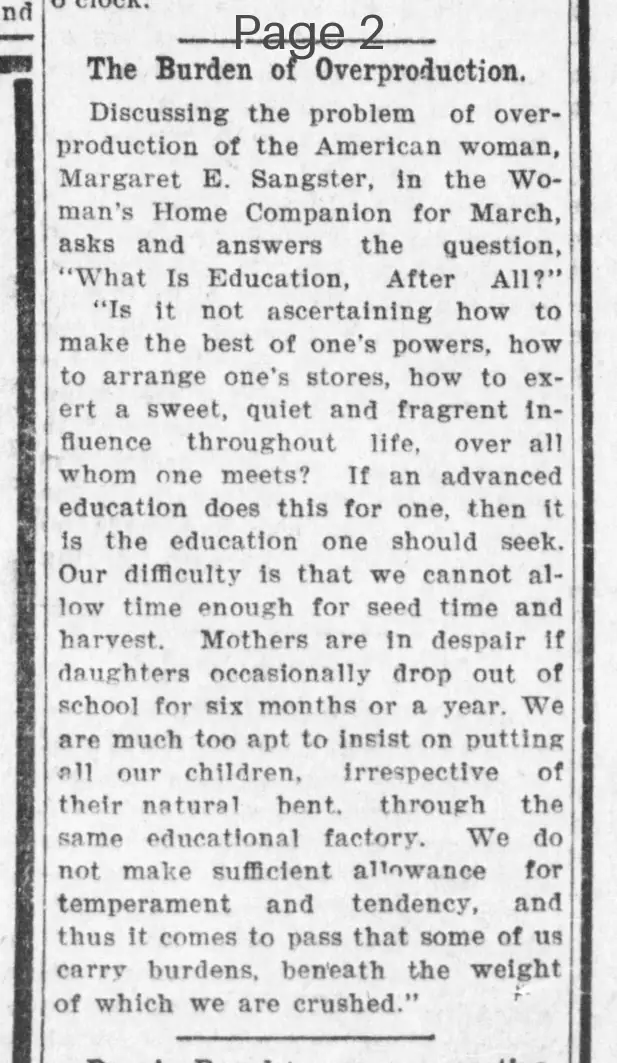
The Burden of Overproduction.
Discussing the problem of over-production of the American woman, Margaret E. Sangster, in the Woman's Home Companion for March, asks and answers the question, "What Is Education, After All?"
"Is it not ascertaining how to make the best of one's powers, how to arrange one's stores, how to exert a sweet, quiet and fragrant influence throughout life, over all whom one meets?
If an advanced education does this for one, then it is the education one should seek.
Our difficulty is that we cannot allow time enough for seed time and harvest.
Mothers are in despair if daughters occasionally drop out of school for six months or a year. We are much too apt to insist on putting all our children, irrespective of their natural bent, through the same educational factory.
We do not make sufficient allowance for temperament and tendency, and thus it comes to pass that some of us carry burdens, beneath the weight of which we are crushed."
Discussing the problem of over-production of the American woman, Margaret E. Sangster, in the Woman's Home Companion for March, asks and answers the question, "What Is Education, After All?"
"Is it not ascertaining how to make the best of one's powers, how to arrange one's stores, how to exert a sweet, quiet and fragrant influence throughout life, over all whom one meets?
If an advanced education does this for one, then it is the education one should seek.
Our difficulty is that we cannot allow time enough for seed time and harvest.
Mothers are in despair if daughters occasionally drop out of school for six months or a year. We are much too apt to insist on putting all our children, irrespective of their natural bent, through the same educational factory.
We do not make sufficient allowance for temperament and tendency, and thus it comes to pass that some of us carry burdens, beneath the weight of which we are crushed."
What sub-type of article is it?
Essay
What themes does it cover?
Moral Virtue
Social Manners
What keywords are associated?
Education
Women
Overproduction
Temperament
Natural Bent
Moral Influence
What entities or persons were involved?
Margaret E. Sangster
Literary Details
Title
The Burden Of Overproduction
Author
Margaret E. Sangster
Subject
What Is Education, After All?
Key Lines
"What Is Education, After All?"
"Is It Not Ascertaining How To Make The Best Of One's Powers, How To Arrange One's Stores, How To Exert A Sweet, Quiet And Fragrant Influence Throughout Life, Over All Whom One Meets?"
"If An Advanced Education Does This For One, Then It Is The Education One Should Seek."
We Do Not Make Sufficient Allowance For Temperament And Tendency, And Thus It Comes To Pass That Some Of Us Carry Burdens, Beneath The Weight Of Which We Are Crushed.