Thank you for visiting SNEWPapers!
Sign up free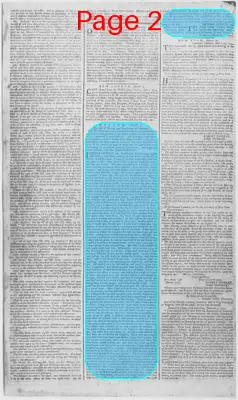
The Virginia Gazette
Richmond, Williamsburg, Richmond County, Virginia
What is this article about?
On March 8, 1775, in Boston, Thomas Ditson Jr. of Billerica was tarred and feathered by British soldiers of the 47th Regiment after attempting to purchase a gun from a soldier, suspected of enticing desertion. He was paraded through the streets to Liberty Tree.
Clipping
OCR Quality
Full Text
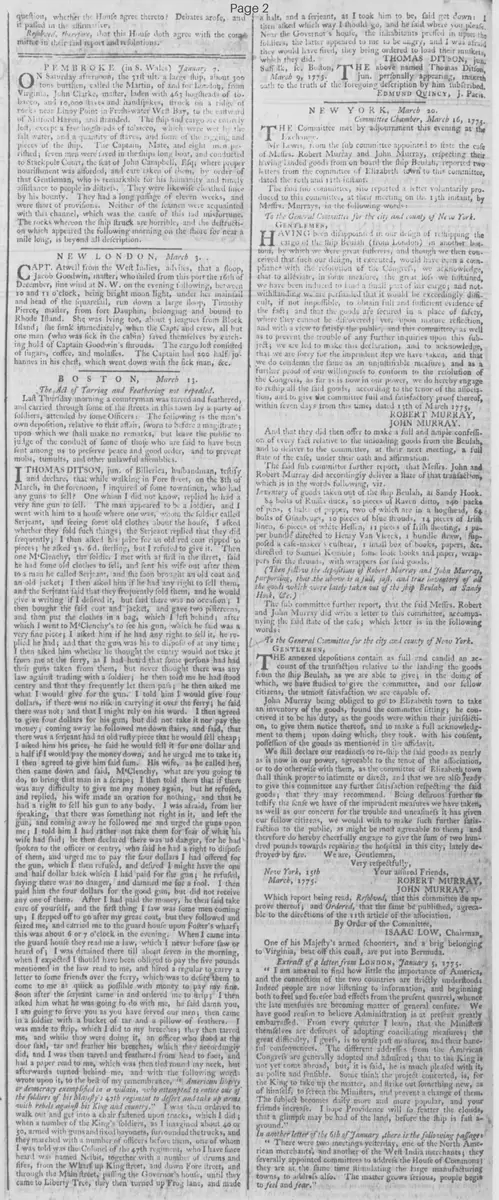
The Act of Tarring and Feathering not repealed.
Last Thursday morning a countryman was tarred and feathered, and carried through some of the streets in this town by a party of soldiers, attended by some Officers: The following is the man's own deposition, relative to that affair, sworn to before a magistrate; upon which we shall make no remarks, but leave the public to judge of the conduct of some of those who are said to have been sent among us to preserve peace and good order, and to prevent mobs, tumults, and other unlawful assemblies.
I, THOMAS DITSON, jun. of Billerica, husbandman, testify and declare, that while walking in Fore street, on the 8th of March, in the forenoon, I inquired of some townsmen, who had any guns to sell? One whom I did not know, replied he had a very fine gun to sell. The man appeared to be a soldier, and I went with him to a house where one was, whom the soldier called Sergeant, and seeing some old clothes about the house, I asked whether they sold such things; the Sergeant replied that they did frequently; I then asked his price for an old red coat ripped to pieces; he asked 3s. 6d. sterling, but I refused to give it. Then one McClenchan, the soldier I met with at first in the street, said he had some old clothes to sell, and sent his wife out after them to a man he called Sergeant, and she soon brought an old coat and an old jacket; I then asked him if he had any right to sell them, and the Sergeant said that they frequently sold them, and he would give a writing if I desired it, but said there was no occasion; I then bought the said coat and jacket, and gave two pistareens, and then put the clothes in a bag, which I left behind; after which I went to McClenchan's to see his gun, which he said was a very fine piece; I asked him if he had any right to sell it, he replied he had; and that the gun was his to dispose of at any time; I then asked him whether he thought the sentry would not take it from me at the ferry, as I had heard that some persons had had their guns taken from them, but never thought there was any law against trading with a soldier; he then told me he had stood sentry and that they frequently let them pass; he then asked me what I would give for the gun. I told him I would give four dollars, if there was no risk in carrying it over the ferry; he said there was not; and that I might rely on his word. I then agreed to give four dollars for his gun, but did not take it nor pay the money; coming away he followed me down stairs, and said, that there was a sergeant had an old rusty piece that he would sell cheap; I asked him his price, he said he would sell it for one dollar and a half if I would pay the money down, and he urged me to take it; I then agreed to give him said sum. His wife, as he called her, then came down and said, McClenchan, what are you going to do, to bring that man in a scrape; I then told them that if there was any difficulty to give me my money again, but he refused, and replied, his wife made an oration for nothing, and that he had a right to sell his gun to any body. I was afraid, from her speaking, that there was something not right in it, and left the gun, and coming away he followed me and urged the guns upon me; I told him I had rather not take them for fear of what his wife had said; he then declared there was no danger, for he had spoken to the officer or sentry, who said he had a right to dispose of them, and urged me to pay the four dollars I had offered for the gun, which I then refused, and desired I might have the one and half dollar back which I had paid for the gun; he refused, saying there was no danger, and damned me for a fool. I then paid him the four dollars for the good gun, but did not receive any one of them. After I had paid the money, he then said take care of yourself, and the first thing I saw was some men coming up; I stepped off to go after my great coat, but they followed and seized me, and carried me to the guard house upon Fort's wharf; this was about 6 or 7 o'clock in the evening. When I came into the guard house they read me a law, which I never before saw or heard of; I was detained there till about seven in the morning, when I expected I should have been obliged to pay the five pounds mentioned in the law read to me, and hired a negro to carry a letter to some friends over the ferry, which was to desire them to come to me as quick as possible with money to pay my fine. Soon after the sergeant came in and ordered me to strip; I then asked him what he was going to do with me, he said damn you, I am going to serve you as you have served our men; then came in a soldier with a bucket of tar and a pillow of feathers. I was made to strip, which I did to my breeches; they then tarred me, and while they were doing it, an officer who stood at the door said, tar and feather his breeches, which they accordingly did, and I was then tarred and feathered from head to foot, and had a paper read to me, which was then tied round my neck, but afterwards turned behind me, and with the following words written upon it, to the best of my remembrance, "American liberty or democracy exemplified in a villain, who attempted to entice one of the Soldiers of his Majesty's 47th regiment to desert and take up arms with rebels against his King and country." I was then ordered to walk out and get into a chair fastened upon trucks, which I did; when a number of the King's soldiers, as I imagined about 40 or 50, armed with guns and fixed bayonets, surrounded the trucks, and they marched with a number of officers before them, one of whom I was told was the Colonel of the 47th regiment, who I have since heard was named Nesbitt, together with a number of drums and fifes, from the Wharf up King street, and down Fore street, and through the Main street, passing the Governor's house, until they came to Liberty Tree, they then turned up Frog lane, and made
a halt, and a sergeant, as I took him to be, said get down: I then asked which way I should go, and he said where you please. Near the Governor's house, the inhabitants pressed in upon the soldiers, the latter appeared to me to be angry, and I was afraid they would have fired, they being ordered to load their muskets, which they did.
THOMAS DITSON, jun.
Suffolk, ss. Boston,
March 9, 1775.
T
The above named Thomas Ditton, jun. personally appearing, maketh oath to the truth of this foregoing description by him subscribed.
Edmund Quincy, J. Pacis.
What sub-type of article is it?
What keywords are associated?
What entities or persons were involved?
Where did it happen?
Domestic News Details
Primary Location
Boston
Event Date
8th Of March
Key Persons
Outcome
thomas ditson was tarred and feathered from head to foot, paraded through boston streets by 40-50 soldiers to liberty tree, and released.
Event Details
Thomas Ditson attempted to buy a gun and clothes from soldiers including McClenchan and a sergeant, suspected of enticing desertion. Soldiers seized him, detained him overnight, tarred and feathered him, attached a mocking paper to his neck, and marched him publicly with drums, fifes, and officers including Colonel Nesbitt.