Thank you for visiting SNEWPapers!
Sign up free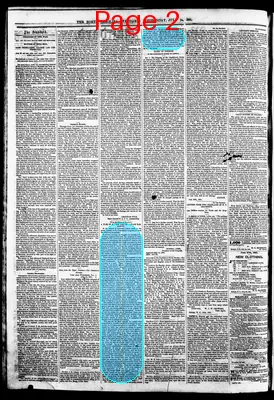
Editorial
July 24, 1861
Weekly Standard
Raleigh, Wake County, North Carolina
What is this article about?
Editorial denounces Secretary Chase's proposal to confiscate property of Confederates and supporters as punishment for insurrection, labeling it robbery. Advocates total resistance, no retreats, and destroying undefendable property to deny it to invaders, citing enemy atrocities in Martinsburg.
Clipping
OCR Quality
95%
Excellent
Full Text
A WAR OF RAPINE AND OF SAVAGE BARBARITY.
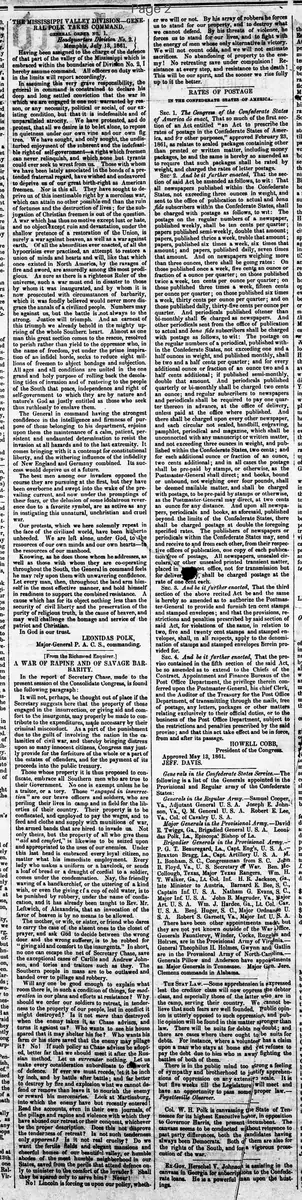
In the report of Secretary Chase, made to the present session of the Confederate Congress, is found the following paragraph: It will not, perhaps, be thought out of place if the Secretary suggests here that the property of those engaged in the insurrection, or giving aid and comfort to the insurgents, may properly be made to contribute to the expenditures, made necessary by their criminal misconduct. As a part of the punishment due to the guilt of involving the nation in the calamities of civil war, and thereby bringing distress upon so many innocent citizens, Congress may justly provide for the forfeiture of the whole or a part of the estates of offenders, and for the payment of its proceeds into the public treasury. Those whose property it is thus proposed to confiscate, embrace all Southern men who are true to their Government. No one is exempt unless he be a traitor, or a tory. Those "engaged in insurrection" are our brave officers and soldiers, who are periling their lives in camp and in field for the liberties of their country. Their property is to be confiscated, and employed to pay the wages, and to feed and clothe and supply with munitions of war, the armed bands that are hired to invade us. Not only theirs, but the property of all who give them "aid and comfort," is likewise to be seized upon and appropriated to the uses of our enemies. Under this last head is embraced every loyal citizen, no matter what his immediate employment. Every lady who makes a uniform or a havelock, or sends a loaf of bread or a draught of cordial to a soldier, comes under the condemnation. Nay, the friendly waving of a handkerchief, or the uttering of a kind wish, or even the giving of a cup of cold water, is to be punished by robbery, under the name of confiscation, and it has already been taught to Rev. Mr. Leftwich, of Alexandria, that an invocation of the favor of heaven is by no means to be allowed. The mother, or wife, or sister, or friend who dares to carry the case of the absent ones to the closet of prayer, and ask God to decide between the wrong doer and the wrong sufferer, is to be robbed for "giving aid and comfort to the insurgents." In short no one can escape the net of Secretary Chase, save the exceptional cases of Carlile and Andrew Johnson, and tories and traitors such as they. The Southern people in mass are to be outlawed and handed over to pillage and robbery. Will any one be good enough to explain what room there is, in such a condition of things, for moderation in our plans and efforts at resistance? Why should we order our soldiers to retreat, in tenderness to the property of our people, lest in conflict it might be destroyed? Is it not more than destroyed when the enemy takes it, as Chase advises, and turns it against us? Who wants to see his house spared that it may shelter his foe? Who wants his farm or his store saved that the enemy may pillage it? No! If such policy as Chase advises be adopted, better far that we should meet it after the Russian method. Let us surrender nothing. Let us make every consideration subordinate to the work of defence. If ever we must recede, let it be inch by inch, and by battle after battle; and far better to destroy by fire and explosion what we cannot defend or remove than leave it to nourish the enemy or reward his mercenaries. Look at Martinsburg, into which the enemy have but recently entered! Read the accounts, even in their own journals, of the pillage and rapine and violence with which they have abused our retreat or their conquest, whichever be the proper description. Does this not disprove the tenderness of retreat? Is not such tenderness only apparent? Is it not real cruelty? Do we want the fertile fields and elegant mansions and cheerful homes of our beautiful valley, or humble abodes of the most humble neighborhood in our States, saved from the perils that attend defence only to minister to the comfort of the Invader? Shall they be spared only to serve him? Never! No! Lincoln is forcing us upon our policy, whether we will or not. By his array of robbers he forces us to stand for our property, and to destroy what we cannot defend. By his threats of violence, he forces us to stand for our lives, and to fight with the energy of men whose only alternative is victory. We will not count odds, and we will not estimate sacrifices. No abandoning of property to the enemy! No retreating save under compulsion! Resistance at every step, and resistance to the death! This will be our spirit, and the sooner we rise fully up to it the better.
In the report of Secretary Chase, made to the present session of the Confederate Congress, is found the following paragraph: It will not, perhaps, be thought out of place if the Secretary suggests here that the property of those engaged in the insurrection, or giving aid and comfort to the insurgents, may properly be made to contribute to the expenditures, made necessary by their criminal misconduct. As a part of the punishment due to the guilt of involving the nation in the calamities of civil war, and thereby bringing distress upon so many innocent citizens, Congress may justly provide for the forfeiture of the whole or a part of the estates of offenders, and for the payment of its proceeds into the public treasury. Those whose property it is thus proposed to confiscate, embrace all Southern men who are true to their Government. No one is exempt unless he be a traitor, or a tory. Those "engaged in insurrection" are our brave officers and soldiers, who are periling their lives in camp and in field for the liberties of their country. Their property is to be confiscated, and employed to pay the wages, and to feed and clothe and supply with munitions of war, the armed bands that are hired to invade us. Not only theirs, but the property of all who give them "aid and comfort," is likewise to be seized upon and appropriated to the uses of our enemies. Under this last head is embraced every loyal citizen, no matter what his immediate employment. Every lady who makes a uniform or a havelock, or sends a loaf of bread or a draught of cordial to a soldier, comes under the condemnation. Nay, the friendly waving of a handkerchief, or the uttering of a kind wish, or even the giving of a cup of cold water, is to be punished by robbery, under the name of confiscation, and it has already been taught to Rev. Mr. Leftwich, of Alexandria, that an invocation of the favor of heaven is by no means to be allowed. The mother, or wife, or sister, or friend who dares to carry the case of the absent ones to the closet of prayer, and ask God to decide between the wrong doer and the wrong sufferer, is to be robbed for "giving aid and comfort to the insurgents." In short no one can escape the net of Secretary Chase, save the exceptional cases of Carlile and Andrew Johnson, and tories and traitors such as they. The Southern people in mass are to be outlawed and handed over to pillage and robbery. Will any one be good enough to explain what room there is, in such a condition of things, for moderation in our plans and efforts at resistance? Why should we order our soldiers to retreat, in tenderness to the property of our people, lest in conflict it might be destroyed? Is it not more than destroyed when the enemy takes it, as Chase advises, and turns it against us? Who wants to see his house spared that it may shelter his foe? Who wants his farm or his store saved that the enemy may pillage it? No! If such policy as Chase advises be adopted, better far that we should meet it after the Russian method. Let us surrender nothing. Let us make every consideration subordinate to the work of defence. If ever we must recede, let it be inch by inch, and by battle after battle; and far better to destroy by fire and explosion what we cannot defend or remove than leave it to nourish the enemy or reward his mercenaries. Look at Martinsburg, into which the enemy have but recently entered! Read the accounts, even in their own journals, of the pillage and rapine and violence with which they have abused our retreat or their conquest, whichever be the proper description. Does this not disprove the tenderness of retreat? Is not such tenderness only apparent? Is it not real cruelty? Do we want the fertile fields and elegant mansions and cheerful homes of our beautiful valley, or humble abodes of the most humble neighborhood in our States, saved from the perils that attend defence only to minister to the comfort of the Invader? Shall they be spared only to serve him? Never! No! Lincoln is forcing us upon our policy, whether we will or not. By his array of robbers he forces us to stand for our property, and to destroy what we cannot defend. By his threats of violence, he forces us to stand for our lives, and to fight with the energy of men whose only alternative is victory. We will not count odds, and we will not estimate sacrifices. No abandoning of property to the enemy! No retreating save under compulsion! Resistance at every step, and resistance to the death! This will be our spirit, and the sooner we rise fully up to it the better.
What sub-type of article is it?
War Or Peace
Military Affairs
Economic Policy
What keywords are associated?
Property Confiscation
Southern Resistance
Civil War Tactics
Enemy Pillage
Martinsburg Atrocities
Total Defense
What entities or persons were involved?
Secretary Chase
Confederate Congress
Lincoln
Southern People
Rev. Mr. Leftwich
Carlile
Andrew Johnson
Editorial Details
Primary Topic
Confederate Response To Union Property Confiscation Proposal
Stance / Tone
Fiercely Defiant Advocacy For Total Resistance And Scorched Earth Tactics
Key Figures
Secretary Chase
Confederate Congress
Lincoln
Southern People
Rev. Mr. Leftwich
Carlile
Andrew Johnson
Key Arguments
Confiscation Targets All Loyal Southerners Including Soldiers And Civilians Providing Aid
Even Minor Acts Like Prayer Or Giving Water Are Punishable By Property Seizure
No Moderation In Resistance Given Enemy's Intent To Rob And Pillage
Better To Destroy Property Than Allow Enemy To Use It Against Confederates
Cite Enemy Atrocities In Martinsburg As Proof Of Retreat's Futility
Adopt Russian Style Total Defense: No Surrender, Fight Inch By Inch
Lincoln's Policies Force Confederates To Total War For Survival