Thank you for visiting SNEWPapers!
Sign up free
Editorial
September 2, 1835
Morning Star
Limerick, York County, Maine
What is this article about?
An 1835 editorial from Dover defends 'excitements' as necessary to rouse people to action in good causes like religion and anti-slavery reform. It criticizes opponents as motivated by self-interest, arguing that true opposition is selective and inconsistent.
Clipping
OCR Quality
95%
Excellent
Full Text
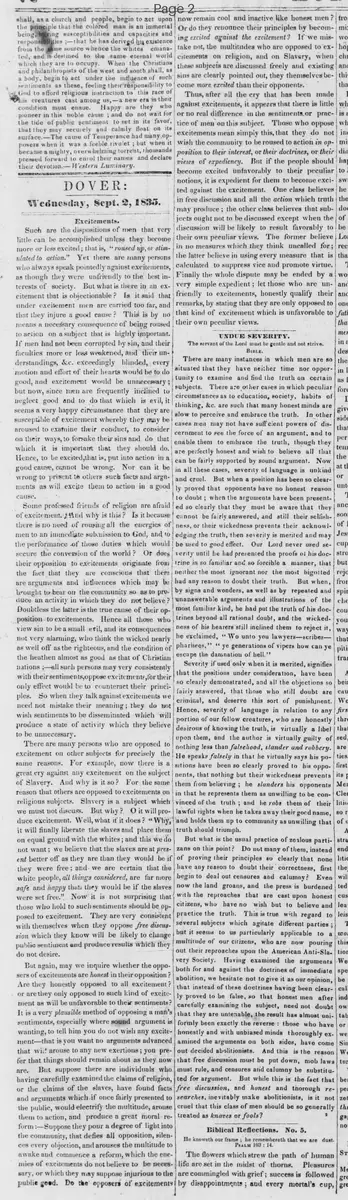
DOVER:
Wednesday, Sept. 2, 1835.
Excitements.
Such are the dispositions of men that very little can be accomplished unless they become more or less excited; that is, "roused up, or stimulated to action." Yet there are many persons who always speak pointedly against excitements, as though they were unfriendly to the best interests of society. But what is there in an excitement that is objectionable? Is it said that under excitement men are carried too far, and that they injure a good cause? This is by no means a necessary consequence of being roused to action on a subject that is highly important. If men had not been corrupted by sin, and their faculties more or less weakened, and their understandings, &c. exceedingly blinded, every motion and effort of their hearts would be to do good, and excitement would be unnecessary; but now, since men are frequently inclined to neglect good and to do that which is evil, it seems a very happy circumstance that they are susceptible of excitement whereby they may be aroused to examine their conduct, to consider on their ways, to forsake their sins and do that which it is important that they should do. Hence, to be excited, that is, put into action in a good cause, cannot be wrong. Nor can it be wrong to present to others such facts and arguments as will excite them to action in a good cause.
Some professed friends of religion are afraid of excitement. And why is this? Is it because there is no need of rousing all the energies of men to an immediate submission to God, and to the performance of those duties which would secure the conversion of the world? Or does their opposition to excitements originate from the fact that they are conscious that there are arguments and influences which may be brought to bear on the community so as to produce an activity in which they do not believe? Doubtless the latter is the true cause of their opposition to excitements. Hence all those who view sin to be a small evil, and its consequences not very alarming, who think the wicked nearly as well off as the righteous, and the condition of the heathen almost as good as that of Christian nations;—all such persons may very consistently with their sentiments, oppose excitements, for their only effect would be to counteract their principles. So when they talk against excitements we need not mistake their meaning; they do not wish sentiments to be disseminated which will produce a state of activity which they believe to be unnecessary.
There are many persons who are opposed to excitement on other subjects for precisely the same reasons. For example, now there is a great cry against any excitement on the subject of Slavery. And why is it so? For the same reason that others are opposed to excitements on religious subjects. Slavery is a subject which we must not discuss. But why? O it will produce excitement. Well, what if it does? "Why. it will finally liberate the slaves and place them on equal ground with the whites; and this we do not want; we believe that the slaves are at present better off as they are than they would be if they were free; and we are certain that the white people, all things considered, are far more safe and happy than they would be if the slaves were set free." Now it is not surprising that those who hold to such sentiments should be opposed to excitement. They are very consistent with themselves when they oppose free discussion which they know will be likely to change public sentiment and produce results which they do not desire.
But again, may we inquire whether the opposers of excitements are honest in their opposition? Are they honestly opposed to all excitement? or are they only opposed to such kind of excitement as will be unfavorable to their sentiments? It is a very plausible method of opposing a man's sentiments, especially where sound argument is wanting, to tell him you do not wish any excitement—that is you want no arguments advanced that will arouse to any new exertions; you prefer that things should remain about as they now are. But suppose there are individuals who having carefully examined the claims of religion, or the claims of the slaves, have found facts and arguments which if once fairly presented to the public, would electrify the multitude, arouse them to action, and produce a great moral reform :—Suppose they pour a degree of light into the community, that defies all opposition, silences every objection, and arouses the multitude to awake and commence a reform, which the enemies of excitements do not believe to be necessary, or which they may suppose injurious to the public good. Do the opposers of excitements now remain cool and inactive like honest men? Or do they renounce their principles by becoming excited against the excitement? If we mistake not, the multitudes who are opposed to excitements on religion, and on Slavery, when these subjects are discussed freely and existing sins are clearly pointed out, they themselves become more excited than their opponents.
Thus, after all the cry that has been made against excitements, it appears that there is little or no real difference in the sentiments, or practice of men on this subject. Those who oppose excitements mean simply this, that they do not wish the community to be roused to action in opposition to their interest, or their doctrines, or their views of expediency. But if the people should become excited unfavorably to their peculiar notions, it is expedient for them to become excited against the excitement. One class believes in free discussion and all the action which truth may produce; the other class believes that subjects ought not to be discussed except when the discussion will be likely to result favorably to their own peculiar views. The former believe in no measures which they think uncalled for: the latter believe in using every measure that is calculated to suppress vice and promote virtue.
Finally the whole dispute may be ended by a very simple expedient; let those who are unfriendly to excitements, honestly qualify their remarks, by stating that they are only opposed to that kind of excitement which is unfavorable to their own peculiar views.
Wednesday, Sept. 2, 1835.
Excitements.
Such are the dispositions of men that very little can be accomplished unless they become more or less excited; that is, "roused up, or stimulated to action." Yet there are many persons who always speak pointedly against excitements, as though they were unfriendly to the best interests of society. But what is there in an excitement that is objectionable? Is it said that under excitement men are carried too far, and that they injure a good cause? This is by no means a necessary consequence of being roused to action on a subject that is highly important. If men had not been corrupted by sin, and their faculties more or less weakened, and their understandings, &c. exceedingly blinded, every motion and effort of their hearts would be to do good, and excitement would be unnecessary; but now, since men are frequently inclined to neglect good and to do that which is evil, it seems a very happy circumstance that they are susceptible of excitement whereby they may be aroused to examine their conduct, to consider on their ways, to forsake their sins and do that which it is important that they should do. Hence, to be excited, that is, put into action in a good cause, cannot be wrong. Nor can it be wrong to present to others such facts and arguments as will excite them to action in a good cause.
Some professed friends of religion are afraid of excitement. And why is this? Is it because there is no need of rousing all the energies of men to an immediate submission to God, and to the performance of those duties which would secure the conversion of the world? Or does their opposition to excitements originate from the fact that they are conscious that there are arguments and influences which may be brought to bear on the community so as to produce an activity in which they do not believe? Doubtless the latter is the true cause of their opposition to excitements. Hence all those who view sin to be a small evil, and its consequences not very alarming, who think the wicked nearly as well off as the righteous, and the condition of the heathen almost as good as that of Christian nations;—all such persons may very consistently with their sentiments, oppose excitements, for their only effect would be to counteract their principles. So when they talk against excitements we need not mistake their meaning; they do not wish sentiments to be disseminated which will produce a state of activity which they believe to be unnecessary.
There are many persons who are opposed to excitement on other subjects for precisely the same reasons. For example, now there is a great cry against any excitement on the subject of Slavery. And why is it so? For the same reason that others are opposed to excitements on religious subjects. Slavery is a subject which we must not discuss. But why? O it will produce excitement. Well, what if it does? "Why. it will finally liberate the slaves and place them on equal ground with the whites; and this we do not want; we believe that the slaves are at present better off as they are than they would be if they were free; and we are certain that the white people, all things considered, are far more safe and happy than they would be if the slaves were set free." Now it is not surprising that those who hold to such sentiments should be opposed to excitement. They are very consistent with themselves when they oppose free discussion which they know will be likely to change public sentiment and produce results which they do not desire.
But again, may we inquire whether the opposers of excitements are honest in their opposition? Are they honestly opposed to all excitement? or are they only opposed to such kind of excitement as will be unfavorable to their sentiments? It is a very plausible method of opposing a man's sentiments, especially where sound argument is wanting, to tell him you do not wish any excitement—that is you want no arguments advanced that will arouse to any new exertions; you prefer that things should remain about as they now are. But suppose there are individuals who having carefully examined the claims of religion, or the claims of the slaves, have found facts and arguments which if once fairly presented to the public, would electrify the multitude, arouse them to action, and produce a great moral reform :—Suppose they pour a degree of light into the community, that defies all opposition, silences every objection, and arouses the multitude to awake and commence a reform, which the enemies of excitements do not believe to be necessary, or which they may suppose injurious to the public good. Do the opposers of excitements now remain cool and inactive like honest men? Or do they renounce their principles by becoming excited against the excitement? If we mistake not, the multitudes who are opposed to excitements on religion, and on Slavery, when these subjects are discussed freely and existing sins are clearly pointed out, they themselves become more excited than their opponents.
Thus, after all the cry that has been made against excitements, it appears that there is little or no real difference in the sentiments, or practice of men on this subject. Those who oppose excitements mean simply this, that they do not wish the community to be roused to action in opposition to their interest, or their doctrines, or their views of expediency. But if the people should become excited unfavorably to their peculiar notions, it is expedient for them to become excited against the excitement. One class believes in free discussion and all the action which truth may produce; the other class believes that subjects ought not to be discussed except when the discussion will be likely to result favorably to their own peculiar views. The former believe in no measures which they think uncalled for: the latter believe in using every measure that is calculated to suppress vice and promote virtue.
Finally the whole dispute may be ended by a very simple expedient; let those who are unfriendly to excitements, honestly qualify their remarks, by stating that they are only opposed to that kind of excitement which is unfavorable to their own peculiar views.
What sub-type of article is it?
Moral Or Religious
Slavery Abolition
Social Reform
What keywords are associated?
Excitements
Religion
Slavery
Free Discussion
Moral Reform
Sin
Abolition
Public Sentiment
What entities or persons were involved?
Professed Friends Of Religion
Opposers Of Excitements
Slaves
Whites
Editorial Details
Primary Topic
Defense Of Excitements In Religion And Anti Slavery Causes
Stance / Tone
Supportive Of Excitements For Moral Reform, Critical Of Selective Opposition
Key Figures
Professed Friends Of Religion
Opposers Of Excitements
Slaves
Whites
Key Arguments
Excitements Are Necessary To Rouse People To Good Actions Due To Human Sinfulness.
Opposition To Religious Excitements Stems From Disbelief In The Urgency Of Conversion.
Opposition To Anti Slavery Excitements Arises From Fear Of Emancipation And Equality.
Opposers Are Inconsistent, Becoming Excited Against Unfavorable Excitements.
True Reform Requires Free Discussion And Action Based On Truth, Not Suppression.