Thank you for visiting SNEWPapers!
Sign up free
The Evening Times
Washington, District Of Columbia
What is this article about?
In Columbia, S.C., the wife of lynched negro Brown sues Orangeburg County for $6,000 under new anti-lynching liability law. Juries rule for county twice despite evidence; case to be appealed to supreme court as test of the law.
Clipping
OCR Quality
Full Text
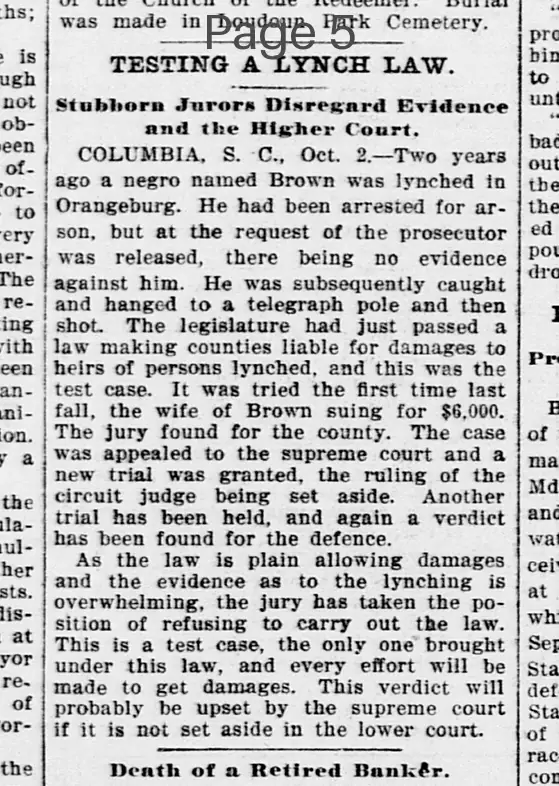
Stubborn Jurors Disregard Evidence and the Higher Court,
COLUMBIA, S. C., Oct. 2.-Two years ago a negro named Brown was lynched in Orangeburg. He had been arrested for arson, but at the request of the prosecutor was released, there being no evidence against him. He was subsequently caught and hanged to a telegraph pole and then shot. The legislature had just passed a law making counties liable for damages to heirs of persons lynched, and this was the test case. It was tried the first time last fall, the wife of Brown suing for $6,000. The jury found for the county. The case was appealed to the supreme court and a new trial was granted, the ruling of the circuit judge being set aside. Another trial has been held, and again a verdict has been found for the defence.
As the law is plain allowing damages and the evidence as to the lynching is overwhelming, the jury has taken the position of refusing to carry out the law. This is a test case, the only one brought under this law, and every effort will be made to get damages. This verdict will probably be upset by the supreme court if it is not set aside in the lower court.
What sub-type of article is it?
What keywords are associated?
What entities or persons were involved?
Where did it happen?
Domestic News Details
Primary Location
Columbia, S. C.
Event Date
Oct. 2
Key Persons
Outcome
brown was lynched, hanged to a telegraph pole and shot. jury found for the county in two trials. verdict likely to be upset by supreme court.
Event Details
Two years ago a negro named Brown was lynched in Orangeburg after arrest for arson and release due to no evidence. This is a test case under a law making counties liable for damages to heirs of lynched persons. Brown's wife sued for $6,000. First trial last fall resulted in verdict for county; appealed and new trial granted. Second trial resulted in another verdict for defense despite plain law and overwhelming evidence of lynching. Efforts to get damages continue.