Thank you for visiting SNEWPapers!
Sign up free
Literary
November 17, 1854
Southern Christian Advocate
Charleston, Charleston County, South Carolina
What is this article about?
This essay argues that sincere prayer, especially collective repentance, can avert national judgments from God, citing biblical examples like Nineveh, Elijah, and Job. It refutes views limiting prayer to personal piety, emphasizing its intercessory power within divine limits.
Clipping
OCR Quality
98%
Excellent
Full Text
PRAYER REMOVES NATIONAL JUDGMENT
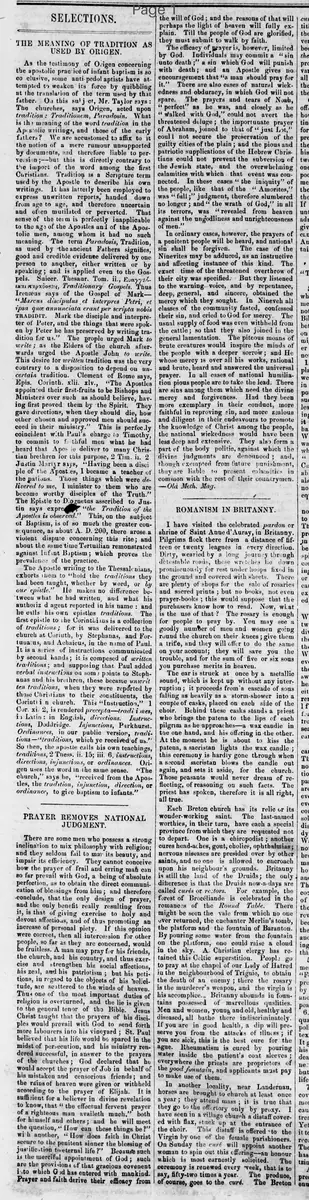
There are some men who possess a strong inclination to mix philosophy with religion; and they seldom fail to mar its beauty, and impair its efficiency. They cannot conceive how the prayer of frail and erring man can so far prevail with God, a being of absolute perfection, as to obtain the direct communication of blessings from him; and therefore conclude, that the only design of prayer, and the only benefit really resulting from it, is that of giving exercise to holy and devout affections, and of thus promoting an increase of personal piety. If this opinion were correct, then all intercession for other people, so far as they are concerned, would be fruitless. A man may pray for his friends, the church, and his country, and thus exercise and strengthen his social affections, his zeal, and his patriotism; but his petitions, in regard to the objects of his solicitude, are scattered to the winds of heaven. Thus one of the most important duties of religion is overturned, and the lie is given to the general tenor of the Bible. Jesus Christ taught that the prayers of his disciples would prevail with God to send forth more labourers into his vineyard; St. Paul believed that his life would be spared in the midst of persecution, and his ministry rendered successful, in answer to the prayers of the churches; God declared that he would accept the prayer of Job in behalf of his mistaken and censorious friends; and the rains of heaven were given or withheld according to the prayer of Elijah. It is sufficient for a believer in divine revelation to know, that "the effectual fervent prayer of a righteous man availeth much," both for himself and others; and he will meet the question, "How can these things be?" with another, "How does faith in Christ secure to the penitent sinner the blessing of justification to eternal life?" Because such is the merciful appointment of God; such are the provisions of that gracious covenant into which God has entered with mankind. Prayer and faith derive their efficacy from the will of God; and the reasons of that will perhaps the light of heaven will fully explain. Till the people of God are glorified, they must submit to walk by faith. The efficacy of prayer is, however, limited by God. Individuals may commit a "sin unto death;" a sin which God will punish with death; and an Apostle gives no encouragement that "a man should pray for it." There are also cases of natural wickedness and obduracy, in which God will not spare. The prayers and tears of Noah, "perfect" as he was, and closely as he "walked with God," could not avert the threatened deluge; the importunate prayer of Abraham, joined to that of "just Lot," could not secure the preservation of the guilty cities of the plain; and the pious and patriotic supplications of the Hebrew Christians could not prevent the subversion of the Jewish state, and the overwhelming calamities with which that event was connected. In these cases "the iniquity" of the people, like that of the "Amorites," was "full;" judgment, therefore slumbered no longer; and "the wrath of God," in all its terrors, was "revealed from heaven against the ungodliness and unrighteousness of men." In ordinary cases, however, the prayers of a penitent people will be heard, and national sin shall be forgiven. The case of the Ninevites may be adduced, as an instructive and affecting instance of this kind. The exact time of the threatened overthrow of their city was specified. But they listened to the warning voice, and by repentance, deep, general, and sincere, obtained the mercy which they sought. In Nineveh all classes of the community fasted, confessed their sin, and cried to God for mercy. The usual supply of food was even withheld from the cattle; so that they also joined in the general lamentation. The piteous moans of brute creatures would inspire the minds of the people with a deeper sorrow; and He whose mercy is over all his works, rational and brute, heard and answered the universal prayer. In all cases of national humiliation pious people are to take the lead. There are sins among them which need the divine mercy and forgiveness. Had they been more exemplary in their conduct, more faithful in reproving sin, and more zealous and diligent in their endeavours to promote the knowledge of Christ among the people, the national wickedness would have been less deep and extensive. They also form a part of the body politic, against which the divine judgments are denounced; and, though exempted from future punishment, they are liable to present calamities in common with the rest of their countrymen. -Old Meth. Mag.
There are some men who possess a strong inclination to mix philosophy with religion; and they seldom fail to mar its beauty, and impair its efficiency. They cannot conceive how the prayer of frail and erring man can so far prevail with God, a being of absolute perfection, as to obtain the direct communication of blessings from him; and therefore conclude, that the only design of prayer, and the only benefit really resulting from it, is that of giving exercise to holy and devout affections, and of thus promoting an increase of personal piety. If this opinion were correct, then all intercession for other people, so far as they are concerned, would be fruitless. A man may pray for his friends, the church, and his country, and thus exercise and strengthen his social affections, his zeal, and his patriotism; but his petitions, in regard to the objects of his solicitude, are scattered to the winds of heaven. Thus one of the most important duties of religion is overturned, and the lie is given to the general tenor of the Bible. Jesus Christ taught that the prayers of his disciples would prevail with God to send forth more labourers into his vineyard; St. Paul believed that his life would be spared in the midst of persecution, and his ministry rendered successful, in answer to the prayers of the churches; God declared that he would accept the prayer of Job in behalf of his mistaken and censorious friends; and the rains of heaven were given or withheld according to the prayer of Elijah. It is sufficient for a believer in divine revelation to know, that "the effectual fervent prayer of a righteous man availeth much," both for himself and others; and he will meet the question, "How can these things be?" with another, "How does faith in Christ secure to the penitent sinner the blessing of justification to eternal life?" Because such is the merciful appointment of God; such are the provisions of that gracious covenant into which God has entered with mankind. Prayer and faith derive their efficacy from the will of God; and the reasons of that will perhaps the light of heaven will fully explain. Till the people of God are glorified, they must submit to walk by faith. The efficacy of prayer is, however, limited by God. Individuals may commit a "sin unto death;" a sin which God will punish with death; and an Apostle gives no encouragement that "a man should pray for it." There are also cases of natural wickedness and obduracy, in which God will not spare. The prayers and tears of Noah, "perfect" as he was, and closely as he "walked with God," could not avert the threatened deluge; the importunate prayer of Abraham, joined to that of "just Lot," could not secure the preservation of the guilty cities of the plain; and the pious and patriotic supplications of the Hebrew Christians could not prevent the subversion of the Jewish state, and the overwhelming calamities with which that event was connected. In these cases "the iniquity" of the people, like that of the "Amorites," was "full;" judgment, therefore slumbered no longer; and "the wrath of God," in all its terrors, was "revealed from heaven against the ungodliness and unrighteousness of men." In ordinary cases, however, the prayers of a penitent people will be heard, and national sin shall be forgiven. The case of the Ninevites may be adduced, as an instructive and affecting instance of this kind. The exact time of the threatened overthrow of their city was specified. But they listened to the warning voice, and by repentance, deep, general, and sincere, obtained the mercy which they sought. In Nineveh all classes of the community fasted, confessed their sin, and cried to God for mercy. The usual supply of food was even withheld from the cattle; so that they also joined in the general lamentation. The piteous moans of brute creatures would inspire the minds of the people with a deeper sorrow; and He whose mercy is over all his works, rational and brute, heard and answered the universal prayer. In all cases of national humiliation pious people are to take the lead. There are sins among them which need the divine mercy and forgiveness. Had they been more exemplary in their conduct, more faithful in reproving sin, and more zealous and diligent in their endeavours to promote the knowledge of Christ among the people, the national wickedness would have been less deep and extensive. They also form a part of the body politic, against which the divine judgments are denounced; and, though exempted from future punishment, they are liable to present calamities in common with the rest of their countrymen. -Old Meth. Mag.
What sub-type of article is it?
Essay
What themes does it cover?
Religious
Moral Virtue
What keywords are associated?
Prayer Efficacy
National Repentance
Biblical Intercession
Divine Judgment
Nineveh Example
Religious Duty
What entities or persons were involved?
Old Meth. Mag.
Literary Details
Title
Prayer Removes National Judgment
Author
Old Meth. Mag.
Subject
On The Efficacy Of Prayer To Avert National Judgment
Key Lines
The Effectual Fervent Prayer Of A Righteous Man Availeth Much
In Ordinary Cases, However, The Prayers Of A Penitent People Will Be Heard, And National Sin Shall Be Forgiven.
The Case Of The Ninevites May Be Adduced, As An Instructive And Affecting Instance Of This Kind.