Thank you for visiting SNEWPapers!
Sign up free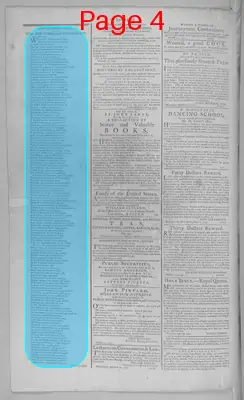
Poem
November 9, 1791
Gazette Of The United States
New York, New York County, New York
What is this article about?
Satirical verse letter to printer Mr. Hough describing debates at the New Hampshire Constitutional Convention on the Bill of Rights, aristocracy, court reforms, and religious establishment, mocking aristocratic pretensions and proposed changes.
Clipping

OCR Quality
95%
Excellent
Full Text
FROM THE CONCORD HERALD.
THE NEW-HAMPSHIRE CONVENTION.
MR. Hough,
Well, Mr. Printer—as of late,
Convention sat in free debate,
In order duly to revise
And guard our rights with eagle eyes,
To mend them wheresoever torn,
And patch in places fairly worn—
I took a seat on gallery-bench,
To hear the daily eloquence,
Nervous and strong as brass or iron,
And sweet as comb in Samson's lion,
Which flow'd in Ciceronian strains,
From heads compos'd of tongue and brains.
The Bill of Rights first underwent
The chemic-force of parliament,
Wherein majority agreed,
That all mankind were Adam's seed,
And had an equal right by nature,
To certain grants from God Creator;
This was the general voice—tho' some
(Who prophesy of things to come)
Contended, that great Nature's God
Had plac'd the governmental rod
In fav'rite hands, with power to use it,
In whipping rebels, when they choose it,
And plead their special reason for't,
That they are much the better sort,
By plastic hands much more refin'd,
As well in body as in mind;
Therefore, by reason mathematic,
God made a few aristocratic,
With full prerogative to rule,
No matter whether wise, or fool—
It must be so—for who (with case)
Can stem the current of decrees?
Upon this easy ground 'twas urged,
That legislation might be purged
Of every thick-skull'd, muddy head,
Whose lining is compos'd of lead;
And that all power of legislation
Be plac'd in men of penetration,
Of whom ('tis ascertained of late)
There are but sixty in the State;
Who, if empower'd with full commission,
Would legislate with expedition,
Make laws and things for simple sheep,
More just, more gentle, and more cheap,
More safe for any Christian flocks,
Because they're always orthodox!—
And furthermore, that kind of rats
Which some folks term aristocrats,
Will never bite—like bugs—and fleas;
And slyly eat—the public cheese.
It may be so—but yet—perhaps,
'Tis best to keep—a cat—and traps.
The next achievement, worth attention,
(Which felt the hammer of Convention)
Was that heroic coup-de-main,
Whereby the Common Pleas were slain,
Condemn'd to end their wicked days,
By magic force of yeas and nays :
So vicious men, for breach of law,
Once felt the weight of Samson's jaw,
Which, tho devoid of tooth or marrow,
Was certain death as gun to sparrow..
Well, when they'd kill'd these naughty courts,
Dame Fancy led to other sports—
As, changing minnow fish to flounders,
And making two-pound shot four-pounders,
Which, elevated two degrees,
Will overshoot the murder'd pleas,
And which, when fir'd across the trench,
Will lodge in the Superior bench;
When justice holds her golden balance,
And weighs all coins, from mites, to talents.
Good lack! thought I, what horrid flashes
The Constitution feels.—what gashes
Are cut upon this great emergence,
To manifest the skill of surgeons,
Who sometimes busily are found
Creating a tremendous wound,
(The patient, dismal pain enduring)
That they may show their art in curing.
Nextly, when each had done his best,
(This wound, secundum artem drest)
A certain junto-cratic brother,
Declar'd 'twas best to make another
In some more noble tender part,
Perhaps upon the head or heart,
That when the subject's head is broke
By the aforesaid random stroke,
He must inevitably die,
Or seek for cure in chancery;
Which ipso facto lays the evil,
As stroking carries off king's evil,
And as by magic operation
It chancery's down all inflammation,
Dispels the gout, the spleen, and agues,
With many other pains that plague us;
In short 'twill cure the deadly phthisis,
And bring about a sudden crisis.
Thus while its friends said much about it,
And swore we could not do without it.
Others declar'd, with honest breath,
They'd rather die a natural death ;
Would sooner close with grim disease,
Than pay the chancellor his fees.
In fine, the code ecclesiastical,
Was fumbled o'er with fingers plastic,
Which ach'd and itch'd to form a system
Of new made things—but could not twist 'em.
Full many curious propositions
Were made by zealous politicians,
And then presented to the chair,
Defining conscience to a hair;
Which is, that every man and woman,
Whether a Hebrew, Greek, or Roman,
In order to be found, and good,
Must live on Calvinistic food;
Which, tho a most delicious fruit
To most—yet some it does not suit;
So that their stomachs heave and work,
Like queamish Jews at sight of pork!
However, vile, ungodly crew,
Your vain pretence will never do!
Most certainly you must be cramm'd;
For he that doubteth must be damn'd!
But stay—our catholic committee,
Perhaps your dismal case may pity:
Thus meekly—patiently be merry,
And wait th' approach of February.
SPECTATOR.
THE NEW-HAMPSHIRE CONVENTION.
MR. Hough,
Well, Mr. Printer—as of late,
Convention sat in free debate,
In order duly to revise
And guard our rights with eagle eyes,
To mend them wheresoever torn,
And patch in places fairly worn—
I took a seat on gallery-bench,
To hear the daily eloquence,
Nervous and strong as brass or iron,
And sweet as comb in Samson's lion,
Which flow'd in Ciceronian strains,
From heads compos'd of tongue and brains.
The Bill of Rights first underwent
The chemic-force of parliament,
Wherein majority agreed,
That all mankind were Adam's seed,
And had an equal right by nature,
To certain grants from God Creator;
This was the general voice—tho' some
(Who prophesy of things to come)
Contended, that great Nature's God
Had plac'd the governmental rod
In fav'rite hands, with power to use it,
In whipping rebels, when they choose it,
And plead their special reason for't,
That they are much the better sort,
By plastic hands much more refin'd,
As well in body as in mind;
Therefore, by reason mathematic,
God made a few aristocratic,
With full prerogative to rule,
No matter whether wise, or fool—
It must be so—for who (with case)
Can stem the current of decrees?
Upon this easy ground 'twas urged,
That legislation might be purged
Of every thick-skull'd, muddy head,
Whose lining is compos'd of lead;
And that all power of legislation
Be plac'd in men of penetration,
Of whom ('tis ascertained of late)
There are but sixty in the State;
Who, if empower'd with full commission,
Would legislate with expedition,
Make laws and things for simple sheep,
More just, more gentle, and more cheap,
More safe for any Christian flocks,
Because they're always orthodox!—
And furthermore, that kind of rats
Which some folks term aristocrats,
Will never bite—like bugs—and fleas;
And slyly eat—the public cheese.
It may be so—but yet—perhaps,
'Tis best to keep—a cat—and traps.
The next achievement, worth attention,
(Which felt the hammer of Convention)
Was that heroic coup-de-main,
Whereby the Common Pleas were slain,
Condemn'd to end their wicked days,
By magic force of yeas and nays :
So vicious men, for breach of law,
Once felt the weight of Samson's jaw,
Which, tho devoid of tooth or marrow,
Was certain death as gun to sparrow..
Well, when they'd kill'd these naughty courts,
Dame Fancy led to other sports—
As, changing minnow fish to flounders,
And making two-pound shot four-pounders,
Which, elevated two degrees,
Will overshoot the murder'd pleas,
And which, when fir'd across the trench,
Will lodge in the Superior bench;
When justice holds her golden balance,
And weighs all coins, from mites, to talents.
Good lack! thought I, what horrid flashes
The Constitution feels.—what gashes
Are cut upon this great emergence,
To manifest the skill of surgeons,
Who sometimes busily are found
Creating a tremendous wound,
(The patient, dismal pain enduring)
That they may show their art in curing.
Nextly, when each had done his best,
(This wound, secundum artem drest)
A certain junto-cratic brother,
Declar'd 'twas best to make another
In some more noble tender part,
Perhaps upon the head or heart,
That when the subject's head is broke
By the aforesaid random stroke,
He must inevitably die,
Or seek for cure in chancery;
Which ipso facto lays the evil,
As stroking carries off king's evil,
And as by magic operation
It chancery's down all inflammation,
Dispels the gout, the spleen, and agues,
With many other pains that plague us;
In short 'twill cure the deadly phthisis,
And bring about a sudden crisis.
Thus while its friends said much about it,
And swore we could not do without it.
Others declar'd, with honest breath,
They'd rather die a natural death ;
Would sooner close with grim disease,
Than pay the chancellor his fees.
In fine, the code ecclesiastical,
Was fumbled o'er with fingers plastic,
Which ach'd and itch'd to form a system
Of new made things—but could not twist 'em.
Full many curious propositions
Were made by zealous politicians,
And then presented to the chair,
Defining conscience to a hair;
Which is, that every man and woman,
Whether a Hebrew, Greek, or Roman,
In order to be found, and good,
Must live on Calvinistic food;
Which, tho a most delicious fruit
To most—yet some it does not suit;
So that their stomachs heave and work,
Like queamish Jews at sight of pork!
However, vile, ungodly crew,
Your vain pretence will never do!
Most certainly you must be cramm'd;
For he that doubteth must be damn'd!
But stay—our catholic committee,
Perhaps your dismal case may pity:
Thus meekly—patiently be merry,
And wait th' approach of February.
SPECTATOR.
What sub-type of article is it?
Satire
Verse Letter
What themes does it cover?
Political
Satire Society
Liberty Independence
What keywords are associated?
New Hampshire Convention
Bill Of Rights
Aristocracy
Common Pleas
Chancery
Calvinism
Satire
What entities or persons were involved?
Spectator.
Poem Details
Title
The New Hampshire Convention.
Author
Spectator.
Subject
Satire On The New Hampshire Constitutional Convention
Form / Style
Heroic Couplets
Key Lines
Well, Mr. Printer—As Of Late,
Convention Sat In Free Debate,
In Order Duly To Revise
And Guard Our Rights With Eagle Eyes,
That All Mankind Were Adam's Seed,
And Had An Equal Right By Nature,
To Certain Grants From God Creator;
And That All Power Of Legislation
Be Plac'd In Men Of Penetration,
Of Whom ('Tis Ascertained Of Late)
There Are But Sixty In The State;
Would Sooner Close With Grim Disease,
Than Pay The Chancellor His Fees.
Must Live On Calvinistic Food;
Which, Tho A Most Delicious Fruit
To Most—Yet Some It Does Not Suit;