Thank you for visiting SNEWPapers!
Sign up free
Domestic News
July 13, 1807
The National Intelligencer And Washington Advertiser
Washington, District Of Columbia
What is this article about?
The Fourth of July 1807 was celebrated in Richmond, Virginia, with orations, a military parade, toasts, and patriotic fervor amid sorrow over the Chesapeake incident; a minor fire at the Penitentiary was quickly extinguished.
Clipping
OCR Quality
98%
Excellent
Full Text
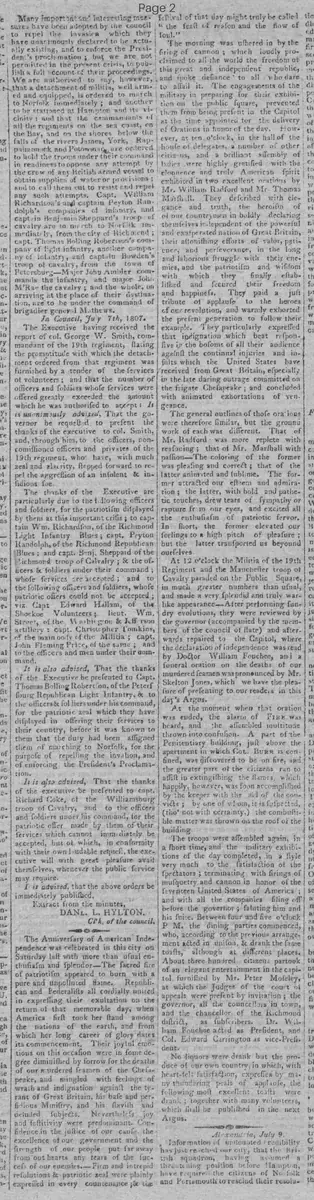
The Anniversary of American Independence was celebrated in this city on Saturday last with more than usual enthusiasm and splendor—The sacred fire of patriotism appeared to burn with a pure and unpolluted flame. Republicans and Federalists all cordially united in expressing their exultation on the return of that memorable day, when America first took her stand among the nations of the earth, and from which her long career of glory dates its commencement. Their joyful emotions on this occasion were in some degree diminished by sorrow for the deaths of our murdered seamen of the Chesapeake, and mingled with feelings of wrath and indignation against the tyrant of Great Britain, his base and perfidious Ministry, and his lavish and deluded subjects. Nevertheless joy and festivity were predominant. Confidence in the justice of our cause, the excellence of our government and the strength of our people put far away from our hearts any tears of the success of our enemies.—Firm and intrepid resolutions & patriotic zeal were plainly expressed in every countenance; & the festival of that day might truly be called "the feast of reason and the flow of soul."
The morning was ushered in by the firing of cannon; which loudly proclaimed to all the world the freedom of this great and independent republic, and spoke defiance to all who dare to assail it. The engagements of the military in preparing for their exhibition on the public square, prevented them from being present in the Capitol at the time appointed for the delivery of Orations in honor of the day. However, at ten o'clock, in the hall of the house of delegates, a number of other citizens, and a brilliant assembly of ladies were highly gratified with the eloquence and truly American spirit exhibited in two excellent orations by Mr. William Radford and Mr. Thomas Marshall. They described with elegance and truth, the heroism of our countrymen in boldly declaring themselves independent of the powerful and exasperated nation of Great Britain, their astonishing efforts of valor, patience, and perseverance, in the long and laborious struggle with their enemies, and the patriotism and wisdom with which they finally established and secured their freedom and happiness. They paid a just tribute of applause to the heroes of our revolution, and warmly exhorted the present generation to follow their example. They particularly expressed that indignation which beats responsive in the bosoms of all their audience against the continual injuries and insults which the United States have received from Great Britain, especially, in the late daring outrage committed on the frigate Chesapeake; and concluded with animated exhortations of vengeance.
The general outlines of those orations were therefore similar, but the groundwork of each was different. That of Mr. Radford was more replete with reasoning; that of Mr. Marshall with passion—The coloring of the former was pleasing and correct; that of the latter animated and sublime. The former attracted our esteem and admiration; the latter, with bold and pathetic touches, drew tears of sympathy or rapture from our eyes, and excited all the enthusiasm of patriotic fervor. In short, the former elevated our feelings to a high pitch of pleasure; but the latter transported us beyond ourselves.
At 12 o'clock the Militia of the 19th Regiment and the Manchester troop of Cavalry paraded on the Public Square, in much greater numbers than usual, and made a very splendid and truly warlike appearance—After performing sundry evolutions, they were reviewed by the governor (accompanied by the members of the council of state) and afterwards repaired to the Capitol, where the declaration of independence was read by Doctor William Foushee, and a funeral oration on the deaths of our murdered seamen was pronounced by Mr. Skelton Jones, which we have the pleasure of presenting to our readers in this day's Argus.
At the moment when that oration was ended, the alarm of Fire was heard, and the assembled multitude thrown into confusion. A part of the Penitentiary building, just above the apartment in which Col. Burr is confined, was discovered to be on fire, and the greater part of the citizens ran to assist in extinguishing the flames, which happily, however, was soon accomplished by the keeper with the aid of the convicts; by one of whom, it is suspected, (tho' not with certainty,) the combustible matter was thrown on the roof of the building.
The troops were assembled again, in a short time, and the military exhibitions of the day completed, in a style very much to the satisfaction of the spectators; terminating with firings of musquetry and cannon in honor of the seventeen United States of America: and with all the companies filing off before the governor; saluting him and his suite. Between four and five o'clock P. M. the dining parties commenced, who, according to the previous arrangement acted in union, & drank the same toasts, although at different places. About three hundred citizens partook of an elegant entertainment in the capitol, furnished by Mr. Peter Moseley, at which the Judges of the court of appeals were present by invitation; the governor, all the councellors in town, and the chancellor of the Richmond district, as subscribers. Dr. William Foushee acted as President, and Col. Edward Carrington as vice-President.
No liquors were drank but the produce of our own country, in which, with heart-felt satisfaction, expressed by many thundering peals of applause, the following most excellent toasts were drank; together with many volunteers, which shall be published in the next Argus.
The morning was ushered in by the firing of cannon; which loudly proclaimed to all the world the freedom of this great and independent republic, and spoke defiance to all who dare to assail it. The engagements of the military in preparing for their exhibition on the public square, prevented them from being present in the Capitol at the time appointed for the delivery of Orations in honor of the day. However, at ten o'clock, in the hall of the house of delegates, a number of other citizens, and a brilliant assembly of ladies were highly gratified with the eloquence and truly American spirit exhibited in two excellent orations by Mr. William Radford and Mr. Thomas Marshall. They described with elegance and truth, the heroism of our countrymen in boldly declaring themselves independent of the powerful and exasperated nation of Great Britain, their astonishing efforts of valor, patience, and perseverance, in the long and laborious struggle with their enemies, and the patriotism and wisdom with which they finally established and secured their freedom and happiness. They paid a just tribute of applause to the heroes of our revolution, and warmly exhorted the present generation to follow their example. They particularly expressed that indignation which beats responsive in the bosoms of all their audience against the continual injuries and insults which the United States have received from Great Britain, especially, in the late daring outrage committed on the frigate Chesapeake; and concluded with animated exhortations of vengeance.
The general outlines of those orations were therefore similar, but the groundwork of each was different. That of Mr. Radford was more replete with reasoning; that of Mr. Marshall with passion—The coloring of the former was pleasing and correct; that of the latter animated and sublime. The former attracted our esteem and admiration; the latter, with bold and pathetic touches, drew tears of sympathy or rapture from our eyes, and excited all the enthusiasm of patriotic fervor. In short, the former elevated our feelings to a high pitch of pleasure; but the latter transported us beyond ourselves.
At 12 o'clock the Militia of the 19th Regiment and the Manchester troop of Cavalry paraded on the Public Square, in much greater numbers than usual, and made a very splendid and truly warlike appearance—After performing sundry evolutions, they were reviewed by the governor (accompanied by the members of the council of state) and afterwards repaired to the Capitol, where the declaration of independence was read by Doctor William Foushee, and a funeral oration on the deaths of our murdered seamen was pronounced by Mr. Skelton Jones, which we have the pleasure of presenting to our readers in this day's Argus.
At the moment when that oration was ended, the alarm of Fire was heard, and the assembled multitude thrown into confusion. A part of the Penitentiary building, just above the apartment in which Col. Burr is confined, was discovered to be on fire, and the greater part of the citizens ran to assist in extinguishing the flames, which happily, however, was soon accomplished by the keeper with the aid of the convicts; by one of whom, it is suspected, (tho' not with certainty,) the combustible matter was thrown on the roof of the building.
The troops were assembled again, in a short time, and the military exhibitions of the day completed, in a style very much to the satisfaction of the spectators; terminating with firings of musquetry and cannon in honor of the seventeen United States of America: and with all the companies filing off before the governor; saluting him and his suite. Between four and five o'clock P. M. the dining parties commenced, who, according to the previous arrangement acted in union, & drank the same toasts, although at different places. About three hundred citizens partook of an elegant entertainment in the capitol, furnished by Mr. Peter Moseley, at which the Judges of the court of appeals were present by invitation; the governor, all the councellors in town, and the chancellor of the Richmond district, as subscribers. Dr. William Foushee acted as President, and Col. Edward Carrington as vice-President.
No liquors were drank but the produce of our own country, in which, with heart-felt satisfaction, expressed by many thundering peals of applause, the following most excellent toasts were drank; together with many volunteers, which shall be published in the next Argus.
What sub-type of article is it?
Celebration
Military
Politics
What keywords are associated?
Independence Day
Celebration
Orations
Military Parade
Chesapeake Incident
Penitentiary Fire
Patriotic Toasts
What entities or persons were involved?
William Radford
Thomas Marshall
William Foushee
Skelton Jones
Edward Carrington
Peter Moseley
Col. Burr
Where did it happen?
This City
Domestic News Details
Primary Location
This City
Event Date
Saturday Last
Key Persons
William Radford
Thomas Marshall
William Foushee
Skelton Jones
Edward Carrington
Peter Moseley
Col. Burr
Outcome
fire at penitentiary extinguished without harm; celebration concluded successfully with toasts and military honors.
Event Details
Independence Day celebrated with cannon fire, orations by Radford and Marshall, military parade and review by governor, reading of Declaration, funeral oration by Jones, brief fire alarm at Penitentiary, dinner with toasts using American liquors.