Thank you for visiting SNEWPapers!
Sign up free
Literary
September 9, 1932
The Ironton News
Ironton, Lawrence County, Ohio
What is this article about?
Bruce Barton reflects on Jesus' 40 days of doubt and temptation in the wilderness, framing it as a battle against material success and compromise, leading to a conviction of divine mission essential for true leadership.
Clipping
OCR Quality
95%
Excellent
Full Text
BRUCE BARTON
Writes of "THE MASTER EXECUTIVE"
Supplying a week-to-week inspiration for the heavy-burdened who will find
every human trial paralleled in the experiences of "The Man Nobody Knows."
A MAN COMES OUT
THE days of Jesus' doubt are set down as forty in number.
It is easy to imagine that lonely struggle. He had left a good
trade among people who knew him and trusted him—and for
what? To become a wandering preacher, talking to folks who
never heard of him? And what was he to talk about? How,
with his lack of experience, should he find words for his message? Where should he begin? Who would listen? Would
they listen? Hadn't he perhaps made a mistake?
Satan, says the narrative, tempted him, saying: "You are hungry: here are stones. Make
them into bread."—The temptation of material
success. It was entirely unnecessary for him to
be hungry EVER. He had a good trade: he
knew well enough that his organizing ability
was better than Joseph's. He could build up a
far more successful business and acquire comfort and wealth. Why not?
Satan comes in again, according to the narrative, taking him up into a high mountain and
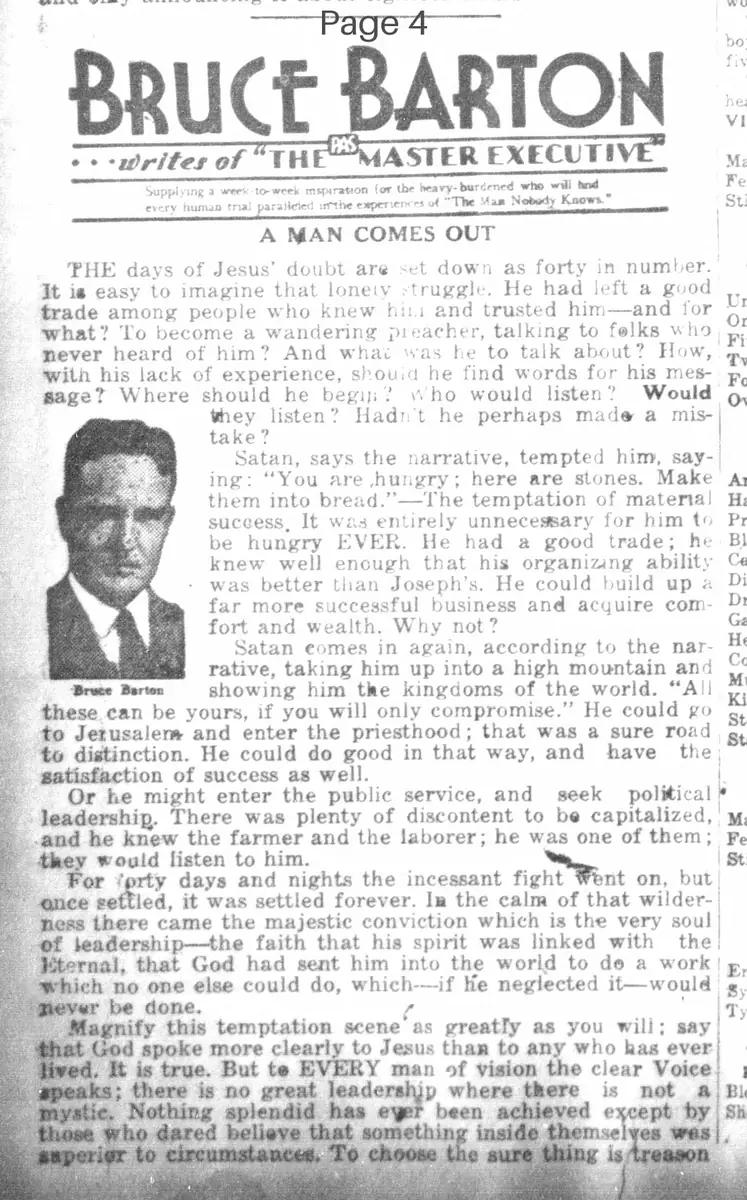
Bruce Barton
showing him the kingdoms of the world. "All
these can be yours, if you will only compromise." He could go
to Jerusalem and enter the priesthood: that was a sure road
to distinction. He could do good in that way, and have the
satisfaction of success as well.
Or he might enter the public service, and seek political
leadership. There was plenty of discontent to be capitalized,
and he knew the farmer and the laborer; he was one of them:
they would listen to him.
For forty days and nights the incessant fight went on, but
once settled, it was settled forever. In the calm of that wilderness there came the majestic conviction which is the very soul
of leadership—the faith that his spirit was linked with the
Eternal, that God had sent him into the world to do a work
which no one else could do, which—if he neglected it—would
never be done.
Magnify this temptation scene as greatly as you will: say
that God spoke more clearly to Jesus than to any who has ever
lived. It is true. But to EVERY man of vision the clear Voice
speaks; there is no great leadership where there is not a
mystic. Nothing splendid has ever been achieved except by
those who dared believe that something inside themselves was
superior to circumstances. To choose the sure thing is treason
to the blood.
Writes of "THE MASTER EXECUTIVE"
Supplying a week-to-week inspiration for the heavy-burdened who will find
every human trial paralleled in the experiences of "The Man Nobody Knows."
A MAN COMES OUT
THE days of Jesus' doubt are set down as forty in number.
It is easy to imagine that lonely struggle. He had left a good
trade among people who knew him and trusted him—and for
what? To become a wandering preacher, talking to folks who
never heard of him? And what was he to talk about? How,
with his lack of experience, should he find words for his message? Where should he begin? Who would listen? Would
they listen? Hadn't he perhaps made a mistake?
Satan, says the narrative, tempted him, saying: "You are hungry: here are stones. Make
them into bread."—The temptation of material
success. It was entirely unnecessary for him to
be hungry EVER. He had a good trade: he
knew well enough that his organizing ability
was better than Joseph's. He could build up a
far more successful business and acquire comfort and wealth. Why not?
Satan comes in again, according to the narrative, taking him up into a high mountain and
Bruce Barton
showing him the kingdoms of the world. "All
these can be yours, if you will only compromise." He could go
to Jerusalem and enter the priesthood: that was a sure road
to distinction. He could do good in that way, and have the
satisfaction of success as well.
Or he might enter the public service, and seek political
leadership. There was plenty of discontent to be capitalized,
and he knew the farmer and the laborer; he was one of them:
they would listen to him.
For forty days and nights the incessant fight went on, but
once settled, it was settled forever. In the calm of that wilderness there came the majestic conviction which is the very soul
of leadership—the faith that his spirit was linked with the
Eternal, that God had sent him into the world to do a work
which no one else could do, which—if he neglected it—would
never be done.
Magnify this temptation scene as greatly as you will: say
that God spoke more clearly to Jesus than to any who has ever
lived. It is true. But to EVERY man of vision the clear Voice
speaks; there is no great leadership where there is not a
mystic. Nothing splendid has ever been achieved except by
those who dared believe that something inside themselves was
superior to circumstances. To choose the sure thing is treason
to the blood.
What sub-type of article is it?
Essay
What themes does it cover?
Religious
Moral Virtue
What keywords are associated?
Jesus Temptation
Divine Mission
Leadership
Faith
Material Success
Bruce Barton
The Man Nobody Knows
What entities or persons were involved?
Bruce Barton
Literary Details
Title
A Man Comes Out
Author
Bruce Barton
Subject
Jesus' Temptation In The Wilderness
Key Lines
Satan, Says The Narrative, Tempted Him, Saying: "You Are Hungry: Here Are Stones. Make Them Into Bread."—The Temptation Of Material Success.
Satan Comes In Again, According To The Narrative, Taking Him Up Into A High Mountain And Showing Him The Kingdoms Of The World. "All These Can Be Yours, If You Will Only Compromise."
In The Calm Of That Wilderness There Came The Majestic Conviction Which Is The Very Soul Of Leadership—The Faith That His Spirit Was Linked With The Eternal, That God Had Sent Him Into The World To Do A Work Which No One Else Could Do, Which—If He Neglected It—Would Never Be Done.
But To Every Man Of Vision The Clear Voice Speaks; There Is No Great Leadership Where There Is Not A Mystic.