Thank you for visiting SNEWPapers!
Sign up free
The New Hampshire Gazette
Portsmouth, Rockingham County, New Hampshire
What is this article about?
Trial in Amherst, N.H., Superior Court contested the 1818 will of Joseph Noyes of Andover, who bequeathed $10,000 for a school. Heirs claimed insanity; jury ruled against will after three-day trial, awarding children $12,000-$15,000. Reported April 26 from Concord.
Clipping
OCR Quality
Full Text
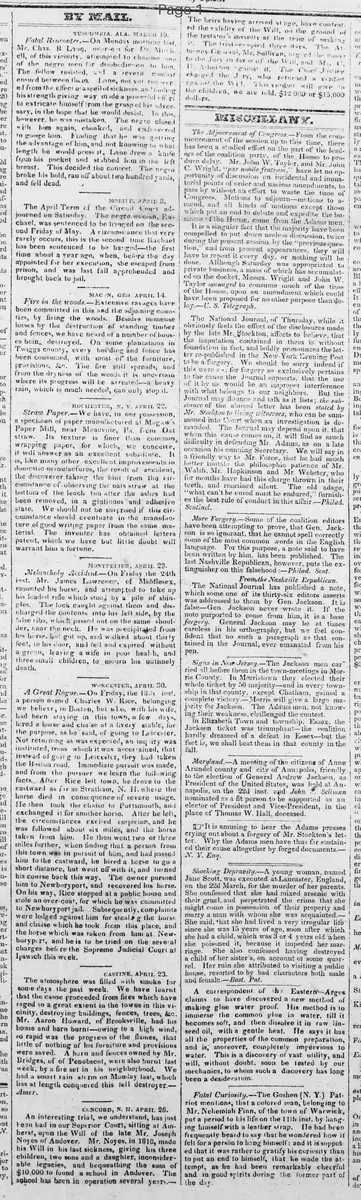
An interesting trial, we understand, has just been had in our Superior Court, sitting at Amherst, upon the Will of the late Mr. Joseph Noyes of Andover. Mr. Noyes, in 1818, made his Will in his last sickness, giving his three children, two sons and a daughter, inconsiderable legacies, and bequeathing the sum of $10,000 to found a school in Andover. The school has been in operation several years.
The heirs having arrived at age, have contested the validity of the Will, on the ground of the testator's insanity at the time of making it. The trial occupied three days. The Attorney General, Mr. Sullivan, argued the cause to the Jury in favor of the Will, and Mr. G. Sullivan against it. The Chief Justice charged the Jury, who returned a verdict against the Will. This verdict will give to the children, we are told, $12,000 or $15,000 dollars.
What sub-type of article is it?
What keywords are associated?
What entities or persons were involved?
Where did it happen?
Domestic News Details
Primary Location
Amherst
Event Date
April 26
Key Persons
Outcome
verdict against the will, giving the children $12,000 or $15,000
Event Details
Trial in Superior Court at Amherst contesting the 1818 will of Joseph Noyes of Andover, who left $10,000 for a school and small legacies to his three children. Heirs contested on grounds of testator's insanity. Trial lasted three days; Attorney General Mr. Sullivan argued for the will, Mr. G. Sullivan against it. Chief Justice charged the jury, who returned verdict against the will.