Thank you for visiting SNEWPapers!
Sign up free
Literary
March 1, 1787
The New York Journal, And Weekly Register
New York, New York County, New York
What is this article about?
The first letter in a series praises the Church of England's public liturgy, highlighting its holiness, beauty, and parallels to Jewish worship, including sacraments and ecclesiastical orders, post-Reformation reforms.
Clipping
OCR Quality
98%
Excellent
Full Text
A plain EXPOSITION of the DAILY PUBLIC SERVICE of the CHURCH of ENGLAND.
In a series of Letters.
[Published at the request of a number of the respectable perusers of this Journal.]
LETTER I
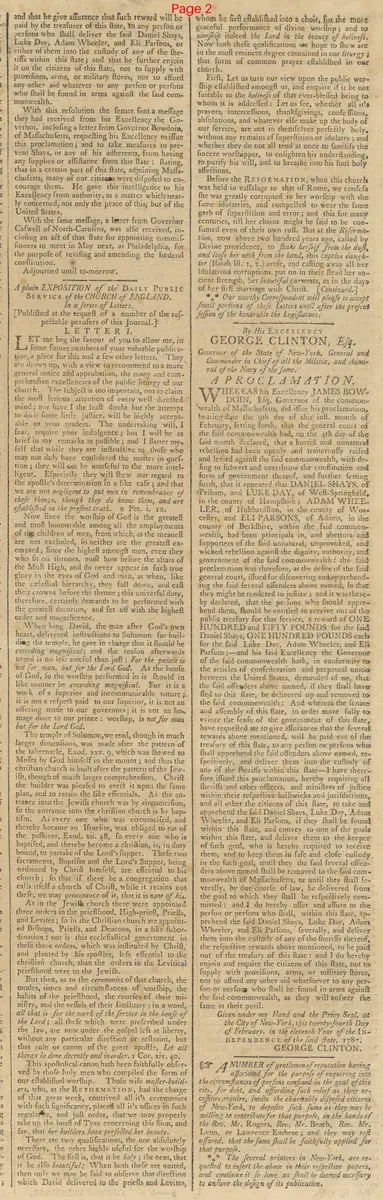
Let me beg the favour of you to allow me, in some future numbers of your valuable publication, a place for this and a few other letters. They are drawn up, with a view to recommend to a more general notice and approbation, the many and comprehensive excellencies of the public liturgy of our church. The subject is too important, not to claim the most serious attention of every well directed mind; nor have I the least doubt but the attempt to do it some little justice, will be highly acceptable to your readers. The undertaking will, I fear, require your indulgence; but I will be as brief in my remarks as possible; and I flatter myself that while they are instructive to those who may not duly have considered the matter in question; they will not be unuseful to the more intelligent. Especially they will shew our regard to the apostle's determination in a like case; and that we are not negligent to put men in remembrance of those things, though they do know them, and are established in the present truth. 2 Pet. i. 12.
Now since the worship of God is the greatest and most honourable among all the employments of the children of men, from which, as the meanest are not excluded, so neither are the greatest exempted; since the highest amongst men, even they who sit on thrones, must bow before the altars of the Most High, and do never appear in such true glory in the eyes of God and men, as when, like the celestial hierarchy, they fall down, and cast their crowns before the throne; this universal duty, therefore, certainly demands to be performed with the greatest decorum, and set off with the highest order and magnificence.
When king David, the man after God's own heart, delivered instructions to Solomon for building the temple, he gave in charge that it should be exceeding magnifical; and the reason afterwards urged is no less awful than just: For the palace is not for man, but for the Lord God. As the house of God, so the worship performed in it should in like manner be exceeding magnifical. For it is a work of a superior and incommunicable nature; it is not a respect paid to our superior, it is not an offering made to our governors; it is not an homage done to our prince: worship, is not for man but for the Lord God.
The temple of Solomon, we read, though in much larger dimensions, was made after the pattern of the tabernacle, Exod. xxv. 9, which was shewed to Moses by God himself in the mount; and thus the christian church is built after the pattern of the Jewish, though of much larger comprehension. Christ the builder was pleased to erect it upon the same plan, and to retain the like essentials. As the entrance into the Jewish church was by circumcision, so the entrance into the christian church is by baptism. As every one who was circumcised, and thereby became an Israelite, was obliged to eat of the passover, Exod. xii. 48, so every one who is baptised, and thereby become a christian, is, in duty bound, to partake of the Lord's supper. These two sacraments, Baptism and the Lord's Supper, being ordained by Christ himself, are essential to his church; so that if there be a congregation that calls itself a church of Christ, while it retains not these, we may pronounce of it, that it is none of his.
As in the Jewish church there were appointed three orders in the priesthood, High-priest, Priests, and Levites; so in the Christian church are appointed Bishops, Priests, and Deacons, in a like subordination: nor is this ecclesiastical government in these three orders, which was instituted by Christ, and planted by his apostles, less essential to the christian church, than the orders in the Levitical priesthood were to the Jewish.
But then, as to the ceremonies of that church, the modes, times and circumstances of worship, the habits of the priesthood, the courses of their ministry, and the vessels of their sanctuary; in a word, all that is for the work of the service in the house of the Lord; all these which were prescribed under the law, are now under the gospel left at liberty, without any particular direction or restraint, but that rule or canon of the great apostle, Let all things be done decently and in order. 1 Cor. xiv. 40.
This apostolical canon hath been faithfully observed by those holy men who compiled the form of our established worship. Those wise master-builders, who, at the Reformation, had the charge of that great work, contrived all it's ceremonies with such significancy, placed all it's offices in such regularity, and just order, that we may properly take up the boast of Tyre concerning this Sion, and say, that her builders have perfected her beauty.
There are two qualifications, the one absolutely necessary, the other highly useful for the worship of God. The first is, that it be holy; the next, that it be also beautiful: When both these are united, then only we may be said to observe that direction which David delivered to the priests and Levites, whom he first established into a choir, for the more graceful performance of divine worship; and to worship indeed the Lord in the beauty of holiness.
Now both these qualifications we hope to shew are in the most eminent degree contained in our liturgy that form of common prayer established in our church.
First, Let us turn our view upon the public worship established amongst us, and enquire if it be not suitable to the holiness of that ever-blessed being to whom it is addressed: Let us see, whether all it's prayers, intercessions, thanksgivings, confessions, absolutions, and whatever else make up the body of our service, are not in themselves perfectly holy, without any remains of superstition or idolatry; and whether they do not all tend at once to sanctify the sincere worshipper, to enlighten his understanding, to purify his will, and to breathe into his soul holy affections.
Before the Reformation, when this church was held in vassalage to that of Rome, we confess she was greatly corrupted in her worship with the same idolatries, and compelled to wear the same garb of superstition and error; and this for many centuries, till her chains might be said to be consumed even of their own rust. But at the Reformation, now above two hundred years ago, called by Divine providence, to shake herself from the dust, and loose her neck from the band, this captive daughter (Isaiah lii. 1, 2.) arose, and casting away all her idolatrous corruptions, put on in their stead her ancient strength, her beautiful garments, as in the days of her first marriage with Christ. Continued.
* * Our worthy Correspondent will please to accept small portions of these Letters until after the present Session of the honorable the Legislature.
In a series of Letters.
[Published at the request of a number of the respectable perusers of this Journal.]
LETTER I
Let me beg the favour of you to allow me, in some future numbers of your valuable publication, a place for this and a few other letters. They are drawn up, with a view to recommend to a more general notice and approbation, the many and comprehensive excellencies of the public liturgy of our church. The subject is too important, not to claim the most serious attention of every well directed mind; nor have I the least doubt but the attempt to do it some little justice, will be highly acceptable to your readers. The undertaking will, I fear, require your indulgence; but I will be as brief in my remarks as possible; and I flatter myself that while they are instructive to those who may not duly have considered the matter in question; they will not be unuseful to the more intelligent. Especially they will shew our regard to the apostle's determination in a like case; and that we are not negligent to put men in remembrance of those things, though they do know them, and are established in the present truth. 2 Pet. i. 12.
Now since the worship of God is the greatest and most honourable among all the employments of the children of men, from which, as the meanest are not excluded, so neither are the greatest exempted; since the highest amongst men, even they who sit on thrones, must bow before the altars of the Most High, and do never appear in such true glory in the eyes of God and men, as when, like the celestial hierarchy, they fall down, and cast their crowns before the throne; this universal duty, therefore, certainly demands to be performed with the greatest decorum, and set off with the highest order and magnificence.
When king David, the man after God's own heart, delivered instructions to Solomon for building the temple, he gave in charge that it should be exceeding magnifical; and the reason afterwards urged is no less awful than just: For the palace is not for man, but for the Lord God. As the house of God, so the worship performed in it should in like manner be exceeding magnifical. For it is a work of a superior and incommunicable nature; it is not a respect paid to our superior, it is not an offering made to our governors; it is not an homage done to our prince: worship, is not for man but for the Lord God.
The temple of Solomon, we read, though in much larger dimensions, was made after the pattern of the tabernacle, Exod. xxv. 9, which was shewed to Moses by God himself in the mount; and thus the christian church is built after the pattern of the Jewish, though of much larger comprehension. Christ the builder was pleased to erect it upon the same plan, and to retain the like essentials. As the entrance into the Jewish church was by circumcision, so the entrance into the christian church is by baptism. As every one who was circumcised, and thereby became an Israelite, was obliged to eat of the passover, Exod. xii. 48, so every one who is baptised, and thereby become a christian, is, in duty bound, to partake of the Lord's supper. These two sacraments, Baptism and the Lord's Supper, being ordained by Christ himself, are essential to his church; so that if there be a congregation that calls itself a church of Christ, while it retains not these, we may pronounce of it, that it is none of his.
As in the Jewish church there were appointed three orders in the priesthood, High-priest, Priests, and Levites; so in the Christian church are appointed Bishops, Priests, and Deacons, in a like subordination: nor is this ecclesiastical government in these three orders, which was instituted by Christ, and planted by his apostles, less essential to the christian church, than the orders in the Levitical priesthood were to the Jewish.
But then, as to the ceremonies of that church, the modes, times and circumstances of worship, the habits of the priesthood, the courses of their ministry, and the vessels of their sanctuary; in a word, all that is for the work of the service in the house of the Lord; all these which were prescribed under the law, are now under the gospel left at liberty, without any particular direction or restraint, but that rule or canon of the great apostle, Let all things be done decently and in order. 1 Cor. xiv. 40.
This apostolical canon hath been faithfully observed by those holy men who compiled the form of our established worship. Those wise master-builders, who, at the Reformation, had the charge of that great work, contrived all it's ceremonies with such significancy, placed all it's offices in such regularity, and just order, that we may properly take up the boast of Tyre concerning this Sion, and say, that her builders have perfected her beauty.
There are two qualifications, the one absolutely necessary, the other highly useful for the worship of God. The first is, that it be holy; the next, that it be also beautiful: When both these are united, then only we may be said to observe that direction which David delivered to the priests and Levites, whom he first established into a choir, for the more graceful performance of divine worship; and to worship indeed the Lord in the beauty of holiness.
Now both these qualifications we hope to shew are in the most eminent degree contained in our liturgy that form of common prayer established in our church.
First, Let us turn our view upon the public worship established amongst us, and enquire if it be not suitable to the holiness of that ever-blessed being to whom it is addressed: Let us see, whether all it's prayers, intercessions, thanksgivings, confessions, absolutions, and whatever else make up the body of our service, are not in themselves perfectly holy, without any remains of superstition or idolatry; and whether they do not all tend at once to sanctify the sincere worshipper, to enlighten his understanding, to purify his will, and to breathe into his soul holy affections.
Before the Reformation, when this church was held in vassalage to that of Rome, we confess she was greatly corrupted in her worship with the same idolatries, and compelled to wear the same garb of superstition and error; and this for many centuries, till her chains might be said to be consumed even of their own rust. But at the Reformation, now above two hundred years ago, called by Divine providence, to shake herself from the dust, and loose her neck from the band, this captive daughter (Isaiah lii. 1, 2.) arose, and casting away all her idolatrous corruptions, put on in their stead her ancient strength, her beautiful garments, as in the days of her first marriage with Christ. Continued.
* * Our worthy Correspondent will please to accept small portions of these Letters until after the present Session of the honorable the Legislature.
What sub-type of article is it?
Essay
Epistolary
What themes does it cover?
Religious
Political
Moral Virtue
What keywords are associated?
Church Liturgy
Public Worship
Reformation
Sacraments
Ecclesiastical Order
Divine Service
Beauty Of Holiness
Literary Details
Title
Letter I
Subject
Exposition Of The Excellencies Of The Public Liturgy Of The Church Of England
Key Lines
Now Since The Worship Of God Is The Greatest And Most Honourable Among All The Employments Of The Children Of Men, From Which, As The Meanest Are Not Excluded, So Neither Are The Greatest Exempted; Since The Highest Amongst Men, Even They Who Sit On Thrones, Must Bow Before The Altars Of The Most High, And Do Never Appear In Such True Glory In The Eyes Of God And Men, As When, Like The Celestial Hierarchy, They Fall Down, And Cast Their Crowns Before The Throne; This Universal Duty, Therefore, Certainly Demands To Be Performed With The Greatest Decorum, And Set Off With The Highest Order And Magnificence.
For The Palace Is Not For Man, But For The Lord God. As The House Of God, So The Worship Performed In It Should In Like Manner Be Exceeding Magnifical. For It Is A Work Of A Superior And Incommunicable Nature; It Is Not A Respect Paid To Our Superior, It Is Not An Offering Made To Our Governors; It Is Not An Homage Done To Our Prince: Worship, Is Not For Man But For The Lord God.
These Two Sacraments, Baptism And The Lord's Supper, Being Ordained By Christ Himself, Are Essential To His Church; So That If There Be A Congregation That Calls Itself A Church Of Christ, While It Retains Not These, We May Pronounce Of It, That It Is None Of His.
Let All Things Be Done Decently And In Order. 1 Cor. Xiv. 40.
To Worship Indeed The Lord In The Beauty Of Holiness.