Thank you for visiting SNEWPapers!
Sign up free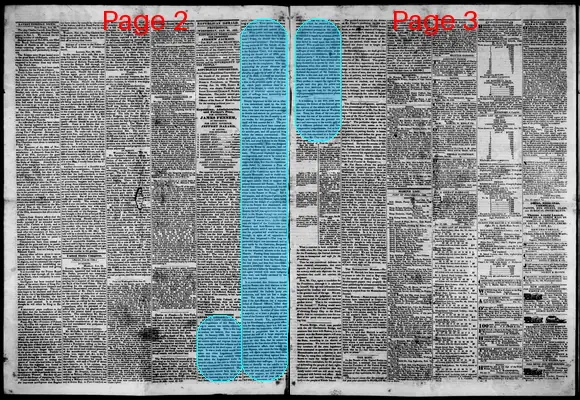
Editorial
January 25, 1832
Republican Herald
Providence, Providence County, Rhode Island
What is this article about?
Editorial criticizes Rhode Island's legislature for a two-week session to pass an act perpetuating Governor Arnold and the Senate in power despite potential loss of Anti-Masonic support, undermining suffrage and democratic rights.
Merged-components note: Continuation of the same editorial piece critiquing the Rhode Island General Assembly session and related political maneuvers.
Clippings
1 of 2
OCR Quality
95%
Excellent
Full Text
GENERAL ASSEMBLY—OR. KING LEMUEL'S LONG PARLIAMENT.
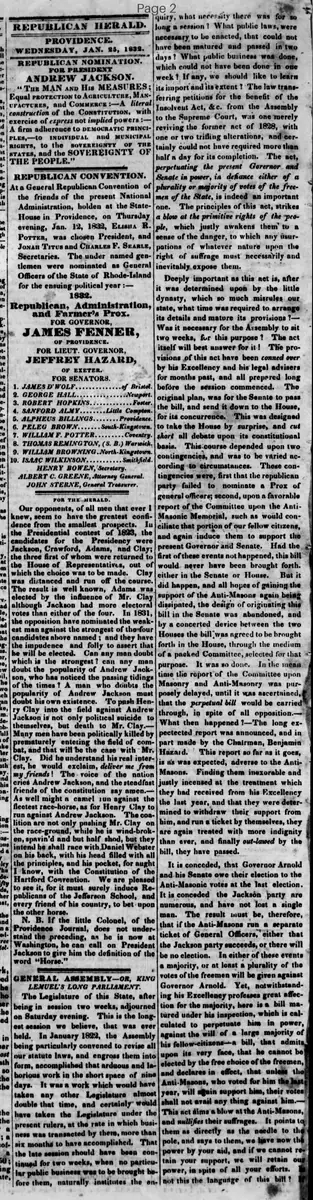
The Legislature of this State, after being in session two weeks, adjourned on Saturday evening. This is the longest session we believe, that was ever held. In January 1822, the Assembly being particularly convened to revise all our statute laws, and engross them into form, accomplished that arduous and laborious work in the short space of nine days. It was a work which would have taken any other Legislature almost double that time, and certainly would have taken the Legislature under the present rulers, at the rate in which business was transacted by them, more than six months to have accomplished. That the late session should have been continued for two weeks, when no particular public business was to be brought before them, naturally institutes the enquiry, what necessity there was for so long a session ? What public laws, were necessary to be enacted, that could not have been matured and passed in two days? What public business was done, which could not have been done in one week ? If any, we should like to learn its import and its extent ? The law transferring petitions for the benefit of the Insolvent Act, &c. from the Assembly to the Supreme Court, was one merely reviving the former act of 1828, with one or two trifling alterations, and certainly could not have required more than half a day for its completion. The act perpetuating the present Governor. and Senate in power, in defiance either of a plurality or majority of votes of the freemen of the State, is indeed an important one. The principles of this act, strikes a blow at the primitive rights of the people, which justly awakens them to a sense of the danger, to which any usurpations of whatever nature upon the right of suffrage must necessarily and inevitably expose them.
Deeply important as this act is, after it was determined upon by the little dynasty, which so much misrules our state, what time was required to arrange its details and mature its provisions ?—Was it necessary for the Assembly to sit two weeks, for this purpose? The act itself will best answer for it ! The provisions of this act have been conned over by his Excellency and his legal advisers for months past, and all prepared long before the session commenced. The original plan, was for the Senate to pass the bill, and send it down to the House, for its concurrence. This was designed to take the House by surprise, and cut short all debate upon its constitutional basis. This course depended upon two contingencies, and was to be varied according to circumstances. Those contingencies were, first that the republican party failed to nominate a Prox of general officers; second, upon a favorable report of the Committee upon the Anti-Masonic Memorial, such as would conciliate that portion of our fellow citizens, and again induce them to support the present Governor and Senate. Had the first of these events not happened, this bill would never have been brought forth. either in the Senate or House. But it did happen, and all hopes of gaining the support of the Anti-Masons again being dissipated, the design of originating this bill in the Senate was abandoned, and by a concerted device between the two Houses the bill was agreed to be brought forth in the House, through the medium of a packed Committee, selected for that purpose. It was so done. In the mean time the report of the Committee upon Masonry and Anti-Masonry was purposely delayed, until it was ascertained, that the perpetual bill would be carried through, in spite of all opposition.—What then happened ?—The long expected report was announced, and in part made by the Chairman, Benjamin Hazard. This report so far as it goes, is as was expected, adverse to the Anti-Masons. Finding them inexorable and justly incensed at the treatment which they had received from his Excellency the last year, and that they were determined to withdraw their support from him, and run a ticket by themselves, they are again treated with more indignity than ever, and finally out-lawed by the bill, they have passed.
It is conceded, that Governor Arnold and his Senate owe their election to the Anti-Masonic votes at the last election. It is conceded the Jackson party are numerous, and have not lost a single man. The result must be, therefore, that if the Anti-Masons run a separate ticket of General Officers, either that the Jackson party succeeds, or there will be no election. In either of these events a majority, or at least a plurality of the votes of the freemen will be given against Governor Arnold. Yet, notwithstanding his Excellency professes great affection for the majority, here is a bill matured under his inspection, which is calculated to perpetuate him in power, against the will of a large majority of his fellow-citizens—a bill, that admits upon its very face, that he cannot be elected by the free choice of the freemen, and declares in effect, that unless the Anti-Masons, who voted for him the last year, will again support him, their votes shall not avail any thing against him.—This act aims a blow at the Anti-Masons, and nullifies their suffrages. It points to them as directly as the needle to the pole, and says to them, we have now the power by your aid, and if we cannot retain your support, we will retain our power, in spite of all your efforts.
Is not this the language of this bill ?
Governor Arnold were sure of the same support,- which he received last year, where was the necessity of this act ? Its very provisions presuppose the case of non-election by the people, which this act is intended to supply by arbitrary power! What party, however desperate, has .ever dared to tread upon this hallowed ground! Who would have ever ventured upon such a bold measure, to defeat the suffrages of their fellow-citizens, under such peculiar circumstances, since the National party ? It is almost incredible that any party should have attempted to keep themselves in power by their own legislation, when they admit their own acts and disgraceful conduct, have justly forfeited the support of the freemen.- Yet this is the case, and ever will be the case, with aristocrats and demagogues. They profess to respect the rights of the people, until they gain the power and places their ambition aspires to, and then turn against them, for the purpose of perpetuating themselves in those places and power. It is amusing to see with what complacency the Editor of the Journal gives his opinion of the talents and qualifications of distinguished men at Washington. None but those of his own party can bear the test of his critical acumen. Burges and Clay are the greatest orators and statesmen in the world; and all of a different political cast sink into comparative insignificance. Let us however compare the opinion of the Journal now with that expressed at a former period, when Mr. Clay was at the zenith of his greatness.
The Legislature of this State, after being in session two weeks, adjourned on Saturday evening. This is the longest session we believe, that was ever held. In January 1822, the Assembly being particularly convened to revise all our statute laws, and engross them into form, accomplished that arduous and laborious work in the short space of nine days. It was a work which would have taken any other Legislature almost double that time, and certainly would have taken the Legislature under the present rulers, at the rate in which business was transacted by them, more than six months to have accomplished. That the late session should have been continued for two weeks, when no particular public business was to be brought before them, naturally institutes the enquiry, what necessity there was for so long a session ? What public laws, were necessary to be enacted, that could not have been matured and passed in two days? What public business was done, which could not have been done in one week ? If any, we should like to learn its import and its extent ? The law transferring petitions for the benefit of the Insolvent Act, &c. from the Assembly to the Supreme Court, was one merely reviving the former act of 1828, with one or two trifling alterations, and certainly could not have required more than half a day for its completion. The act perpetuating the present Governor. and Senate in power, in defiance either of a plurality or majority of votes of the freemen of the State, is indeed an important one. The principles of this act, strikes a blow at the primitive rights of the people, which justly awakens them to a sense of the danger, to which any usurpations of whatever nature upon the right of suffrage must necessarily and inevitably expose them.
Deeply important as this act is, after it was determined upon by the little dynasty, which so much misrules our state, what time was required to arrange its details and mature its provisions ?—Was it necessary for the Assembly to sit two weeks, for this purpose? The act itself will best answer for it ! The provisions of this act have been conned over by his Excellency and his legal advisers for months past, and all prepared long before the session commenced. The original plan, was for the Senate to pass the bill, and send it down to the House, for its concurrence. This was designed to take the House by surprise, and cut short all debate upon its constitutional basis. This course depended upon two contingencies, and was to be varied according to circumstances. Those contingencies were, first that the republican party failed to nominate a Prox of general officers; second, upon a favorable report of the Committee upon the Anti-Masonic Memorial, such as would conciliate that portion of our fellow citizens, and again induce them to support the present Governor and Senate. Had the first of these events not happened, this bill would never have been brought forth. either in the Senate or House. But it did happen, and all hopes of gaining the support of the Anti-Masons again being dissipated, the design of originating this bill in the Senate was abandoned, and by a concerted device between the two Houses the bill was agreed to be brought forth in the House, through the medium of a packed Committee, selected for that purpose. It was so done. In the mean time the report of the Committee upon Masonry and Anti-Masonry was purposely delayed, until it was ascertained, that the perpetual bill would be carried through, in spite of all opposition.—What then happened ?—The long expected report was announced, and in part made by the Chairman, Benjamin Hazard. This report so far as it goes, is as was expected, adverse to the Anti-Masons. Finding them inexorable and justly incensed at the treatment which they had received from his Excellency the last year, and that they were determined to withdraw their support from him, and run a ticket by themselves, they are again treated with more indignity than ever, and finally out-lawed by the bill, they have passed.
It is conceded, that Governor Arnold and his Senate owe their election to the Anti-Masonic votes at the last election. It is conceded the Jackson party are numerous, and have not lost a single man. The result must be, therefore, that if the Anti-Masons run a separate ticket of General Officers, either that the Jackson party succeeds, or there will be no election. In either of these events a majority, or at least a plurality of the votes of the freemen will be given against Governor Arnold. Yet, notwithstanding his Excellency professes great affection for the majority, here is a bill matured under his inspection, which is calculated to perpetuate him in power, against the will of a large majority of his fellow-citizens—a bill, that admits upon its very face, that he cannot be elected by the free choice of the freemen, and declares in effect, that unless the Anti-Masons, who voted for him the last year, will again support him, their votes shall not avail any thing against him.—This act aims a blow at the Anti-Masons, and nullifies their suffrages. It points to them as directly as the needle to the pole, and says to them, we have now the power by your aid, and if we cannot retain your support, we will retain our power, in spite of all your efforts.
Is not this the language of this bill ?
Governor Arnold were sure of the same support,- which he received last year, where was the necessity of this act ? Its very provisions presuppose the case of non-election by the people, which this act is intended to supply by arbitrary power! What party, however desperate, has .ever dared to tread upon this hallowed ground! Who would have ever ventured upon such a bold measure, to defeat the suffrages of their fellow-citizens, under such peculiar circumstances, since the National party ? It is almost incredible that any party should have attempted to keep themselves in power by their own legislation, when they admit their own acts and disgraceful conduct, have justly forfeited the support of the freemen.- Yet this is the case, and ever will be the case, with aristocrats and demagogues. They profess to respect the rights of the people, until they gain the power and places their ambition aspires to, and then turn against them, for the purpose of perpetuating themselves in those places and power. It is amusing to see with what complacency the Editor of the Journal gives his opinion of the talents and qualifications of distinguished men at Washington. None but those of his own party can bear the test of his critical acumen. Burges and Clay are the greatest orators and statesmen in the world; and all of a different political cast sink into comparative insignificance. Let us however compare the opinion of the Journal now with that expressed at a former period, when Mr. Clay was at the zenith of his greatness.
What sub-type of article is it?
Partisan Politics
Suffrage
Constitutional
What keywords are associated?
Governor Arnold
Anti Masons
Suffrage
Legislature
Election
Perpetual Act
Jackson Party
State Assembly
What entities or persons were involved?
Governor Arnold
Senate
Anti Masons
Jackson Party
Benjamin Hazard
Legislature Of This State
Editor Of The Journal
Burges
Clay
Editorial Details
Primary Topic
Criticism Of Act Perpetuating Governor Arnold And Senate In Power Against Voter Will
Stance / Tone
Strongly Critical Of Governor Arnold And Legislature, Pro Anti Masonic Rights
Key Figures
Governor Arnold
Senate
Anti Masons
Jackson Party
Benjamin Hazard
Legislature Of This State
Editor Of The Journal
Burges
Clay
Key Arguments
Longest Session Unnecessary, Only Minor Laws Passed
Act Perpetuates Governor And Senate Despite Potential Loss Of Votes
Strikes At Right Of Suffrage And Primitive Rights Of People
Planned In Advance To Surprise And Limit Debate
Dependent On Anti Masonic Support, Now Nullifies Their Votes
Admits Inability To Win Free Election
Compares To Aristocratic And Demagogic Tactics
Criticizes Journal's Partisan Praise Of Figures Like Clay