Thank you for visiting SNEWPapers!
Sign up free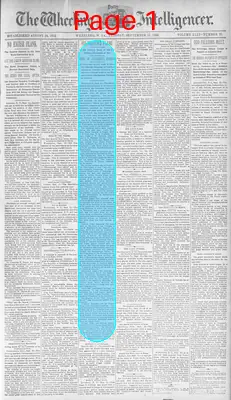
Story
September 17, 1895
The Wheeling Daily Intelligencer
Wheeling, Ohio County, West Virginia
What is this article about?
At the 27th annual reunion of the Society of the Army of the Tennessee in Cincinnati on Sept. 16, Col. Fred Grant delivered an address outlining his father General Grant's Civil War strategy, including coordinated army movements to defeat Confederate forces. The event included reports, welcomes, and music.
Clipping

OCR Quality
95%
Excellent
Full Text
HIS FATHER'S PLANS.
In the Closing Days of the Rebellion, Discussed at the Army of Tennessee's Reunion.
At Cincinnati by Col. Fred D. Grant.
The Russian Campaign of Napoleon Somewhat Similar—Lincoln's Desire for a Central Head of the Military Forces—The Speaker Received an Ovation.
CINCINNATI, O., Sept. 16.—The twenty-seventh annual session of the society of the army of the Tennessee began here at 10 a. m., with an unusually large attendance. Over 100 officers of high rank were registered. The morning session was devoted to reports and routine business. In the afternoon the distinguished visitors and their ladies attended a reception at Fort Thomas, in Kentucky, tendered by Commander Cochran and other army officers. The battalion drill was followed by luncheon, at which many ladies from Cincinnati, Newport and Covington assisted.
Gen. D. B. Henderson reported $94,000 secured for the Sherman monument at Washington, and $2,000 promised by the Grand Army of the Republic.
The following deaths were reported during the past year: Lieut. E. P. Toby, Major General B. Hogan, Major C. H. Dyer, Gen. W. Q. Gresham, Chicago; Major J. W. Paddock, Omaha; Capt. E. I. Webster, Denver; Capt. T. H. Griffin, St. Louis; Gen. Mason Brayman, Kansas City; Major Frank F. Peats, Rockford, Ill.; Col. E. C. Dawes, Cincinnati; Lieut. Oliver Anson, Council Bluffs, and Gen. Charles Sutherland, Washington.
Governor McKinley delivered an eloquent welcome for the state of Ohio. Ex-Congressman John A. Caldwell, mayor of Cincinnati, spoke the welcome for the Queen City. The president, Gen. Granville M. Dodge, responded for the society.
The annual address was delivered by Col. Fred Grant, of New York city. It was unusually interesting. It outlined General Grant's plan of campaign for closing the war, and described the order in which General Grant would have narrated the story in the second volume of his memoirs, had his life been spared. Until being appointed lieutenant general and assuming command, General Grant had an interview with President Lincoln, who wanted someone to take the responsibility of action, and call upon him for supplies, the president pledging the full powers of the government in rendering all assistance possible.
General Grant then planned movements of all the armies to move at once. He regarded the army of the James, as the left wing, the army of the Potomac as the centre and the troops operating under Sherman, of which the army of the Tennessee was a most important part, was the right wing, all other troops being co-operative columns. By continuous hammering against the Confederate armies, he proposed to destroy both them and their sources of supply.
General Grant compared the movement of the army of the Potomac to that of Napoleon in the Russian campaign, while the plan in reference to the whole army resembled that adopted by the allies in their campaign against France in 1813-14. He outlined how the confederates had concentrated their troops east of the Mississippi into the armies of Lee and Johnston, how General Grant placed himself with the army of the Potomac where the greatest opposition was expected, sent Sherman against Johnston and Sheridan through the Shenandoah Valley. On May 4 the army of the Potomac moved, and on May 6 all were moving. By May 11 the southern troops were forced to act entirely on the defensive and the union lines were considerably advanced.
It was at the end of this first week of the campaign that General Grant wrote: "I propose to fight it out on this line if it takes all summer."
The second phase of the plan was to keep the enemy within the besieged cities, Richmond, Petersburg and Atlanta, and actively engage the outside troops, to drive all the smaller commands to the south, to devastate the country from which supplies were drawn, and to destroy those who gathered these supplies.
Music was interspersed through the programme. It was furnished by an orchestra, the Loyal Legion Quartet and Miss Mary Logan Pearson, "the daughter of the army of the Tennessee."
Her singing of the "Star Spangled Banner" was the musical feature of the evening.
Governor McKinley left for Chattanooga when he finished speaking. General Hickenlooper introducing him mentioned him as the probable next president. He had just come from a dinner given him at the St. Nicholas at which Mark Hanna and others were present.
All the speakers at the meeting were applauded. Governor McKinley came in for a very large share.
Colonel Grant met with an ovation when introduced, the applause continuing a minute or more. He was generously applauded at the close of his address. Only the officers and speakers for the evening occupied the stage sharing it with uniformed military companies. General Howard occupied the box, all others formed a part of the audience.
In the Closing Days of the Rebellion, Discussed at the Army of Tennessee's Reunion.
At Cincinnati by Col. Fred D. Grant.
The Russian Campaign of Napoleon Somewhat Similar—Lincoln's Desire for a Central Head of the Military Forces—The Speaker Received an Ovation.
CINCINNATI, O., Sept. 16.—The twenty-seventh annual session of the society of the army of the Tennessee began here at 10 a. m., with an unusually large attendance. Over 100 officers of high rank were registered. The morning session was devoted to reports and routine business. In the afternoon the distinguished visitors and their ladies attended a reception at Fort Thomas, in Kentucky, tendered by Commander Cochran and other army officers. The battalion drill was followed by luncheon, at which many ladies from Cincinnati, Newport and Covington assisted.
Gen. D. B. Henderson reported $94,000 secured for the Sherman monument at Washington, and $2,000 promised by the Grand Army of the Republic.
The following deaths were reported during the past year: Lieut. E. P. Toby, Major General B. Hogan, Major C. H. Dyer, Gen. W. Q. Gresham, Chicago; Major J. W. Paddock, Omaha; Capt. E. I. Webster, Denver; Capt. T. H. Griffin, St. Louis; Gen. Mason Brayman, Kansas City; Major Frank F. Peats, Rockford, Ill.; Col. E. C. Dawes, Cincinnati; Lieut. Oliver Anson, Council Bluffs, and Gen. Charles Sutherland, Washington.
Governor McKinley delivered an eloquent welcome for the state of Ohio. Ex-Congressman John A. Caldwell, mayor of Cincinnati, spoke the welcome for the Queen City. The president, Gen. Granville M. Dodge, responded for the society.
The annual address was delivered by Col. Fred Grant, of New York city. It was unusually interesting. It outlined General Grant's plan of campaign for closing the war, and described the order in which General Grant would have narrated the story in the second volume of his memoirs, had his life been spared. Until being appointed lieutenant general and assuming command, General Grant had an interview with President Lincoln, who wanted someone to take the responsibility of action, and call upon him for supplies, the president pledging the full powers of the government in rendering all assistance possible.
General Grant then planned movements of all the armies to move at once. He regarded the army of the James, as the left wing, the army of the Potomac as the centre and the troops operating under Sherman, of which the army of the Tennessee was a most important part, was the right wing, all other troops being co-operative columns. By continuous hammering against the Confederate armies, he proposed to destroy both them and their sources of supply.
General Grant compared the movement of the army of the Potomac to that of Napoleon in the Russian campaign, while the plan in reference to the whole army resembled that adopted by the allies in their campaign against France in 1813-14. He outlined how the confederates had concentrated their troops east of the Mississippi into the armies of Lee and Johnston, how General Grant placed himself with the army of the Potomac where the greatest opposition was expected, sent Sherman against Johnston and Sheridan through the Shenandoah Valley. On May 4 the army of the Potomac moved, and on May 6 all were moving. By May 11 the southern troops were forced to act entirely on the defensive and the union lines were considerably advanced.
It was at the end of this first week of the campaign that General Grant wrote: "I propose to fight it out on this line if it takes all summer."
The second phase of the plan was to keep the enemy within the besieged cities, Richmond, Petersburg and Atlanta, and actively engage the outside troops, to drive all the smaller commands to the south, to devastate the country from which supplies were drawn, and to destroy those who gathered these supplies.
Music was interspersed through the programme. It was furnished by an orchestra, the Loyal Legion Quartet and Miss Mary Logan Pearson, "the daughter of the army of the Tennessee."
Her singing of the "Star Spangled Banner" was the musical feature of the evening.
Governor McKinley left for Chattanooga when he finished speaking. General Hickenlooper introducing him mentioned him as the probable next president. He had just come from a dinner given him at the St. Nicholas at which Mark Hanna and others were present.
All the speakers at the meeting were applauded. Governor McKinley came in for a very large share.
Colonel Grant met with an ovation when introduced, the applause continuing a minute or more. He was generously applauded at the close of his address. Only the officers and speakers for the evening occupied the stage sharing it with uniformed military companies. General Howard occupied the box, all others formed a part of the audience.
What sub-type of article is it?
Historical Event
Military Action
Biography
What themes does it cover?
Triumph
Bravery Heroism
What keywords are associated?
Army Of Tennessee Reunion
Grant's Civil War Plans
Union Strategy
Confederate Defeat
Military Campaign
Veterans Gathering
Sherman Monument
What entities or persons were involved?
Col. Fred Grant
General Grant
President Lincoln
Gen. Sherman
Gen. Sheridan
Gen. Lee
Gen. Johnston
Governor Mckinley
Gen. Granville M. Dodge
Gen. D. B. Henderson
Where did it happen?
Cincinnati, O.
Story Details
Key Persons
Col. Fred Grant
General Grant
President Lincoln
Gen. Sherman
Gen. Sheridan
Gen. Lee
Gen. Johnston
Governor Mckinley
Gen. Granville M. Dodge
Gen. D. B. Henderson
Location
Cincinnati, O.
Event Date
Sept. 16
Story Details
Col. Fred Grant's address at the Army of the Tennessee reunion outlined General Grant's Civil War strategy: coordinated advances by Union armies as wings to hammer Confederate forces, destroy supplies, and besiege key cities like Richmond, Petersburg, and Atlanta, leading to Union victory.