Thank you for visiting SNEWPapers!
Sign up free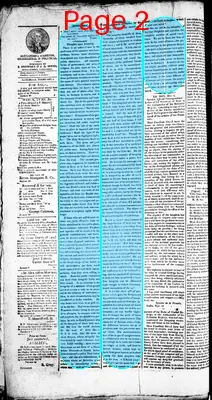
Literary
February 6, 1813
Alexandria Gazette, Commercial And Political
Alexandria, Virginia
What is this article about?
An essay by Young on the integrity of religious ministers in public life, particularly courts and among statesmen. It argues that biblical prophets like Moses, Daniel, and Paul exemplified virtue under trial, challenging suspicions of modern 'court divines' and emphasizing tested moral character over seclusion.
Clipping
OCR Quality
88%
Good
Full Text
MONITORY.
O Thou! whose word from solid dark
That spark, the Sun, strike wisdom from
my soul!
YOUNG.
Thoughts upon Integrity.
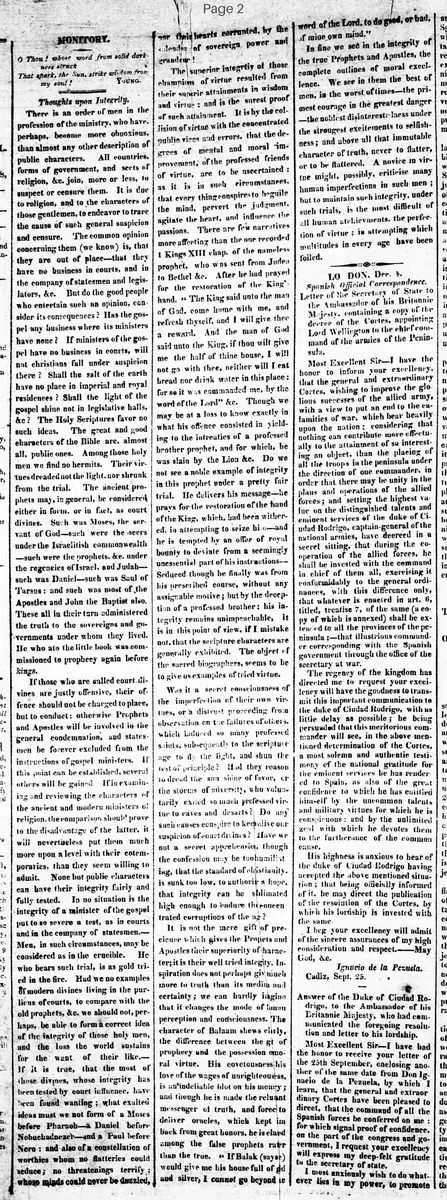
There is an order of men in the profession of the ministry, who have, perhaps, become more obnoxious, than almost any other description of public characters. All countries, forms of government, and sects of religion, &c. join, more or less, to suspect or censure them. It is due to religion, and to the characters of those gentlemen, to endeavor to trace the cause of such general suspicion and censure. The common opinion concerning them (we know) is, that they are out of place-that they have no business in courts, and in the company of statesmen and legislators, &c. But do the good people who entertain such an opinion, consider its consequences? Has the gospel any business where its ministers have none? If ministers of the gospel have no business in courts, will not christians fall under suspicion there? Shall the salt of the earth have no place in imperial and royal residences? Shall the light of the gospel shine not in legislative halls, &c? The Holy Scriptures favor no such ideas. The great and good characters of the Bible are, almost all, public ones. Among those holy men we find no hermits. Their virtues dreaded not the light, nor shrunk from the trial. The ancient prophets may, in general, be considered either in form, or in fact, as court divines. Such was Moses, the servant of God-such were the seers under the Israelitish commonwealth --such were the prophets. &c. under the regencies of Israel, and Judah-: such was Daniel-such was Saul of Tarsus: and such was most of the Apostles and John the Baptist also. These all in their turn-administered the truths to the sovereigns and governments under whom they lived. He who ate the little book was commissioned to prophecy again before kings. If those who are called court divines are justly offensive, their offence should not be charged to place, but to conduct: otherwise Prophets and Apostles will be involved in the general condemnation, and statesmen be forever excluded from the instructions of gospel ministers. If this point can be established, several others will be gained If in examining and reviewing the characters of the ancient and modern ministers of religion, the comparison should prove to the disadvantage of the latter. it will nevertheless put them much more upon a level with their contemporaries, than they seem willing to admit. None but public characters can have their integrity fairly and fully tested. In no situation is the integrity of a minister of the gospel put to so severe a test, as in courts and in the company of statesmen.- Men, in such circumstances, may be considered as in the crucible. He who bears such trial, is as gold tried in the fire. Had we no examples of modern divines living in the purlicus of courts, to compare with the old prophets, &c. we should not, perhaps, be able to form a correct idea of the integrity of those holy men, and the loss the world sustains for the want of their like.- If it is true, that the most of those divines, whose integrity has been tested by court influence, have been found wanting ; what exalted ideas must we not form of a Moses before Pharaoh--a Daniel before Nebuchadnezzar-and a Paul before Nero : and also of a constellation of worthies whom no flatteries could seduce; no threatenings terrify ; whose minds could never be dazzled, nor their hearts corrupted, by the splendor of sovereign power and grandeur! their superior attainments in wisdom and virtue : and is the surest proof of such attainment. It is by the collision of virtue with the concentrated degrees of mental and moral improvement; of the professed friends of virtue, are to be ascertained : as it is in such circumstances, that every thing conspires to beguile the mind, pervert the judgment, agitate the heart, and influence the passions. There are few narratives more affecting than the one recorded 1 Kings XIII chap. of the nameless prophet, who was sent from Judea to Bethel &c. After he had prayed for the restoration of the King's hand. The King said unto the man of God, come home with me, and refresh thyself, and I will give thee a reward. And the man of God said unto the King, if thou wilt give me the half of thine house, I will not go with thee, neither will I eat bread nor drink water in this place: for so it was commanded me, by the word of the Lord &c. Though we may be at a loss to know exactly in what his offence consisted in yielding to the intreaties of a professed brother prophet, and for which. he was slain by the Lion &c. Do we not see a noble example of integrity in this prophet under a pretty fair trial. He delivers his message -he prays for the restoration of the hand of the King, which, had been withered. in attempting to seize him-and he is tempted by an offer of royal bounty to deviate from a seeming unessential part of his instructions-. Seduced though he finally was from his prescribed course, without any assignable motive; but by the deception of a professed brother: his integrity remains unimpeachable, it is in this point of view. if I mistake not, that the scripture characters are generally exhibited. The object of the sacred biographers, seems to be to give us examples of tried virtue. Was it a secret consciousness of the imperfection of their own virtues, or a distrust proceeding from observation on the failures of others. which induced so many professed saints, subsequent to the scripture age to fly the light, and shun the test of principle? Had they reason to dread the sun shine of favor, or the storms of adversity, who voluntarily exiled so much professed virtue to caves and deserts? Do any such causes conspire to becalm out suspicion of court divines? Have we not a secret apprehension, though the confession may be too humiliating, that the standard of christianity is sunk too low, to authorize a hope. that integrity can be sublimated high enough to endure the concentrated corruptions of the a? It is not the mere gift of prescience which gives the Prophets and Apostles their superiority of character; it is their well tried integrity. Inspiration does not perhaps give much more to truth than its medium and certainty; we can hardly imagine that it changes the mode of human perception and consciousness. The character of Balaam shews clearly, the difference between the gift of prophecy and the possession of moral virtue. His covetousness his love of the wages of unrighteousness, is an indelible blot on his memory; and though he is made the reluctant messenger of truth, and forced to deliver oracles, which kept in back from great honors, he is classed among the false prophets rather than the true. If Balak (says he) would give me his house full of gold and silver, I cannot go beyond the word of the Lord, to do good, or bad, of mine own mind. In fine we see in the integrity of the true Prophets and Apostles, the complete outlines of moral excellence. We see in them the best of men, in the worst of times -the prime courage in the greatest danger the strongest excitements to selfishness -the noblest disinterestedness under the strongest temptations never to flatter, or to be flattered. A novice in virtue might, possibly, criticise many human imperfections in such men ; but to maintain such integrity, under such trials, is the most difficult of all human achievements, the perfection of virtue ; in attempting which multitudes in every age have been foiled.
O Thou! whose word from solid dark
That spark, the Sun, strike wisdom from
my soul!
YOUNG.
Thoughts upon Integrity.
There is an order of men in the profession of the ministry, who have, perhaps, become more obnoxious, than almost any other description of public characters. All countries, forms of government, and sects of religion, &c. join, more or less, to suspect or censure them. It is due to religion, and to the characters of those gentlemen, to endeavor to trace the cause of such general suspicion and censure. The common opinion concerning them (we know) is, that they are out of place-that they have no business in courts, and in the company of statesmen and legislators, &c. But do the good people who entertain such an opinion, consider its consequences? Has the gospel any business where its ministers have none? If ministers of the gospel have no business in courts, will not christians fall under suspicion there? Shall the salt of the earth have no place in imperial and royal residences? Shall the light of the gospel shine not in legislative halls, &c? The Holy Scriptures favor no such ideas. The great and good characters of the Bible are, almost all, public ones. Among those holy men we find no hermits. Their virtues dreaded not the light, nor shrunk from the trial. The ancient prophets may, in general, be considered either in form, or in fact, as court divines. Such was Moses, the servant of God-such were the seers under the Israelitish commonwealth --such were the prophets. &c. under the regencies of Israel, and Judah-: such was Daniel-such was Saul of Tarsus: and such was most of the Apostles and John the Baptist also. These all in their turn-administered the truths to the sovereigns and governments under whom they lived. He who ate the little book was commissioned to prophecy again before kings. If those who are called court divines are justly offensive, their offence should not be charged to place, but to conduct: otherwise Prophets and Apostles will be involved in the general condemnation, and statesmen be forever excluded from the instructions of gospel ministers. If this point can be established, several others will be gained If in examining and reviewing the characters of the ancient and modern ministers of religion, the comparison should prove to the disadvantage of the latter. it will nevertheless put them much more upon a level with their contemporaries, than they seem willing to admit. None but public characters can have their integrity fairly and fully tested. In no situation is the integrity of a minister of the gospel put to so severe a test, as in courts and in the company of statesmen.- Men, in such circumstances, may be considered as in the crucible. He who bears such trial, is as gold tried in the fire. Had we no examples of modern divines living in the purlicus of courts, to compare with the old prophets, &c. we should not, perhaps, be able to form a correct idea of the integrity of those holy men, and the loss the world sustains for the want of their like.- If it is true, that the most of those divines, whose integrity has been tested by court influence, have been found wanting ; what exalted ideas must we not form of a Moses before Pharaoh--a Daniel before Nebuchadnezzar-and a Paul before Nero : and also of a constellation of worthies whom no flatteries could seduce; no threatenings terrify ; whose minds could never be dazzled, nor their hearts corrupted, by the splendor of sovereign power and grandeur! their superior attainments in wisdom and virtue : and is the surest proof of such attainment. It is by the collision of virtue with the concentrated degrees of mental and moral improvement; of the professed friends of virtue, are to be ascertained : as it is in such circumstances, that every thing conspires to beguile the mind, pervert the judgment, agitate the heart, and influence the passions. There are few narratives more affecting than the one recorded 1 Kings XIII chap. of the nameless prophet, who was sent from Judea to Bethel &c. After he had prayed for the restoration of the King's hand. The King said unto the man of God, come home with me, and refresh thyself, and I will give thee a reward. And the man of God said unto the King, if thou wilt give me the half of thine house, I will not go with thee, neither will I eat bread nor drink water in this place: for so it was commanded me, by the word of the Lord &c. Though we may be at a loss to know exactly in what his offence consisted in yielding to the intreaties of a professed brother prophet, and for which. he was slain by the Lion &c. Do we not see a noble example of integrity in this prophet under a pretty fair trial. He delivers his message -he prays for the restoration of the hand of the King, which, had been withered. in attempting to seize him-and he is tempted by an offer of royal bounty to deviate from a seeming unessential part of his instructions-. Seduced though he finally was from his prescribed course, without any assignable motive; but by the deception of a professed brother: his integrity remains unimpeachable, it is in this point of view. if I mistake not, that the scripture characters are generally exhibited. The object of the sacred biographers, seems to be to give us examples of tried virtue. Was it a secret consciousness of the imperfection of their own virtues, or a distrust proceeding from observation on the failures of others. which induced so many professed saints, subsequent to the scripture age to fly the light, and shun the test of principle? Had they reason to dread the sun shine of favor, or the storms of adversity, who voluntarily exiled so much professed virtue to caves and deserts? Do any such causes conspire to becalm out suspicion of court divines? Have we not a secret apprehension, though the confession may be too humiliating, that the standard of christianity is sunk too low, to authorize a hope. that integrity can be sublimated high enough to endure the concentrated corruptions of the a? It is not the mere gift of prescience which gives the Prophets and Apostles their superiority of character; it is their well tried integrity. Inspiration does not perhaps give much more to truth than its medium and certainty; we can hardly imagine that it changes the mode of human perception and consciousness. The character of Balaam shews clearly, the difference between the gift of prophecy and the possession of moral virtue. His covetousness his love of the wages of unrighteousness, is an indelible blot on his memory; and though he is made the reluctant messenger of truth, and forced to deliver oracles, which kept in back from great honors, he is classed among the false prophets rather than the true. If Balak (says he) would give me his house full of gold and silver, I cannot go beyond the word of the Lord, to do good, or bad, of mine own mind. In fine we see in the integrity of the true Prophets and Apostles, the complete outlines of moral excellence. We see in them the best of men, in the worst of times -the prime courage in the greatest danger the strongest excitements to selfishness -the noblest disinterestedness under the strongest temptations never to flatter, or to be flattered. A novice in virtue might, possibly, criticise many human imperfections in such men ; but to maintain such integrity, under such trials, is the most difficult of all human achievements, the perfection of virtue ; in attempting which multitudes in every age have been foiled.
What sub-type of article is it?
Essay
What themes does it cover?
Moral Virtue
Religious
Political
What keywords are associated?
Integrity
Ministers
Prophets
Courts
Biblical Examples
Virtue
Gospel
Public Characters
Moral Excellence
Tried Virtue
What entities or persons were involved?
Young.
Literary Details
Title
Thoughts Upon Integrity
Author
Young.
Subject
Integrity Of Gospel Ministers In Courts And Public Life
Key Lines
If Ministers Of The Gospel Have No Business In Courts, Will Not Christians Fall Under Suspicion There? Shall The Salt Of The Earth Have No Place In Imperial And Royal Residences?
The Ancient Prophets May, In General, Be Considered Either In Form, Or In Fact, As Court Divines. Such Was Moses, The Servant Of God Such Were The Seers Under The Israelitish Commonwealth
None But Public Characters Can Have Their Integrity Fairly And Fully Tested. In No Situation Is The Integrity Of A Minister Of The Gospel Put To So Severe A Test, As In Courts And In The Company Of Statesmen.
It Is Not The Mere Gift Of Prescience Which Gives The Prophets And Apostles Their Superiority Of Character; It Is Their Well Tried Integrity.
We See In Them The Best Of Men, In The Worst Of Times The Prime Courage In The Greatest Danger The Strongest Excitements To Selfishness The Noblest Disinterestedness Under The Strongest Temptations