Thank you for visiting SNEWPapers!
Sign up free
Gazette Of The United States, & Daily Advertiser
Philadelphia, Philadelphia County, Pennsylvania
What is this article about?
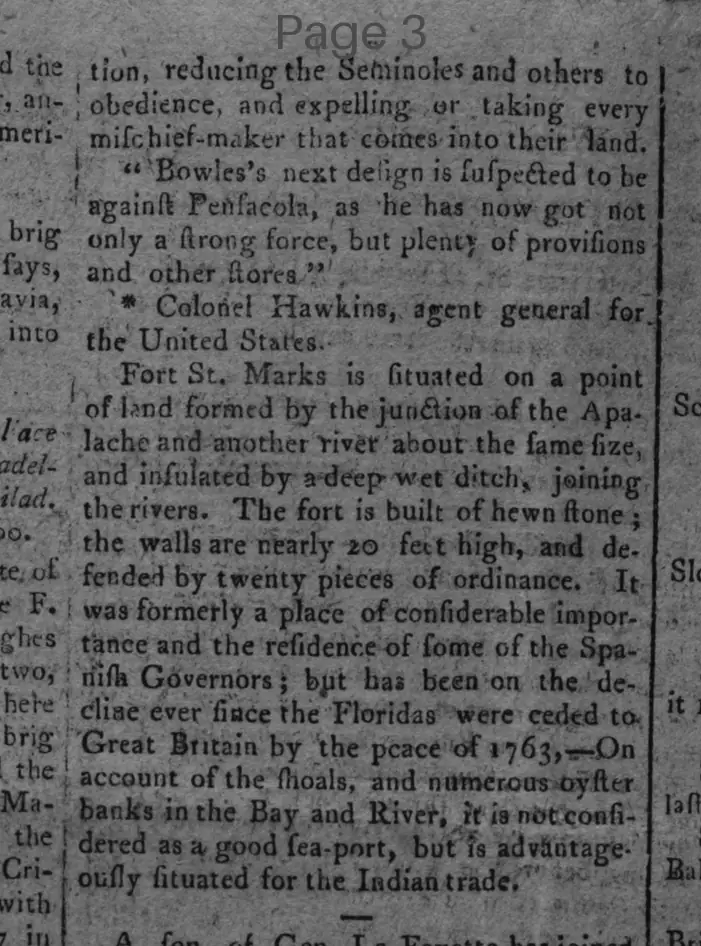
Description of Fort St. Marks: its location at the junction of the Apalachicola and another river, construction of hewn stone with 20-foot walls and 20 cannons, historical importance as a Spanish governors' residence, decline since the 1763 cession of Floridas to Britain, and suitability for Indian trade despite poor sea-port access.
Clipping
OCR Quality
Full Text
What sub-type of article is it?
What themes does it cover?
What keywords are associated?
Where did it happen?
Story Details
Location
Fort St. Marks, Junction Of The Apalachicola And Another River
Event Date
1763
Story Details
Fort St. Marks, built of hewn stone with high walls and ordnance, was once important as a Spanish governors' residence but declined after the 1763 cession of Floridas to Britain; suitable for Indian trade but not as a sea-port due to shoals and oyster banks.