Thank you for visiting SNEWPapers!
Sign up free
Literary
September 14, 1882
The Iowa Plain Dealer
Cresco, New Oregon, Howard County, Iowa
What is this article about?
Historical account of the 1729 discovery of diamonds in Brazil by gold miners and a monk, leading to Portuguese royal control, economic boom, and despotic governance in Minas. Describes initial finds in river sands and later deeper beds.
Clipping
OCR Quality
95%
Excellent
Full Text
The Discovery of Diamonds in Brazil.
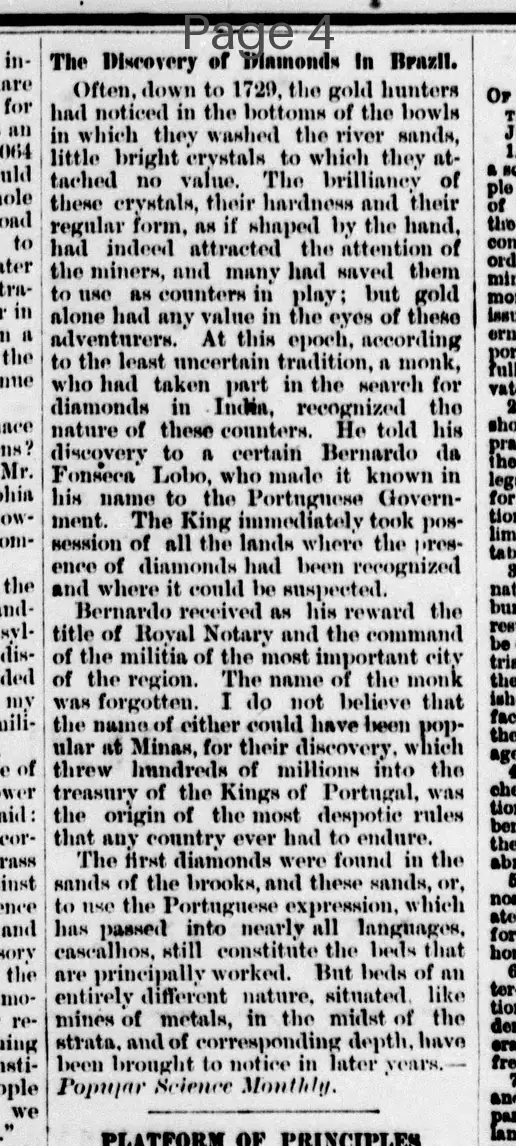
Often, down to 1729, the gold hunters had noticed in the bottoms of the bowl, in which they washed the river sands, little bright crystals to which they attached no value. The brilliancy of these crystals, their hardness and their regular form, as if shaped by the hand, had indeed attracted the attention of the miners, and many had saved them to use as counters in play; but gold alone had any value in the eyes of these adventurers. At this epoch, according to the least uncertain tradition, a monk, who had taken part in the search for diamonds in India, recognized the nature of these counters. He told his discovery to a certain Bernardo da Fonseca Lobo, who made it known in his name to the Portuguese Government. The King immediately took possession of all the lands where the presence of diamonds had been recognized and where it could be suspected. Bernardo received as his reward the title of Royal Notary and the command of the militia of the most important city of the region. The name of the monk was forgotten. I do not believe that the name of either could have been popular at Minas, for their discovery, which threw hundreds of millions into the treasury of the Kings of Portugal, was the origin of the most despotic rules that any country ever had to endure.
The first diamonds were found in the sands of the brooks, and these sands, or, to use the Portuguese expression, which has passed into nearly all languages, cascalhos, still constitute the beds that are principally worked. But beds of an entirely different nature, situated, like mines of metals, in the midst of the strata, and of corresponding depth, have been brought to notice in later years.
-Popular Science Monthly
Often, down to 1729, the gold hunters had noticed in the bottoms of the bowl, in which they washed the river sands, little bright crystals to which they attached no value. The brilliancy of these crystals, their hardness and their regular form, as if shaped by the hand, had indeed attracted the attention of the miners, and many had saved them to use as counters in play; but gold alone had any value in the eyes of these adventurers. At this epoch, according to the least uncertain tradition, a monk, who had taken part in the search for diamonds in India, recognized the nature of these counters. He told his discovery to a certain Bernardo da Fonseca Lobo, who made it known in his name to the Portuguese Government. The King immediately took possession of all the lands where the presence of diamonds had been recognized and where it could be suspected. Bernardo received as his reward the title of Royal Notary and the command of the militia of the most important city of the region. The name of the monk was forgotten. I do not believe that the name of either could have been popular at Minas, for their discovery, which threw hundreds of millions into the treasury of the Kings of Portugal, was the origin of the most despotic rules that any country ever had to endure.
The first diamonds were found in the sands of the brooks, and these sands, or, to use the Portuguese expression, which has passed into nearly all languages, cascalhos, still constitute the beds that are principally worked. But beds of an entirely different nature, situated, like mines of metals, in the midst of the strata, and of corresponding depth, have been brought to notice in later years.
-Popular Science Monthly
What sub-type of article is it?
Essay
What themes does it cover?
Commerce Trade
Political
Taxation Oppression
What keywords are associated?
Diamond Discovery
Brazil
Portugal
Minas
Gold Hunters
Monk
Bernardo Da Fonseca Lobo
Cascalhos
What entities or persons were involved?
Popular Science Monthly
Literary Details
Title
The Discovery Of Diamonds In Brazil.
Author
Popular Science Monthly
Subject
Discovery Of Diamonds In Brazil
Key Lines
Often, Down To 1729, The Gold Hunters Had Noticed In The Bottoms Of The Bowl, In Which They Washed The River Sands, Little Bright Crystals To Which They Attached No Value.
A Monk, Who Had Taken Part In The Search For Diamonds In India, Recognized The Nature Of These Counters.
The King Immediately Took Possession Of All The Lands Where The Presence Of Diamonds Had Been Recognized And Where It Could Be Suspected.
Their Discovery, Which Threw Hundreds Of Millions Into The Treasury Of The Kings Of Portugal, Was The Origin Of The Most Despotic Rules That Any Country Ever Had To Endure.
The First Diamonds Were Found In The Sands Of The Brooks, And These Sands, Or, To Use The Portuguese Expression, Which Has Passed Into Nearly All Languages, Cascalhos, Still Constitute The Beds That Are Principally Worked.