Thank you for visiting SNEWPapers!
Sign up free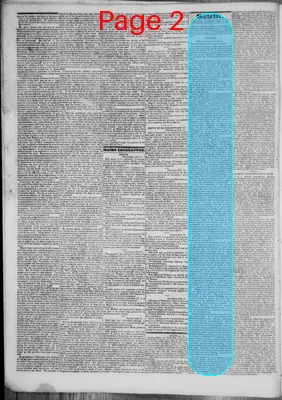
Editorial
February 17, 1824
The Portland Gazette
Portland, Cumberland County, Maine
What is this article about?
The Portland Gazette editorial critiques a congressional caucus that nominated William H. Crawford for president amid 1824 election rivalries. It argues against caucuses as undemocratic, preferring direct popular choice, and warns of oligarchic risks using historical analogies.
Clipping

OCR Quality
95%
Excellent
Full Text
Gazette.
PORTLAND, TUESDAY, FEB. 17, 1824.
(We are gratified to observe a coincidence between the concluding sentiments of the following article, and some excellent remarks on the same subject from the editor of the Portsmouth Journal which we shall endeavor to make room for in our next.]
CAUCUS.
"The great, the important day,
"Big with the fate of Cesar and of Rome!"
Gen. John Chandler, of this state, has issued his invitation, signed by himself, and several other names less familiar to us, to the democratic members of Congress, to meet on Saturday evening last at the capitol to nominate candidates for President and Vice President of the United States.
Counter to this summons, we see in the National Intelligencer an advertisement subscribed by Col. Johnson of Kentucky, Mr. Burleigh of this state, Messrs. Crowninshield and Fuller of Massachusetts, and sundry others from various states in the Union, whose names will be found in our columns, from which it seems that measures have been taken to ascertain negatively the number of those, who would have nothing to do with a nomination of this kind.
The result announced according to their statement is, that of 281 members of Congress, 161 had made up their minds against it. The rest may be safely set down for Mr. Crawford, who will undoubtedly receive the unanimous nomination of the meeting
Whether this denouement of the grand political drama, which has been so long in preparation, will answer the public expectation, or satisfy those who have been most concerned in the preliminary arrangements, we have no means of forming an opinion. Whether this is the caucus which the republicans of this state were taught to expect, is more than we can say; and whether those members of the legislature who have pledged themselves to abide the result of a national nomination, will feel themselves bound by the doings of this meeting, under these circumstances, is a question for themselves to determine. It is one which we have no occasion nor inclination to meddle with. We are not the keepers of their consciences; nor are we quite casuists enough to determine the difficulty for them. We have no ambition "to throw a firebrand into the midst of the Ottoman empire." And indeed we are not advised, whether the republicans will recognize it as a regular parliament, or regard it only as a rump.
But we are well satisfied on the whole, that this is as it should be. There is no longer any contest in the country between organized parties for the ascendancy. We are now all republicans, if we are not all federalists. At all events there is no federal republican candidate for the presidency; nor any one that federalists can support with animation. Of course there is no occasion for any mechanical expedient to concentrate the energy of the democratic party. And there is no longer any controversy on any ground of principle. It is only a competition among the champions of the republican party for the mastery. It is a question entirely among themselves. They are all of the same general politics, and all stand on the same democratic platform; and are all entitled to stand on the same footing before the people without any artificial scaffolding to give one the advantage of a head above the rest. Mr. Crawford is now placed precisely on a level with his compeers, each of whom has his circle of friends and supporters; and is a fair candidate for the presidency.
Viewing the nomination in this narrow light, for ourselves we are free to confess that we regard one very great objection to Mr. Crawford as done away by this consequence. We had rather receive him or either of the candidates for our President from the suffrages of the people of the United States, than to have one imposed upon us by an usurpation of arbitrary authority; as we had rather submit to an unavoidable visitation of Providence, than be subjected to an unhallowed infliction from the arm of flesh; and be under any yoke sooner than the despotic dictation of a dominant faction. We had rather be governed like the Greeks by the Turks, than like the Turks themselves be slaves to the Janissaries. It was in the last stage of the Roman empire that the election passed into the hands of the Praetorian guards. And if the election must come into the house of representatives at last, we must say we had rather receive Caesar or Pompey from the decree of the Senate to lord it over the whole republic, than Marius or Sylla entering the capital at the head of a cohort, especially with a proscription at the tail of it.
If it is an evil, that the choice should come into the house of representatives, it is one that the constitution provides for; while the constitution does not provide for the other evil, of the people not being able to agree upon a President before the election. The constitution in fact did originally contemplate the precise case of having five candidates. the very number now before the nation, neither having a majority, and leaving the choice to be made among them by the house of representatives voting by states. But this provision was repealed under Mr. Jefferson's administration, and the choice of the house confined to the three highest. However, there is no person in the nation of sufficient prominence for his virtues, talents and services to secure the suffrages of a majority, that is not the fault of the people. Let it operate henceforth as a stimulus to future ambition. to higher exertions to deserve well of the country. These piping times of peace it is true do not afford such golden opportunities for distinction as the past. We want another revolution to form another Washington, or another division of parties like that which took place at the adoption of the constitution to bring them shoulder to shoulder for Adams or Jefferson. If the last war had lasted five years longer, however, Gen. Jackson would probably have accomplished himself for the presidency.
Much has been said about a caucus not being constitutional. As to that, its advocates never pretended it was. All they contended was, that it was not unconstitutional. And in that sense they certainly were right. So far as the forms of the constitution are concerned, we have always considered it just as constitutional as any other convention, which the constitution neither provides for nor prohibits, whether holden by private persons, delegates from States or Members of Congress; and it prohibits them no more in time of peace than it does in war. Indeed most of our bills of rights guarantee the peaceable assembling of the people together to consult for the public good.
We agree therefore, that the letter of the constitution has nothing to do with the subject, more than it has with astrology. But dare not say so much for the spirit of it.
The mere name of a caucus amounts to nothing in our minds We have no superstitious dread, nor bigotted notions about names. It is the thing itself that is either good or bad, and the object of it that is either right or wrong. But though names are not things, as Mirabeau termed them, yet things sometimes acquire a very altered and malignant character under very innocent names. All usurpations, that take place in republics, are practised under the pretence of Liberty. And even Lord Bacon, with a spice of Machiavel himself, recommends the gentle and laudable usage of innovation practised in the ancient republics, viz. of preserving the venerable phrasenology of freedom, but silently and surreptitiously changing its signification. Thus the vigilance of the friends and sentinels of liberty whose horror would be excited at the remotest idea of its infringement, is gradually dragged into agreeable repose by these old opiates, until they wake at last to find the chains rivetted about their necks Thus by the policy of Augustus, Tiberius, Caligula, Claudius and Nero, Rome retained the name of republic long after she had lost every vestige of popular liberty and the very title of emperor, equivalent to our general; was originally of inferior grade to those of consul and dictator, and far less obnoxious than the latter. When Augustus approached the Feast of the Caesars, he is described as turning first white, then red, then black! And Bonaparte ascended the throne of the Bourbons under the modest antique garb of First Consul of the French Republic
But names themselves are not always entirely so innocent as they may seem. In the beginning of the English Commonwealth, the government was vested in a Council of State: nothing but a Council—composed first of officers and afterwards of others. What could be more plausible, and specious than Protectorship/ The instrument of government adopted by the Council on nominating Cromwell to that office, was simply called their Humble Petition and Advice. And the same Council by the same humble petition and advice nominated his son Richard to be his Successor
But the Council had lost its charm, and Richard had the good sense to relinquish the struggle.
The essential principle of a Caucus, such as has been the object of the present enterprise we will not call it a conspiracy, because we believe such an evil intention to be very far and very foreign from the minds and feelings of most of those who have promoted it. but the principle of it, we are bold to say, even under its simple and humble guise of mere recommendation by members of Congress, is in our apprehension fraught with peril to popular freedom, and fatally hostile to constitutional liberty. These simple recommendations will finally have the force of arbitrary decrees. It is not the theory, but the practice of a principle that is to be regarded in a matter of this kind. And let this usage become inveterate by practice—let this become the ancient regime—let "the old formula be observed in every particular"—let Gen. Smith or Gen. Chandler, or whoever may be the general in command at the capitol for the time being, issue his conge d'elire—and call it what you will, we have an imperium in imperio—an influence formed behind the constitution, or under the constitution, or over the constitution, actually more powerful than the constitution itself —and though the forms of an election by the people may remain, the real faculty of choice will be forever gone into the hands, not of the many, but the few. And under the name of a Caucus, we shall have an oligarchy, an aristocracy,—in plain English—despotism in disguise and at last unmasked and undisguised It matters not whether this despotism be usurped under the sacred names of democracy or republicanism. Time was the American people were celebrated for "scenting the approach of tyranny, even in the tainted breeze." —And we fancy they have not quite lost their instinct
PORTLAND, TUESDAY, FEB. 17, 1824.
(We are gratified to observe a coincidence between the concluding sentiments of the following article, and some excellent remarks on the same subject from the editor of the Portsmouth Journal which we shall endeavor to make room for in our next.]
CAUCUS.
"The great, the important day,
"Big with the fate of Cesar and of Rome!"
Gen. John Chandler, of this state, has issued his invitation, signed by himself, and several other names less familiar to us, to the democratic members of Congress, to meet on Saturday evening last at the capitol to nominate candidates for President and Vice President of the United States.
Counter to this summons, we see in the National Intelligencer an advertisement subscribed by Col. Johnson of Kentucky, Mr. Burleigh of this state, Messrs. Crowninshield and Fuller of Massachusetts, and sundry others from various states in the Union, whose names will be found in our columns, from which it seems that measures have been taken to ascertain negatively the number of those, who would have nothing to do with a nomination of this kind.
The result announced according to their statement is, that of 281 members of Congress, 161 had made up their minds against it. The rest may be safely set down for Mr. Crawford, who will undoubtedly receive the unanimous nomination of the meeting
Whether this denouement of the grand political drama, which has been so long in preparation, will answer the public expectation, or satisfy those who have been most concerned in the preliminary arrangements, we have no means of forming an opinion. Whether this is the caucus which the republicans of this state were taught to expect, is more than we can say; and whether those members of the legislature who have pledged themselves to abide the result of a national nomination, will feel themselves bound by the doings of this meeting, under these circumstances, is a question for themselves to determine. It is one which we have no occasion nor inclination to meddle with. We are not the keepers of their consciences; nor are we quite casuists enough to determine the difficulty for them. We have no ambition "to throw a firebrand into the midst of the Ottoman empire." And indeed we are not advised, whether the republicans will recognize it as a regular parliament, or regard it only as a rump.
But we are well satisfied on the whole, that this is as it should be. There is no longer any contest in the country between organized parties for the ascendancy. We are now all republicans, if we are not all federalists. At all events there is no federal republican candidate for the presidency; nor any one that federalists can support with animation. Of course there is no occasion for any mechanical expedient to concentrate the energy of the democratic party. And there is no longer any controversy on any ground of principle. It is only a competition among the champions of the republican party for the mastery. It is a question entirely among themselves. They are all of the same general politics, and all stand on the same democratic platform; and are all entitled to stand on the same footing before the people without any artificial scaffolding to give one the advantage of a head above the rest. Mr. Crawford is now placed precisely on a level with his compeers, each of whom has his circle of friends and supporters; and is a fair candidate for the presidency.
Viewing the nomination in this narrow light, for ourselves we are free to confess that we regard one very great objection to Mr. Crawford as done away by this consequence. We had rather receive him or either of the candidates for our President from the suffrages of the people of the United States, than to have one imposed upon us by an usurpation of arbitrary authority; as we had rather submit to an unavoidable visitation of Providence, than be subjected to an unhallowed infliction from the arm of flesh; and be under any yoke sooner than the despotic dictation of a dominant faction. We had rather be governed like the Greeks by the Turks, than like the Turks themselves be slaves to the Janissaries. It was in the last stage of the Roman empire that the election passed into the hands of the Praetorian guards. And if the election must come into the house of representatives at last, we must say we had rather receive Caesar or Pompey from the decree of the Senate to lord it over the whole republic, than Marius or Sylla entering the capital at the head of a cohort, especially with a proscription at the tail of it.
If it is an evil, that the choice should come into the house of representatives, it is one that the constitution provides for; while the constitution does not provide for the other evil, of the people not being able to agree upon a President before the election. The constitution in fact did originally contemplate the precise case of having five candidates. the very number now before the nation, neither having a majority, and leaving the choice to be made among them by the house of representatives voting by states. But this provision was repealed under Mr. Jefferson's administration, and the choice of the house confined to the three highest. However, there is no person in the nation of sufficient prominence for his virtues, talents and services to secure the suffrages of a majority, that is not the fault of the people. Let it operate henceforth as a stimulus to future ambition. to higher exertions to deserve well of the country. These piping times of peace it is true do not afford such golden opportunities for distinction as the past. We want another revolution to form another Washington, or another division of parties like that which took place at the adoption of the constitution to bring them shoulder to shoulder for Adams or Jefferson. If the last war had lasted five years longer, however, Gen. Jackson would probably have accomplished himself for the presidency.
Much has been said about a caucus not being constitutional. As to that, its advocates never pretended it was. All they contended was, that it was not unconstitutional. And in that sense they certainly were right. So far as the forms of the constitution are concerned, we have always considered it just as constitutional as any other convention, which the constitution neither provides for nor prohibits, whether holden by private persons, delegates from States or Members of Congress; and it prohibits them no more in time of peace than it does in war. Indeed most of our bills of rights guarantee the peaceable assembling of the people together to consult for the public good.
We agree therefore, that the letter of the constitution has nothing to do with the subject, more than it has with astrology. But dare not say so much for the spirit of it.
The mere name of a caucus amounts to nothing in our minds We have no superstitious dread, nor bigotted notions about names. It is the thing itself that is either good or bad, and the object of it that is either right or wrong. But though names are not things, as Mirabeau termed them, yet things sometimes acquire a very altered and malignant character under very innocent names. All usurpations, that take place in republics, are practised under the pretence of Liberty. And even Lord Bacon, with a spice of Machiavel himself, recommends the gentle and laudable usage of innovation practised in the ancient republics, viz. of preserving the venerable phrasenology of freedom, but silently and surreptitiously changing its signification. Thus the vigilance of the friends and sentinels of liberty whose horror would be excited at the remotest idea of its infringement, is gradually dragged into agreeable repose by these old opiates, until they wake at last to find the chains rivetted about their necks Thus by the policy of Augustus, Tiberius, Caligula, Claudius and Nero, Rome retained the name of republic long after she had lost every vestige of popular liberty and the very title of emperor, equivalent to our general; was originally of inferior grade to those of consul and dictator, and far less obnoxious than the latter. When Augustus approached the Feast of the Caesars, he is described as turning first white, then red, then black! And Bonaparte ascended the throne of the Bourbons under the modest antique garb of First Consul of the French Republic
But names themselves are not always entirely so innocent as they may seem. In the beginning of the English Commonwealth, the government was vested in a Council of State: nothing but a Council—composed first of officers and afterwards of others. What could be more plausible, and specious than Protectorship/ The instrument of government adopted by the Council on nominating Cromwell to that office, was simply called their Humble Petition and Advice. And the same Council by the same humble petition and advice nominated his son Richard to be his Successor
But the Council had lost its charm, and Richard had the good sense to relinquish the struggle.
The essential principle of a Caucus, such as has been the object of the present enterprise we will not call it a conspiracy, because we believe such an evil intention to be very far and very foreign from the minds and feelings of most of those who have promoted it. but the principle of it, we are bold to say, even under its simple and humble guise of mere recommendation by members of Congress, is in our apprehension fraught with peril to popular freedom, and fatally hostile to constitutional liberty. These simple recommendations will finally have the force of arbitrary decrees. It is not the theory, but the practice of a principle that is to be regarded in a matter of this kind. And let this usage become inveterate by practice—let this become the ancient regime—let "the old formula be observed in every particular"—let Gen. Smith or Gen. Chandler, or whoever may be the general in command at the capitol for the time being, issue his conge d'elire—and call it what you will, we have an imperium in imperio—an influence formed behind the constitution, or under the constitution, or over the constitution, actually more powerful than the constitution itself —and though the forms of an election by the people may remain, the real faculty of choice will be forever gone into the hands, not of the many, but the few. And under the name of a Caucus, we shall have an oligarchy, an aristocracy,—in plain English—despotism in disguise and at last unmasked and undisguised It matters not whether this despotism be usurped under the sacred names of democracy or republicanism. Time was the American people were celebrated for "scenting the approach of tyranny, even in the tainted breeze." —And we fancy they have not quite lost their instinct
What sub-type of article is it?
Partisan Politics
Constitutional
What keywords are associated?
Caucus
Presidential Nomination
Democratic Party
Congressional Influence
Popular Election
1824 Election
William Crawford
What entities or persons were involved?
John Chandler
Richard Johnson
William Burleigh
Jacob Crowninshield
Theodore Fuller
William H. Crawford
Andrew Jackson
Editorial Details
Primary Topic
Critique Of Congressional Caucus For 1824 Presidential Nomination
Stance / Tone
Critical Of Caucus System, Favoring Popular Election
Key Figures
John Chandler
Richard Johnson
William Burleigh
Jacob Crowninshield
Theodore Fuller
William H. Crawford
Andrew Jackson
Key Arguments
Caucus Nomination Of Crawford Undermines Popular Choice
Caucuses Risk Creating Oligarchy And Despotism In Disguise
Preference For Direct Suffrages Over Factional Imposition
Historical Analogies Warn Against Veiled Usurpations Of Liberty
Constitution Allows House Election But Not Caucus Dominance
No Principled Party Contest, Just Rivalry Among Republicans