Thank you for visiting SNEWPapers!
Sign up free
Daily National Intelligencer
Washington, District Of Columbia
What is this article about?
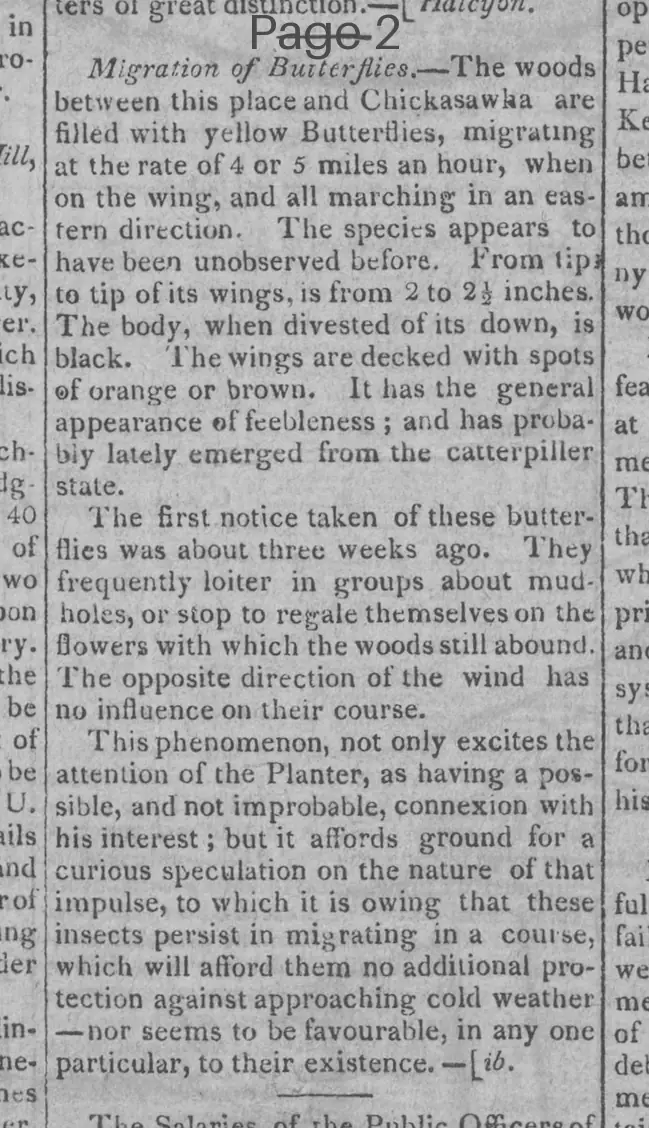
Large numbers of yellow butterflies are migrating eastward through the woods between the reporting location and Chickasawka at 4-5 miles per hour, first noticed about three weeks ago. The species is previously unobserved, with wings 2-2.5 inches across, black body, and orange-brown spots. They ignore wind direction and may impact local planters' interests.
Clipping
OCR Quality
Full Text
The first notice taken of these butterflies was about three weeks ago. They frequently loiter in groups about mud-holes, or stop to regale themselves on the flowers with which the woods still abound. The opposite direction of the wind has no influence on their course.
This phenomenon, not only excites the attention of the Planter, as having a possible, and not improbable, connexion with his interest; but it affords ground for a curious speculation on the nature of that impulse, to which it is owing that these insects persist in migrating in a course, which will afford them no additional protection against approaching cold weather—nor seems to be favourable, in any one particular, to their existence. —[ib.
What sub-type of article is it?
What keywords are associated?
Where did it happen?
Domestic News Details
Primary Location
Woods Between This Place And Chickasawka
Event Date
About Three Weeks Ago
Event Details
The woods between this place and Chickasawka are filled with yellow Butterflies, migrating at the rate of 4 or 5 miles an hour, when on the wing, and all marching in an eastern direction. The species appears to have been unobserved before. From tip to tip of its wings, is from 2 to 2 1/2 inches. The body, when divested of its down, is black. The wings are decked with spots of orange or brown. It has the general appearance of feebleness; and has probably lately emerged from the caterpillar state. The first notice taken of these butterflies was about three weeks ago. They frequently loiter in groups about mud-holes, or stop to regale themselves on the flowers with which the woods still abound. The opposite direction of the wind has no influence on their course. This phenomenon excites the attention of the Planter, as having a possible connexion with his interest; and affords ground for speculation on the impulse causing their migration despite no apparent benefit against cold weather.