Thank you for visiting SNEWPapers!
Sign up free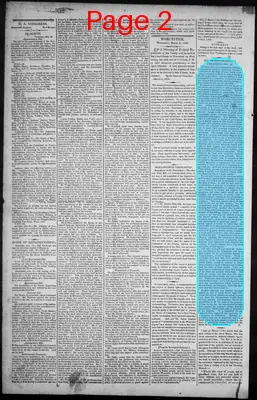
Editorial
March 6, 1822
The Massachusetts Spy
Worcester, Worcester County, Massachusetts
What is this article about?
This editorial advocates for a progressive taxation system in which taxes increase proportionally with property wealth, arguing it benefits society by easing burdens on the poor and industrious while minimally affecting the rich, thereby promoting capital growth and good habits.
Clipping

OCR Quality
98%
Excellent
Full Text
[For the Massachusetts Spy.]
TAXATION—NO. II.
The right, then, of government to determine the proportion which it will require its citizens to advance in the shape of taxes being established, it remains to shew by what policy they should be governed. And our opinion is that it should be in a progressive or ascending ratio, according to the increasing amount of property.
Our reasons for this are the following:—
Government is established for the benefit of the whole, and to secure to each individual as much personal happiness as possible. Individuals submit to the loss or qualification of certain of their natural rights, and to the expenses and burdens of government, in the expectation of realizing a more full and secure enjoyment of the rights which remain to them and those which are given to them by the social compact. Among these is the right of property.—Property to a certain amount is absolutely necessary to their happiness; but beyond this amount, though it may serve to gratify pride and enlarge desire, it in fact procures us no additional solid comfort. It is, therefore, the right of individuals to require of government that it should impose as little burden as possible upon their property until it has accumulated to a sum adequate to their rational wants, but to make their principal requisitions of those whose means of living are far beyond necessities. The weight with which a tax falls upon a person, will always depend upon the adequacy of his income to meet his necessary expenses. To a man who is just setting out in life with a family dependent upon his exertions, the fruits of which are barely sufficient to their support, any deductions from these means operate as a severe burden, and has a tendency to damp his enterprize. They diminish the fund with which the absolute necessaries of life are to be procured. But to the man of wealth, who is annually in the reception of his countless thousands, and who finds it impossible to appropriate but a mere pittance of them in objects of consumption or personal use, taxes are in fact not at all felt. They merely prevent his heap from accumulating so rapidly as it otherwise would, without depriving him of a single comfort.
We are well aware of the objections which will be raised against these remarks and this system, and believe we are prepared to evade the force of them. It will be said that the accumulation of property is beneficial to the State, in the multiplication of capital—that it has a tendency to elevate and improve the character, and foster habits which are the stability and protection of society—that it creates a deeper interest in the government, and a stronger attachment to its laws and institutions. That such salutary effects do flow from it, we are far from denying; but we contend that, under the proposed system, so far from their being checked, they would receive still greater encouragement and impulse. Instead of diminishing capital, it would increase it, by lessening the burdens of much the largest portion of the community, the working classes, those in fact who are personally instrumental in producing capital. As much capital as would be taken from the rich would be set free among the poor and industrious; and it is well known that the same amount of property divided among a number is much more productive than when concentrated in one only. It would have little or no effect in checking the enterprize of the rich in the further acquisition of property, since from the small amount of taxes raised in this country, it would consume but a very small proportion of their income.
The effect it would have upon the character and habits of the community, and upon their respect for the government, instead of being injurious, would be happy. There is no danger that men who have attained to affluence, by the long exercise of correct and useful habits, would be induced to desert them, because a small additional sum is taken from the fruits of those habits. They will have been so confirmed by time, that nothing of this kind can possibly shake them. But with the young, and that class who have their fortunes yet to make, the case is different. They have their characters to form, and their habits to adopt; and it will depend much upon the encouragement which is given to their industry and enterprize, what this character and these habits shall be.
Another objection may possibly be urged against us, that it would not be right to increase the ratio of taxation according to property, when the circumstances of individuals of large property may sometimes require the expenditure of all the avails of this property. To this we say, that the objection has no more force against the proposed system, than the present one, where a man pays in proportion to his property. It is impossible for any system to have regard to the particular circumstances of individuals. General presumptions only can be respected, and one of these is that the more property a man has, the more unappropriated income he has, and the better he can afford to pay taxes.
TAXATION—NO. II.
The right, then, of government to determine the proportion which it will require its citizens to advance in the shape of taxes being established, it remains to shew by what policy they should be governed. And our opinion is that it should be in a progressive or ascending ratio, according to the increasing amount of property.
Our reasons for this are the following:—
Government is established for the benefit of the whole, and to secure to each individual as much personal happiness as possible. Individuals submit to the loss or qualification of certain of their natural rights, and to the expenses and burdens of government, in the expectation of realizing a more full and secure enjoyment of the rights which remain to them and those which are given to them by the social compact. Among these is the right of property.—Property to a certain amount is absolutely necessary to their happiness; but beyond this amount, though it may serve to gratify pride and enlarge desire, it in fact procures us no additional solid comfort. It is, therefore, the right of individuals to require of government that it should impose as little burden as possible upon their property until it has accumulated to a sum adequate to their rational wants, but to make their principal requisitions of those whose means of living are far beyond necessities. The weight with which a tax falls upon a person, will always depend upon the adequacy of his income to meet his necessary expenses. To a man who is just setting out in life with a family dependent upon his exertions, the fruits of which are barely sufficient to their support, any deductions from these means operate as a severe burden, and has a tendency to damp his enterprize. They diminish the fund with which the absolute necessaries of life are to be procured. But to the man of wealth, who is annually in the reception of his countless thousands, and who finds it impossible to appropriate but a mere pittance of them in objects of consumption or personal use, taxes are in fact not at all felt. They merely prevent his heap from accumulating so rapidly as it otherwise would, without depriving him of a single comfort.
We are well aware of the objections which will be raised against these remarks and this system, and believe we are prepared to evade the force of them. It will be said that the accumulation of property is beneficial to the State, in the multiplication of capital—that it has a tendency to elevate and improve the character, and foster habits which are the stability and protection of society—that it creates a deeper interest in the government, and a stronger attachment to its laws and institutions. That such salutary effects do flow from it, we are far from denying; but we contend that, under the proposed system, so far from their being checked, they would receive still greater encouragement and impulse. Instead of diminishing capital, it would increase it, by lessening the burdens of much the largest portion of the community, the working classes, those in fact who are personally instrumental in producing capital. As much capital as would be taken from the rich would be set free among the poor and industrious; and it is well known that the same amount of property divided among a number is much more productive than when concentrated in one only. It would have little or no effect in checking the enterprize of the rich in the further acquisition of property, since from the small amount of taxes raised in this country, it would consume but a very small proportion of their income.
The effect it would have upon the character and habits of the community, and upon their respect for the government, instead of being injurious, would be happy. There is no danger that men who have attained to affluence, by the long exercise of correct and useful habits, would be induced to desert them, because a small additional sum is taken from the fruits of those habits. They will have been so confirmed by time, that nothing of this kind can possibly shake them. But with the young, and that class who have their fortunes yet to make, the case is different. They have their characters to form, and their habits to adopt; and it will depend much upon the encouragement which is given to their industry and enterprize, what this character and these habits shall be.
Another objection may possibly be urged against us, that it would not be right to increase the ratio of taxation according to property, when the circumstances of individuals of large property may sometimes require the expenditure of all the avails of this property. To this we say, that the objection has no more force against the proposed system, than the present one, where a man pays in proportion to his property. It is impossible for any system to have regard to the particular circumstances of individuals. General presumptions only can be respected, and one of these is that the more property a man has, the more unappropriated income he has, and the better he can afford to pay taxes.
What sub-type of article is it?
Taxation
Economic Policy
What keywords are associated?
Progressive Taxation
Property Tax
Economic Policy
Social Benefit
Capital Accumulation
Industry Encouragement
Editorial Details
Primary Topic
Advocacy For Progressive Taxation Based On Property
Stance / Tone
Supportive Of Progressive Taxation
Key Arguments
Government Should Tax Progressively According To Property Amount To Minimize Burdens On The Poor.
Property Beyond Necessities Provides No Additional Comfort, So The Wealthy Can Bear More Tax Without Hardship.
Taxes Heavily Burden Those With Limited Means, Dampening Enterprise, But Are Unfelt By The Rich.
Progressive Taxation Increases Capital By Freeing Resources For The Working Classes.
Divided Property Among Many Is More Productive Than Concentrated Wealth.
It Encourages Good Habits And Industry Among The Young Without Deterring The Affluent.
No System Can Account For Individual Circumstances; General Rule Is That More Property Means Ability To Pay More.