Thank you for visiting SNEWPapers!
Sign up free
Literary
March 7, 1854
The Camden Weekly Journal
Camden, Kershaw County, South Carolina
What is this article about?
An essay extolling the Bible's transformative power on the human mind, especially among prisoners in Newgate (via Mrs. Fry's reforms) and the insane (via Miss Dix's observations), emphasizing its role in providing comfort, reformation, and spiritual solace amid suffering and degradation.
Clipping
OCR Quality
98%
Excellent
Full Text
Miscellaneous.
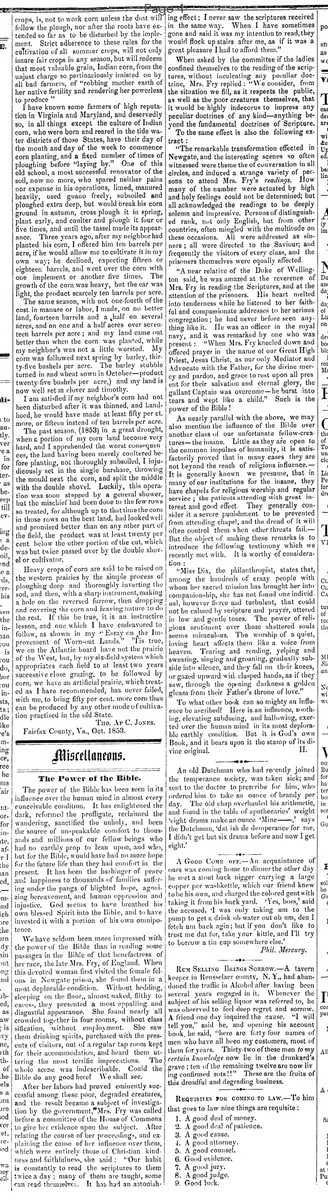
The Power of the Bible.
The power of the Bible has been seen in its influence over the human mind in almost every conceivable condition. It has enlightened the dark, reformed the profligate, reclaimed the wandering, sanctified the unholy, and been the source of unspeakable comfort to thousands and millions of our fellow beings who had no earthly prop to lean upon, and who, but for the Bible, would have had no more hope for the future life than they had comfort in the present. It has been the harbinger of peace and happiness to thousands of families suffering under the pangs of blighted hope, agonizing bereavement, and human oppression and injustice. God seems to have breathed his own blessed Spirit into the Bible, and to have invested it with a portion of his own omnipotence.
We have seldom been more impressed with the power of the Bible than in reading some passages in the Bible of that benefactress of her race, the late Mrs. Fry, of England. When this devoted woman first visited the female felons in Newgate prison, she found them in a most deplorable condition. Without bedding, sleeping on the floor, almost naked, filthy to excess, they presented a most appalling and disgustful appearance. She found nearly all crowded together in four rooms, without classification, without employment. She saw them drinking spirits, purchased with the presents of visitors, out of a regular tap room kept for their accommodation, and heard them uttering the most terrific imprecations. The whole scene was indescribable. Could the Bible do any good here? We shall see.
After her labors had proved eminently successful among these poor, degraded creatures and the result became a subject of investigation by the government, Mrs. Fry was called before a committee of the House of Commons to give her evidence upon the subject. After relating the course of her proceedings, and explaining the cause of her influence over them, which were entirely those of Christian kindness and faithfulness, she said: "Our habit is constantly to read the scriptures to them twice a day; many of them are taught, some can read themselves. It has had an astonishing effect; I never saw the scriptures received in the same way. When I have sometimes gone and said it was my intention to read, they would flock up stairs after me, as if it was a great pleasure I had to afford them."
When asked by the committee if the ladies confined themselves to the reading of the scriptures, without inculcating any peculiar doctrine, Mrs. Fry replied: "We consider, from the situation we fill, as it respects the public as well as the poor creatures themselves, that it would be highly indecorous to impress any peculiar doctrines of any kind—anything beyond the fundamental doctrines of Scripture."
To the same effect is also the following extract:
"The remarkable transformation effected in Newgate, and the interesting scenes so often witnessed were the theme of conversation in all circles, and induced a strange variety of persons to attend Mrs. Fry's readings. How many of the number were actuated by high and holy feelings could not be determined; but all acknowledged the readings to be deeply solemn and impressive. Persons of distinguished rank, not only English, but from other countries, often mingled with the multitude on these occasions. All were addressed as sinners; all were directed to the Saviour; and frequently the visitors of every class, and the prisoners themselves were equally affected.
"A near relative of the Duke of Wellington said, he was amazed at the reverence of Mrs. Fry in reading the Scriptures, and at the attention of the prisoners. His heart melted into tenderness while he listened to her faithful and compassionate addresses to her serious congregation; he had never before seen anything like it. He was an officer in the royal navy, and it was remarked by one who was present: 'When Mrs. Fry kneeled down and offered prayer in the name of our Great High Priest, Jesus Christ, as our only Mediator and Advocate with the Father, for the divine mercy and pardon, and grace to rest upon all present for their salvation and eternal glory, the gallant Captain was overcome—he burst into tears and wept like a child.' Such is the power of the Bible!"
As nearly parallel with the above, we may also mention the influence of the Bible over another class of our unfortunate fellow-creatures—the insane. Little as they are open to the common impulses of humanity, it is satisfactorily proved that in many cases they are not beyond the reach of religious influence. It is generally known we presume, that in many of our institutions for the insane, they have chapels for religious worship and regular service; the patients attending with great interest and good effect. They generally consider it a severe punishment to be prevented from attending chapel, and the dread of it will often control them when other threats fail.
But the object of making these remarks is to introduce the following testimony which we recently met with. It is worthy of consideration:
"Miss Dix, the philanthropist, states that, among the hundreds of crazy people with whom her sacred mission has brought her into companionship, she has not found one individual, however fierce and turbulent, that could not be calmed by scripture and prayer, uttered in low and gentle tones. The power of religious sentiment over those shattered souls seems miraculous. The worship of a quiet, loving heart affects them like a voice from heaven. Tearing and rending, yelping and swearing, singing and groaning, gradually subside into silence, and they fall on their knees, or gazed upward with clasped hands, as if they saw, through the opening darkness a golden gleam from their Father's throne of love."
To what other book can so mighty an influence be ascribed? Here is an influence, soothing, elevating, subduing, and hallowing, exerted over the human mind in its most deplorable earthly condition. But it is God's own Book, and it bears upon it the stamp of its divine original.
H.
The Power of the Bible.
The power of the Bible has been seen in its influence over the human mind in almost every conceivable condition. It has enlightened the dark, reformed the profligate, reclaimed the wandering, sanctified the unholy, and been the source of unspeakable comfort to thousands and millions of our fellow beings who had no earthly prop to lean upon, and who, but for the Bible, would have had no more hope for the future life than they had comfort in the present. It has been the harbinger of peace and happiness to thousands of families suffering under the pangs of blighted hope, agonizing bereavement, and human oppression and injustice. God seems to have breathed his own blessed Spirit into the Bible, and to have invested it with a portion of his own omnipotence.
We have seldom been more impressed with the power of the Bible than in reading some passages in the Bible of that benefactress of her race, the late Mrs. Fry, of England. When this devoted woman first visited the female felons in Newgate prison, she found them in a most deplorable condition. Without bedding, sleeping on the floor, almost naked, filthy to excess, they presented a most appalling and disgustful appearance. She found nearly all crowded together in four rooms, without classification, without employment. She saw them drinking spirits, purchased with the presents of visitors, out of a regular tap room kept for their accommodation, and heard them uttering the most terrific imprecations. The whole scene was indescribable. Could the Bible do any good here? We shall see.
After her labors had proved eminently successful among these poor, degraded creatures and the result became a subject of investigation by the government, Mrs. Fry was called before a committee of the House of Commons to give her evidence upon the subject. After relating the course of her proceedings, and explaining the cause of her influence over them, which were entirely those of Christian kindness and faithfulness, she said: "Our habit is constantly to read the scriptures to them twice a day; many of them are taught, some can read themselves. It has had an astonishing effect; I never saw the scriptures received in the same way. When I have sometimes gone and said it was my intention to read, they would flock up stairs after me, as if it was a great pleasure I had to afford them."
When asked by the committee if the ladies confined themselves to the reading of the scriptures, without inculcating any peculiar doctrine, Mrs. Fry replied: "We consider, from the situation we fill, as it respects the public as well as the poor creatures themselves, that it would be highly indecorous to impress any peculiar doctrines of any kind—anything beyond the fundamental doctrines of Scripture."
To the same effect is also the following extract:
"The remarkable transformation effected in Newgate, and the interesting scenes so often witnessed were the theme of conversation in all circles, and induced a strange variety of persons to attend Mrs. Fry's readings. How many of the number were actuated by high and holy feelings could not be determined; but all acknowledged the readings to be deeply solemn and impressive. Persons of distinguished rank, not only English, but from other countries, often mingled with the multitude on these occasions. All were addressed as sinners; all were directed to the Saviour; and frequently the visitors of every class, and the prisoners themselves were equally affected.
"A near relative of the Duke of Wellington said, he was amazed at the reverence of Mrs. Fry in reading the Scriptures, and at the attention of the prisoners. His heart melted into tenderness while he listened to her faithful and compassionate addresses to her serious congregation; he had never before seen anything like it. He was an officer in the royal navy, and it was remarked by one who was present: 'When Mrs. Fry kneeled down and offered prayer in the name of our Great High Priest, Jesus Christ, as our only Mediator and Advocate with the Father, for the divine mercy and pardon, and grace to rest upon all present for their salvation and eternal glory, the gallant Captain was overcome—he burst into tears and wept like a child.' Such is the power of the Bible!"
As nearly parallel with the above, we may also mention the influence of the Bible over another class of our unfortunate fellow-creatures—the insane. Little as they are open to the common impulses of humanity, it is satisfactorily proved that in many cases they are not beyond the reach of religious influence. It is generally known we presume, that in many of our institutions for the insane, they have chapels for religious worship and regular service; the patients attending with great interest and good effect. They generally consider it a severe punishment to be prevented from attending chapel, and the dread of it will often control them when other threats fail.
But the object of making these remarks is to introduce the following testimony which we recently met with. It is worthy of consideration:
"Miss Dix, the philanthropist, states that, among the hundreds of crazy people with whom her sacred mission has brought her into companionship, she has not found one individual, however fierce and turbulent, that could not be calmed by scripture and prayer, uttered in low and gentle tones. The power of religious sentiment over those shattered souls seems miraculous. The worship of a quiet, loving heart affects them like a voice from heaven. Tearing and rending, yelping and swearing, singing and groaning, gradually subside into silence, and they fall on their knees, or gazed upward with clasped hands, as if they saw, through the opening darkness a golden gleam from their Father's throne of love."
To what other book can so mighty an influence be ascribed? Here is an influence, soothing, elevating, subduing, and hallowing, exerted over the human mind in its most deplorable earthly condition. But it is God's own Book, and it bears upon it the stamp of its divine original.
H.
What sub-type of article is it?
Essay
What themes does it cover?
Religious
Moral Virtue
What keywords are associated?
Bible Power
Mrs Fry
Newgate Prison
Miss Dix
Religious Influence
Prison Reform
Insane Asylums
What entities or persons were involved?
H.
Literary Details
Title
The Power Of The Bible
Author
H.
Subject
Influence Of The Bible On Prisoners And The Insane
Key Lines
Our Habit Is Constantly To Read The Scriptures To Them Twice A Day; Many Of Them Are Taught, Some Can Read Themselves. It Has Had An Astonishing Effect; I Never Saw The Scriptures Received In The Same Way.
We Consider, From The Situation We Fill, As It Respects The Public As Well As The Poor Creatures Themselves, That It Would Be Highly Indecorous To Impress Any Peculiar Doctrines Of Any Kind—Anything Beyond The Fundamental Doctrines Of Scripture.
Miss Dix, The Philanthropist, States That, Among The Hundreds Of Crazy People With Whom Her Sacred Mission Has Brought Her Into Companionship, She Has Not Found One Individual, However Fierce And Turbulent, That Could Not Be Calmed By Scripture And Prayer, Uttered In Low And Gentle Tones.
Such Is The Power Of The Bible!
But It Is God's Own Book, And It Bears Upon It The Stamp Of Its Divine Original.