Thank you for visiting SNEWPapers!
Sign up free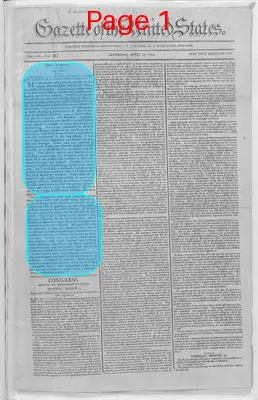
Literary
April 17, 1790
Gazette Of The United States
New York, New York County, New York
What is this article about?
An essay on the importance of prudence in giving praise and censure, warning against hasty judgments that undermine credibility, and advocating for modest, discerning approbation to earn respect and maintain character.
Clipping
OCR Quality
95%
Excellent
Full Text
THE TABLET.
No. CVI.
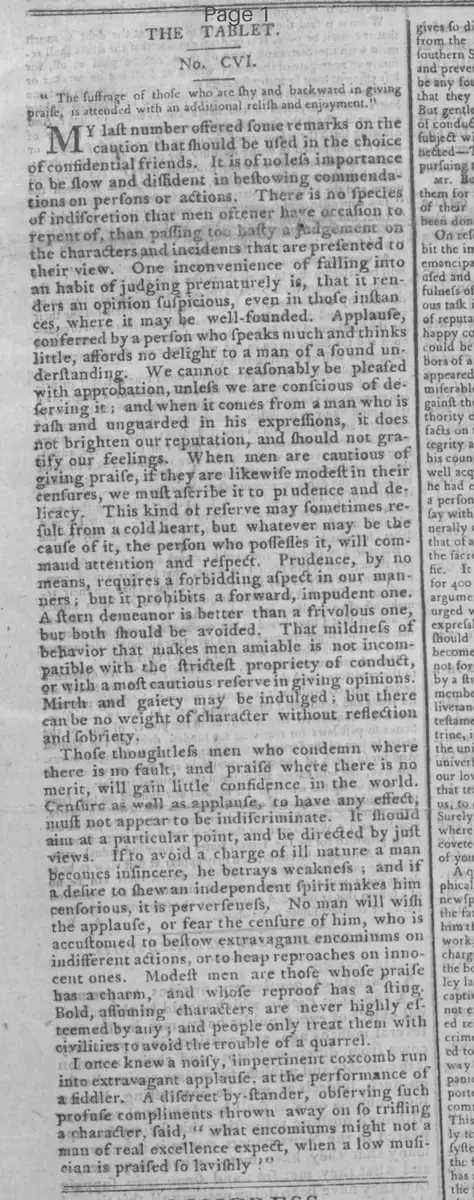
The suffrage of those who are shy and backward in giving praise, is attended with an additional relish and enjoyment. Caution that should be used in the choice of confidential friends. It is of no less importance to be slow and diffident in bestowing commendations on persons or actions. There is no species of indiscretion that men oftener have occasion to repent of, than passing too hasty a judgment on the characters and incidents that are presented to their view. One inconvenience of falling into an habit of judging prematurely is, that it renders an opinion suspicious, even in those instances, where it may be well-founded.
Applause, little, affords no delight to a man of a sound understanding. We cannot reasonably be pleased with approbation, unless we are conscious of deserving it; and when it comes from a man who is rash and unguarded in his expressions, it does not brighten our reputation, and should not gratify our feelings. When men are cautious of giving praise, if they are likewise moderate in their censures, we must ascribe it to prudence and delicacy. This kind of reserve may sometimes result from a cold heart, but whatever may be the cause of it, the person who possesses it, will command attention and respect. Prudence, by no means, requires a forbidding aspect in our manners; but it prohibits a forward, impudent one. A stern demeanor is better than a frivolous one, but both should be avoided. That mildness of behavior that makes men amiable is not incompatible with the strictest propriety of conduct or with a most cautious reserve in giving opinions. Mirth and gaiety may be indulged; but there can be no weight of character without reflection and sobriety.
Those thoughtless men who condemn where there is no fault, and praise where there is no merit, will gain little confidence in the world. Censure as well as applause, to have any effect, must not appear to be indiscriminate. It should aim at a particular point, and be directed by just views. If to avoid a charge of ill nature a man becomes insincere, he betrays weakness; and if a desire to show an independent spirit makes him censorious, it is perversion. No man will wish the applause, or fear the censure of him, who is accustomed to bestow extravagant encomiums on indifferent actions, or to heap reproaches on innocent ones.
Modest men are those whose praise has a charm, and whose reproof has a sting. Bold, assuming characters are never highly esteemed by any; and people only treat them with civilities to avoid the trouble of a quarrel. I once knew a noisy, impertinent coxcomb run into extravagant applause, at the performance of a fiddler. A discreet by-stander, observing such profuse compliments thrown away on so trifling a character, said, "what encomiums might not a man of real excellence expect, when a low musician is praised so lavishly?"
No. CVI.
The suffrage of those who are shy and backward in giving praise, is attended with an additional relish and enjoyment. Caution that should be used in the choice of confidential friends. It is of no less importance to be slow and diffident in bestowing commendations on persons or actions. There is no species of indiscretion that men oftener have occasion to repent of, than passing too hasty a judgment on the characters and incidents that are presented to their view. One inconvenience of falling into an habit of judging prematurely is, that it renders an opinion suspicious, even in those instances, where it may be well-founded.
Applause, little, affords no delight to a man of a sound understanding. We cannot reasonably be pleased with approbation, unless we are conscious of deserving it; and when it comes from a man who is rash and unguarded in his expressions, it does not brighten our reputation, and should not gratify our feelings. When men are cautious of giving praise, if they are likewise moderate in their censures, we must ascribe it to prudence and delicacy. This kind of reserve may sometimes result from a cold heart, but whatever may be the cause of it, the person who possesses it, will command attention and respect. Prudence, by no means, requires a forbidding aspect in our manners; but it prohibits a forward, impudent one. A stern demeanor is better than a frivolous one, but both should be avoided. That mildness of behavior that makes men amiable is not incompatible with the strictest propriety of conduct or with a most cautious reserve in giving opinions. Mirth and gaiety may be indulged; but there can be no weight of character without reflection and sobriety.
Those thoughtless men who condemn where there is no fault, and praise where there is no merit, will gain little confidence in the world. Censure as well as applause, to have any effect, must not appear to be indiscriminate. It should aim at a particular point, and be directed by just views. If to avoid a charge of ill nature a man becomes insincere, he betrays weakness; and if a desire to show an independent spirit makes him censorious, it is perversion. No man will wish the applause, or fear the censure of him, who is accustomed to bestow extravagant encomiums on indifferent actions, or to heap reproaches on innocent ones.
Modest men are those whose praise has a charm, and whose reproof has a sting. Bold, assuming characters are never highly esteemed by any; and people only treat them with civilities to avoid the trouble of a quarrel. I once knew a noisy, impertinent coxcomb run into extravagant applause, at the performance of a fiddler. A discreet by-stander, observing such profuse compliments thrown away on so trifling a character, said, "what encomiums might not a man of real excellence expect, when a low musician is praised so lavishly?"
What sub-type of article is it?
Essay
What themes does it cover?
Moral Virtue
Social Manners
What keywords are associated?
Prudence
Praise
Censure
Judgment
Character
Morality
Reserve
Literary Details
Title
The Tablet. No. Cvi.
Key Lines
There Is No Species Of Indiscretion That Men Oftener Have Occasion To Repent Of, Than Passing Too Hasty A Judgment On The Characters And Incidents That Are Presented To Their View.
Applause, Little, Affords No Delight To A Man Of A Sound Understanding.
Modest Men Are Those Whose Praise Has A Charm, And Whose Reproof Has A Sting.
What Encomiums Might Not A Man Of Real Excellence Expect, When A Low Musician Is Praised So Lavishly?