Thank you for visiting SNEWPapers!
Sign up free
Story
September 25, 1852
Fremont Weekly Freeman
Fremont, Sandusky County, Ohio
What is this article about?
Oyster farming in Shrewsbury Inlet involves transplanting oysters from New Bay to river beds, staking off plots, and harvesting after three years for sixfold growth and high profitability, akin to wheat farming.
Clipping
OCR Quality
98%
Excellent
Full Text
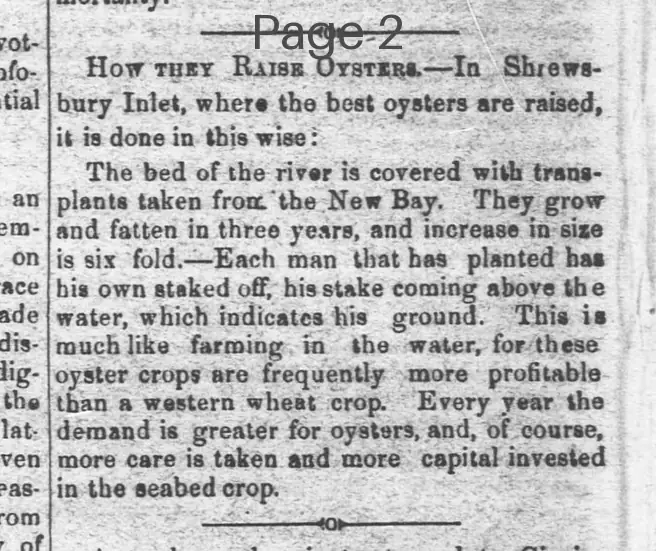
How They Raise Oysters.—In Shrewsbury Inlet, where the best oysters are raised, it is done in this wise:
The bed of the river is covered with transplants taken from the New Bay. They grow and fatten in three years, and increase in size is six fold. Each man that has planted has his own staked off, his stake coming above the water, which indicates his ground. This is much like farming in the water, for these oyster crops are frequently more profitable than a western wheat crop. Every year the demand is greater for oysters, and, of course, more care is taken and more capital invested in the seabed crop.
The bed of the river is covered with transplants taken from the New Bay. They grow and fatten in three years, and increase in size is six fold. Each man that has planted has his own staked off, his stake coming above the water, which indicates his ground. This is much like farming in the water, for these oyster crops are frequently more profitable than a western wheat crop. Every year the demand is greater for oysters, and, of course, more care is taken and more capital invested in the seabed crop.
What sub-type of article is it?
Curiosity
What themes does it cover?
Nature
What keywords are associated?
Oyster Farming
Shrewsbury Inlet
Transplants
Staked Beds
Aquaculture
Profitability
Where did it happen?
Shrewsbury Inlet
Story Details
Location
Shrewsbury Inlet
Story Details
Oysters are transplanted from New Bay to river beds in Shrewsbury Inlet, staked off by planters, grown for three years with sixfold size increase, and harvested for profit exceeding wheat crops amid rising demand.