Thank you for visiting SNEWPapers!
Sign up free
Editorial
February 9, 1949
The Key West Citizen
Key West, Monroe County, Florida
What is this article about?
The Interstate Commerce Commission warns U.S. railroads that further freight rate increases could reduce tonnage and revenues, urging efficiency improvements and new equipment instead. Despite current prosperity, recession risks loom, but railroads remain vital to the national economy.
Clipping
OCR Quality
98%
Excellent
Full Text
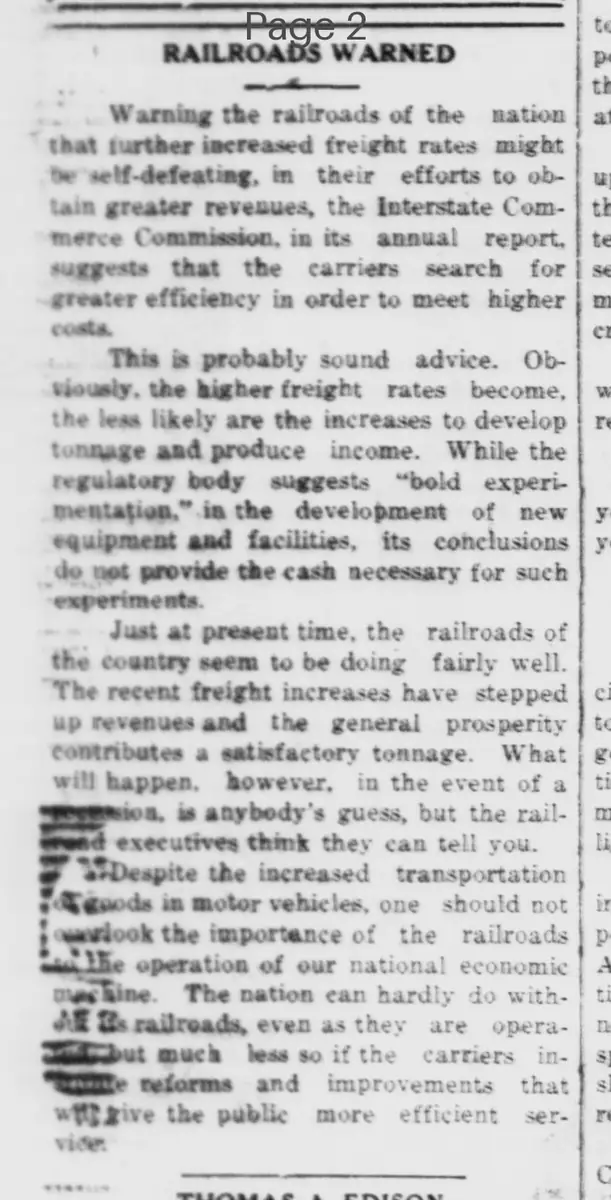
RAILROADS WARNED
Warning the railroads of the nation that further increased freight rates might be self-defeating, in their efforts to obtain greater revenues, the Interstate Commerce Commission, in its annual report, suggests that the carriers search for greater efficiency in order to meet higher costs.
This is probably sound advice. Obviously, the higher freight rates become, the less likely are the increases to develop tonnage and produce income. While the regulatory body suggests "bold experimentation," in the development of new equipment and facilities, its conclusions do not provide the cash necessary for such experiments.
Just at present time, the railroads of the country seem to be doing fairly well. The recent freight increases have stepped up revenues and the general prosperity contributes a satisfactory tonnage. What will happen, however, in the event of a recession, is anybody's guess, but the railroad executives think they can tell you.
Despite the increased transportation loads in motor vehicles, one should not overlook the importance of the railroads in the operation of our national economic machine. The nation can hardly do without railroads, even as they are operated—but much less so if the carriers increase reforms and improvements that will give the public more efficient service
Warning the railroads of the nation that further increased freight rates might be self-defeating, in their efforts to obtain greater revenues, the Interstate Commerce Commission, in its annual report, suggests that the carriers search for greater efficiency in order to meet higher costs.
This is probably sound advice. Obviously, the higher freight rates become, the less likely are the increases to develop tonnage and produce income. While the regulatory body suggests "bold experimentation," in the development of new equipment and facilities, its conclusions do not provide the cash necessary for such experiments.
Just at present time, the railroads of the country seem to be doing fairly well. The recent freight increases have stepped up revenues and the general prosperity contributes a satisfactory tonnage. What will happen, however, in the event of a recession, is anybody's guess, but the railroad executives think they can tell you.
Despite the increased transportation loads in motor vehicles, one should not overlook the importance of the railroads in the operation of our national economic machine. The nation can hardly do without railroads, even as they are operated—but much less so if the carriers increase reforms and improvements that will give the public more efficient service
What sub-type of article is it?
Infrastructure
Economic Policy
What keywords are associated?
Railroad Rates
Freight Increases
Interstate Commerce Commission
Efficiency Improvements
Economic Recession
Transportation Importance
What entities or persons were involved?
Interstate Commerce Commission
Railroads
Editorial Details
Primary Topic
Warning Against Railroad Freight Rate Increases And Push For Efficiency
Stance / Tone
Supportive Of Regulatory Advice And Emphasis On Railroads' Economic Importance
Key Figures
Interstate Commerce Commission
Railroads
Key Arguments
Higher Freight Rates May Reduce Tonnage And Fail To Increase Revenues
Carriers Should Seek Efficiency To Meet Higher Costs
Regulatory Suggestions For Bold Experimentation Lack Funding
Current Prosperity Boosts Railroad Revenues
Recession Could Harm Railroads
Railroads Are Essential To The National Economy Despite Motor Vehicle Competition