Thank you for visiting SNEWPapers!
Sign up free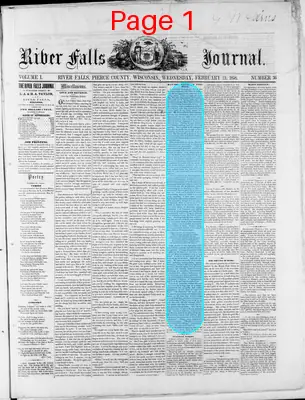
Literary
February 24, 1858
The River Falls Journal
River Falls, Pierce County, Saint Croix County, Wisconsin
What is this article about?
Bayard Taylor protests the invasion of authors' privacy by the public and press, sharing anecdotes about unwanted letters, false rumors, and his preference for simple pleasures over idealized images. He includes a humorous story of rebuffing spiritual pretensions.
Clipping

OCR Quality
95%
Excellent
Full Text
BAYARD TAYLOR'S PROTEST.
In a certain contingency, the ancient
Israelites excused a man from all military
duty for the space of one year; but, in ex-
acting times, I have no right to expect
that the same dispensation of Providence
will justify me in laying aside my steel
(pen) for a longer space than one month.
Not that writing is a necessity to me. On
the contrary, I am sometimes heartily tir-
ed of it, and wish that I had been born
with a spade in my hand, instead of a
quill. My Nemesis is the word 'contract,
and my only consolation, when she somne-
times drives me too hard, is the saving
clause I inserted, that I should only write
when I had (or supposed I had) some-
thing to say. During the past month, I
have written nothing, and you have lost
nothing. For I persist in the antiquated
idea that the public has no right to know
anything about the private life of an au-
thor. His household gods are as sacred
as those of any other individual whatever:
and if he chooses to keep a skeleton, that
is his business.
That certain portions of my life have
been betrayed to the world, is a thing for
which I am not accountable. I have al-
ways resisted and protested against any
such revelation, either in my own case or
in that of others. You, anonymous A-
merican females, who still persist in send-
ing me letters, for the most part either
silly or impertinent-should you be well
pleased, if I, knowing you personally, were
to entertain the public with the secrets of
your hearts or your toilettes? Reverse
the case, in your imaginations, and you
may perhaps spare me, henceforth, the
bore of your advice and your meddling
criticism.
There is scarcely an American author
of any reputation who is not subjected to
this private annoyance, in addition to pub-
lis hed misstatements of his life, plans, and
finances, political and religious creed, &c.
Two years ago, the newspapers insisted
on marrying me to somebody in Ohio--I
never could discover precisely to whom-
and the result was a shower of anonymous
letters, some of which were positively insulting. I have since learned
that English authors are subjected to the
same annoyance, though in a less degree.
In Germany there is not much of it-
which is rather to be wondered at. I
have read lately, in American papers,
statements that Tennyson was ruining
himself by opium-eating, and that Thackeray formerly made a living by shaving,
at an enormous usury, the bills of young
heirs. Knowing both the men, as I do-
and they are two of God's own noblemen
-I pronounce these stories outrageous
lies. There is not a shadow of a foundation for either of them. If these things
are the inevitable shadow of an author's
fame, then, as Tennyson sings:
"Better the life of bush and brier
The bird that pipes his lone desire
And dies unheard within his tree
Than him who warbles long and loud,
And falls at Glory's temple-gates-
For whom the carrion vulture waits,
To tear his heart before the crowd!"
I ask pardon for this digression, which
is not wholly personal, since the annoyance
is so general. Perhaps this protest, which
I make for the first and last time, may
save me future lamentations over a "lost
ideal." I wish to be understood that I
never set up for an ideal. Quite the con-
trary. My tastes are really of the realest
kind, including rocking-chairs, oysters,
fast horses, Christy's Minstrels, lager beer,
macaroni, Havana cigars, Flemish artists,
sausages, salt bathing, pickled herrings,
the raising of vegetables, Newfoundland
dogs, camp-fires, sailors, lumbermen, un-
educated men, and sinners generally. If
your ideal embraces all these ye anonymous
(the plural, I suppose, of anonymous),
hold on to it, and may it comfort you.
I know an American author who was
once bored for a long time by a female
acquaintance for sympathetic and tender
appreciation of her ideas of "spiritual
duty." "Mr. Plutarch," she would say.
"is there a more serene and sublime satis-
faction in life than that of discovering
your spiritual duty, and then conscientiously
performing it? Have you not often, in
your own soul, felt this tranquil bliss?"
The author bore this for a time, but hu-
man patience has its limits. "No," he an-
swered at last; "I hate to do my spiritual
duty. If I know what it is, I won't do it;
but, Madam, there is one thing which does
fill me with a serene and sublime satis-
faction, and reconciles me to the hollowness of life." "Pray, pray, what is it?"
she asked eagerly. "Madam it is a pig's
nose, boiled with cabbage!" was his quiet
answer. He was never forgiven.
I am not afraid of applying the moral
of this story--every word of which is
true--to my own case.-N. Y. Tribune.
In a certain contingency, the ancient
Israelites excused a man from all military
duty for the space of one year; but, in ex-
acting times, I have no right to expect
that the same dispensation of Providence
will justify me in laying aside my steel
(pen) for a longer space than one month.
Not that writing is a necessity to me. On
the contrary, I am sometimes heartily tir-
ed of it, and wish that I had been born
with a spade in my hand, instead of a
quill. My Nemesis is the word 'contract,
and my only consolation, when she somne-
times drives me too hard, is the saving
clause I inserted, that I should only write
when I had (or supposed I had) some-
thing to say. During the past month, I
have written nothing, and you have lost
nothing. For I persist in the antiquated
idea that the public has no right to know
anything about the private life of an au-
thor. His household gods are as sacred
as those of any other individual whatever:
and if he chooses to keep a skeleton, that
is his business.
That certain portions of my life have
been betrayed to the world, is a thing for
which I am not accountable. I have al-
ways resisted and protested against any
such revelation, either in my own case or
in that of others. You, anonymous A-
merican females, who still persist in send-
ing me letters, for the most part either
silly or impertinent-should you be well
pleased, if I, knowing you personally, were
to entertain the public with the secrets of
your hearts or your toilettes? Reverse
the case, in your imaginations, and you
may perhaps spare me, henceforth, the
bore of your advice and your meddling
criticism.
There is scarcely an American author
of any reputation who is not subjected to
this private annoyance, in addition to pub-
lis hed misstatements of his life, plans, and
finances, political and religious creed, &c.
Two years ago, the newspapers insisted
on marrying me to somebody in Ohio--I
never could discover precisely to whom-
and the result was a shower of anonymous
letters, some of which were positively insulting. I have since learned
that English authors are subjected to the
same annoyance, though in a less degree.
In Germany there is not much of it-
which is rather to be wondered at. I
have read lately, in American papers,
statements that Tennyson was ruining
himself by opium-eating, and that Thackeray formerly made a living by shaving,
at an enormous usury, the bills of young
heirs. Knowing both the men, as I do-
and they are two of God's own noblemen
-I pronounce these stories outrageous
lies. There is not a shadow of a foundation for either of them. If these things
are the inevitable shadow of an author's
fame, then, as Tennyson sings:
"Better the life of bush and brier
The bird that pipes his lone desire
And dies unheard within his tree
Than him who warbles long and loud,
And falls at Glory's temple-gates-
For whom the carrion vulture waits,
To tear his heart before the crowd!"
I ask pardon for this digression, which
is not wholly personal, since the annoyance
is so general. Perhaps this protest, which
I make for the first and last time, may
save me future lamentations over a "lost
ideal." I wish to be understood that I
never set up for an ideal. Quite the con-
trary. My tastes are really of the realest
kind, including rocking-chairs, oysters,
fast horses, Christy's Minstrels, lager beer,
macaroni, Havana cigars, Flemish artists,
sausages, salt bathing, pickled herrings,
the raising of vegetables, Newfoundland
dogs, camp-fires, sailors, lumbermen, un-
educated men, and sinners generally. If
your ideal embraces all these ye anonymous
(the plural, I suppose, of anonymous),
hold on to it, and may it comfort you.
I know an American author who was
once bored for a long time by a female
acquaintance for sympathetic and tender
appreciation of her ideas of "spiritual
duty." "Mr. Plutarch," she would say.
"is there a more serene and sublime satis-
faction in life than that of discovering
your spiritual duty, and then conscientiously
performing it? Have you not often, in
your own soul, felt this tranquil bliss?"
The author bore this for a time, but hu-
man patience has its limits. "No," he an-
swered at last; "I hate to do my spiritual
duty. If I know what it is, I won't do it;
but, Madam, there is one thing which does
fill me with a serene and sublime satis-
faction, and reconciles me to the hollowness of life." "Pray, pray, what is it?"
she asked eagerly. "Madam it is a pig's
nose, boiled with cabbage!" was his quiet
answer. He was never forgiven.
I am not afraid of applying the moral
of this story--every word of which is
true--to my own case.-N. Y. Tribune.
What sub-type of article is it?
Essay
What themes does it cover?
Social Manners
What keywords are associated?
Author Privacy
Public Intrusion
Bayard Taylor
Anonymous Letters
Literary Fame
What entities or persons were involved?
Bayard Taylor
Literary Details
Title
Bayard Taylor's Protest.
Author
Bayard Taylor
Subject
Protest Against Invasion Of Authors' Privacy
Form / Style
Personal Essay With Humorous Anecdotes
Key Lines
"Better The Life Of Bush And Brier The Bird That Pipes His Lone Desire And Dies Unheard Within His Tree Than Him Who Warbles Long And Loud, And Falls At Glory's Temple Gates For Whom The Carrion Vulture Waits, To Tear His Heart Before The Crowd!"
"Madam It Is A Pig's Nose, Boiled With Cabbage!"